Get Full Government Meeting Transcripts, Videos, & Alerts Forever!
Get email alerts on the Brownfields Remediation topic
No spam. Unsubscribe anytime.
Monte Vista details $1 million EPA brownfields grant to assess and abate hazardous materials
Summary
City staff told the council Monte Vista won a $1,000,000 EPA multipurpose brownfields grant to assess and remediate asbestos, lead, PCB ballasts, mercury bulbs and other hazards at city properties and select private parcels; $300,000 is earmarked for abatement in city buildings and the rest for assessment/abatement work.
Monte Vista officials briefed the City Council on a $1,000,000 multipurpose brownfields grant from the U.S. Environmental Protection Agency intended to identify and remediate hazardous materials at city-owned buildings and a small number of private properties.
City staff member Dan (presenter) said the grant’s $300,000 abatement requirement is dedicated to interior work on city buildings, with the remaining $700,000 available for site assessment and additional abatement. He described a multi-phase work plan: phase 1 is records and historical-use review; phase 2 involved sampling and more than 300 samples at City Hall; and upcoming phase work will finalize scopes of work and competitive abatement bids.
The presentation listed technical findings at multiple sites. City Hall testing found numerous regulated items — 390 mercury bulbs and about 200 PCB ballasts — plus widespread asbestos-containing materials. The golf-course pro shop and the Car Shed Building showed asbestos and high lead concentrations; 117 Adams was reported to have asbestos-containing materials with damaged joint compounds that have become aerosolized. The airport terminal and 1005 2nd Avenue (the former American Legion building) are in earlier review phases after being added to the grant because of building materials found during walkthroughs.
Dan said consultants (Terracon) will help the city finalize a scope of work and prepare a request for proposals for abatement. He described abatement options — encapsulation, full removal, or hybrid approaches — and said decisions will be driven by cost-effectiveness and consultant engineering recommendations. Terracon also is helping identify financing options and low-interest loans for privately owned parcels that were tested but are not eligible for city-funded abatement.
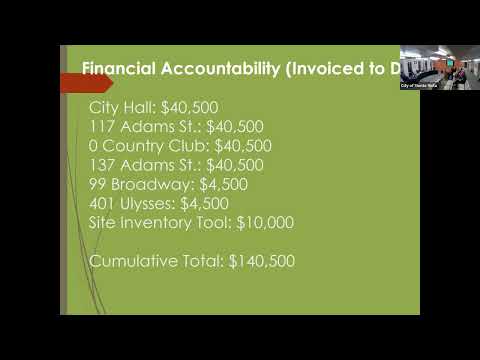
Staff flagged compliance steps required by federal and state programs: Section 106 reviews under the National Historic Preservation Act are required for EPA-funded work on structures older than 50 years, typically taking four to six weeks and costing about $4,500 per site. Dan said the city has approved budget increases to cover those reviews and is coordinating with engineers to ensure testing and analysis are complete before abatement work begins.
The council received the update; staff said the grant has been efficient to administer so far and that the city will continue to add eligible sites over time. No vote was required; staff will return with scopes, budgets and contract recommendations as the engineering work progresses.
The next procedural step is finalizing the scope of work and issuing an RFP for abatement and project management; staff said Terracon would manage the procurement unless the city elects to directly manage a general contractor to save on schedule.