
Rep. Perryman’s bill would have Minnesota cover costs of future health‑insurance mandates; committee lays it over
Get AI-powered insights, summaries, and transcripts
Subscribe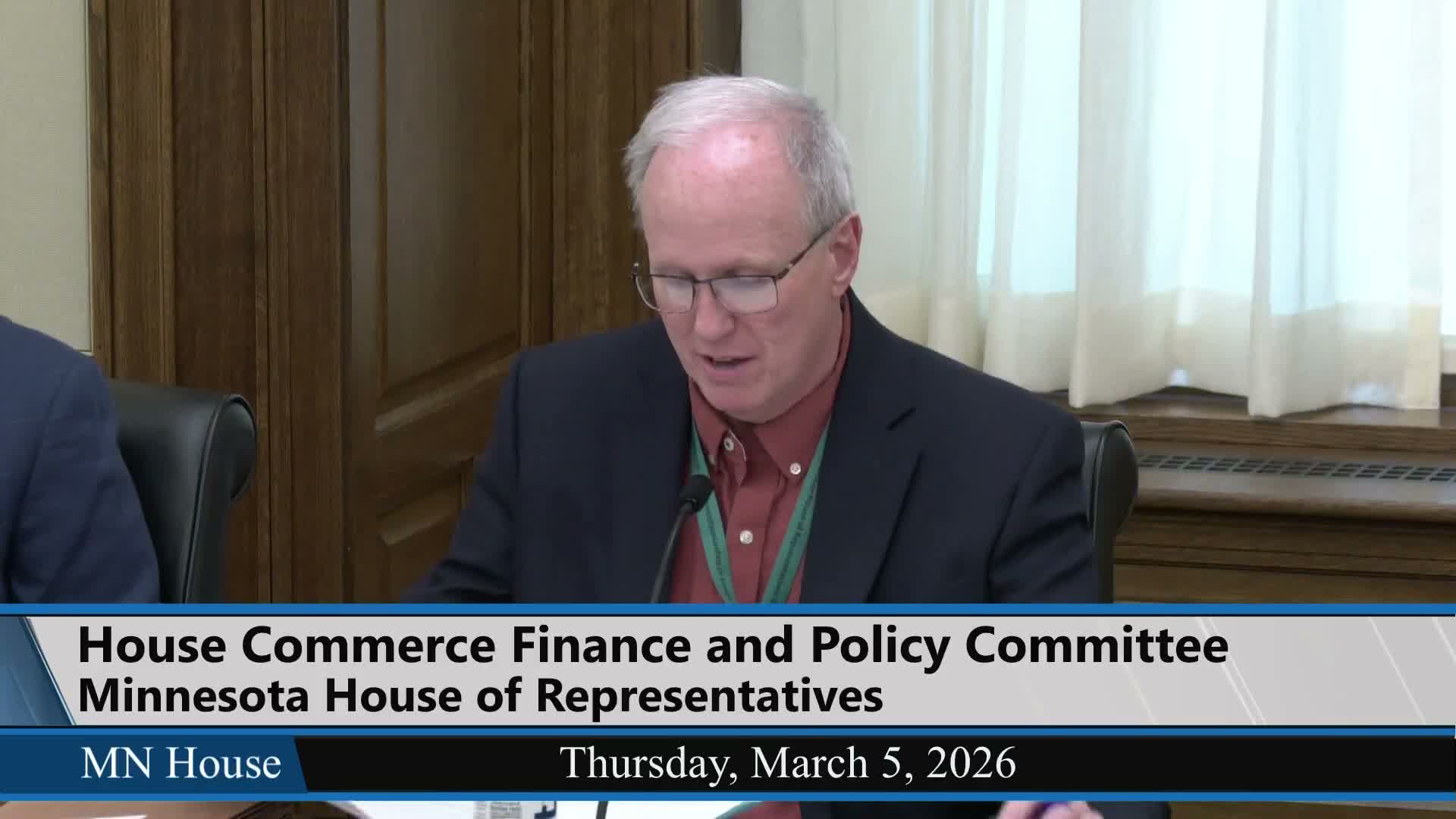
Summary
Rep. Perryman presented HF 400, a defrayal bill that would require the state to pay for any new mandatory health‑insurance benefits so premiums in the fully insured market do not rise. After testimony from business and insurer groups and extended member debate, the committee laid the bill over for further consideration.
Rep. Perryman (author) told the House Commerce, Finance and Policy Committee that House File 400 would let the state pay for the share of costs stemming from any new legislatively required health‑insurance benefits, a move she said would protect affordability for small employers and individuals who rely on the fully insured market.
Why it matters: The bill would preserve the legislature’s ability to require coverage while shifting the premium impact from private purchasers to state funding when the legislature determines a mandate is warranted. Proponents say that approach prevents mandated benefits from driving premiums higher for small employers and people who buy coverage on their own; opponents say it shifts costs onto taxpayers and risks subsidizing private plan administration rather than expanding access.
Business and insurer witnesses told the committee HF 400 addresses a policy lever the legislature controls. Jonathan Cotter, director of health care and commerce policy for the Minnesota Chamber of Commerce, said roughly 70% of the Chamber’s members offer insurance and that Minnesota already has one of the longest lists of state‑required benefit mandates. “When policymakers decide that there is a public health imperative for additional benefits, House File 400 offers the state the opportunity to invest in the health of those seeking them while also ensuring that costs for those who rely on coverage in the state's fully insured market don't increase,” Cotter said.
Dan Andreesen of the Minnesota Council of Health Plans described how defrayal operates under current Commerce Department practice and warned that adding mandates typically requires plans to collect more premium or increase cost‑sharing. He told members the defrayal process relies on verified paid claims and retrospective reimbursements, which plans can anticipate when setting rates.
Several lawmakers pushed back on portraying mandates only as cost drivers. Rep. Smith said many so‑called mandates simply ensure coverage for care people need and that a modest premium increase can protect patients from greater financial harm: “If you are on one of these plans and you go to a breast cancer screening and something comes up on that scan … you want that to be covered,” Smith said, adding that failing to require coverage can lead to large bills and medical bankruptcy.
Committee action and next steps: Committee members stressed that HF 400 addresses one of three related topics—overall premium drivers, whether the legislature should add mandates, and the defrayal mechanism itself—and said more study and discussion are needed. Rep. Perryman asked the committee to lay the bill over so members can continue those discussions; the committee laid HF 400 over for possible future consideration. No final vote on the bill’s merits occurred at the hearing.
What to watch: Committee members requested additional fiscal and scope details about which markets (individual, small group, fully insured large group) are affected and asked Commerce staff to provide follow‑up briefings on rate impacts and assessment mechanics before any final action.