
Committee declines to re‑refer $500,000 economic‑impact study of 'Operation Metro Surge'
Get AI-powered insights, summaries, and transcripts
Subscribe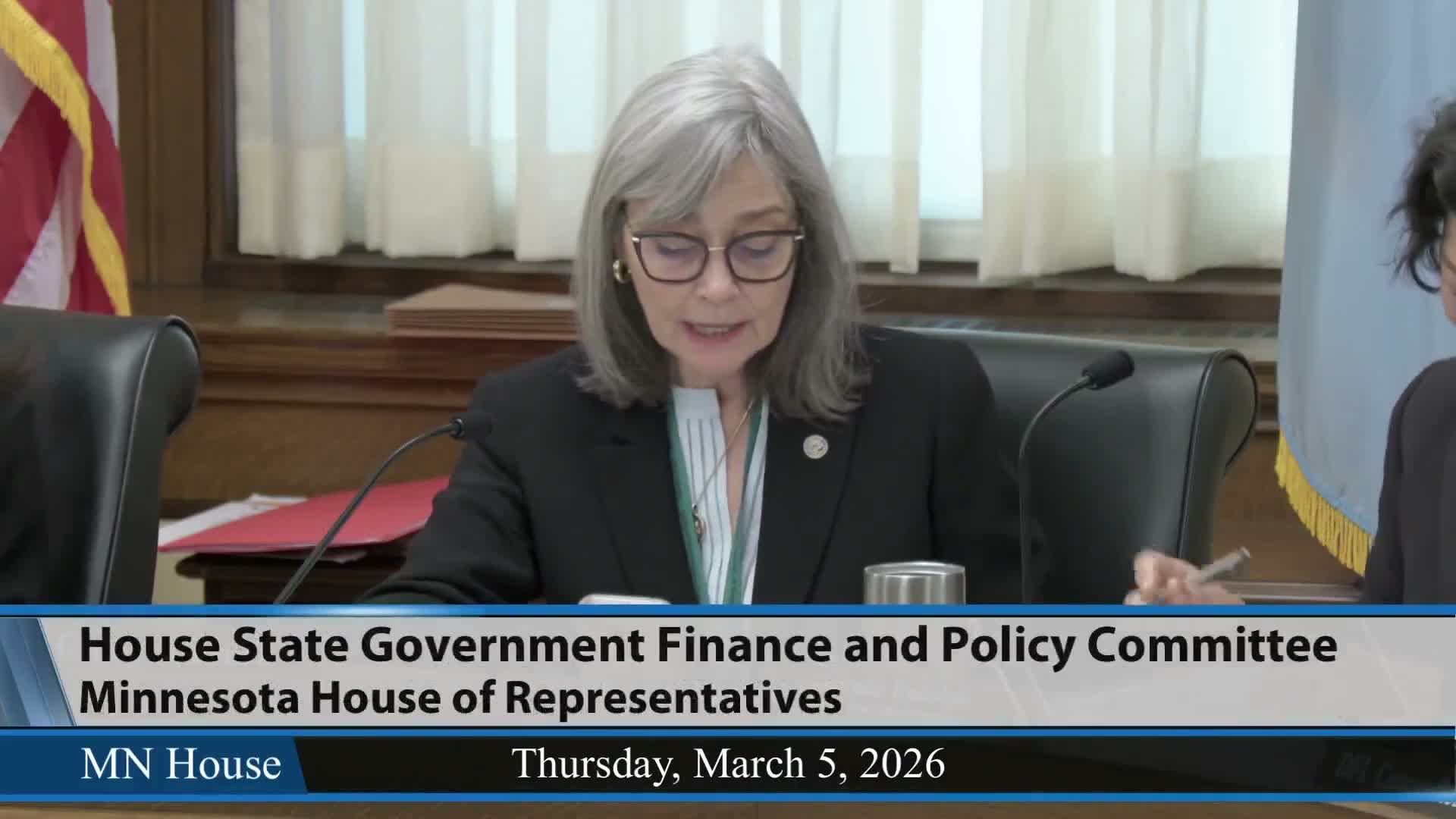
Summary
HF3480, which would commission a $500,000 independent statewide economic‑impact study of Operation Metro Surge, drew testimony from a Wilmer restaurant owner (read by Laura Santiago) and a Minneapolis impact assessment. Members disputed scope, methodology, and cost; a roll call to re‑refer the bill failed 6–7.
Representative Howard introduced House File 34‑80 and moved the author’s A2 amendment, which added a dollar amount and clarified study timing. Howard described the bill as a statewide independent economic‑impact study of Operation Metro Surge and said the measure is "what we should always be doing in this legislature" to gather hard data.
Laura Santiago read testimony for Christopher Gomez, a Wilmer restaurant owner, who described ICE agents detaining his parents after an off‑duty interaction: "In revenue alone, we lost at least $3,000 during the days we were closed... business has dropped because people were and continue to be afraid to leave their homes." Rachel Sayre, director of emergency management for Minneapolis, cited a preliminary city assessment estimating 76,000 residents in immediate need of food assistance, $47 million in lost wages, and $81 million in lost small‑business revenue for a one‑month period, and urged a statewide study.
Committee members pressed the author on who would conduct the study, with Representative Kosnick asking how a "nonpartisan entity" would be chosen; Howard said Minnesota Management and Budget would solicit proposals. Questions focused on the $500,000 cost, study methodology, and whether the study should examine causes and law‑enforcement actions that contributed to costs. After extended debate, a roll call was requested; with 6 ayes and 7 nays the motion to re‑refer HF34‑80 to Ways and Means did not prevail and the bill was not advanced.
The hearing compiled anecdotal testimony and preliminary local estimates but committee members said methodology, scope, and downstream fiscal consequences remain unresolved.