
Israel—s U.N. ambassador says Iranian missile and drone strikes have hit multiple countries; calls for more action
Get AI-powered insights, summaries, and transcripts
Subscribe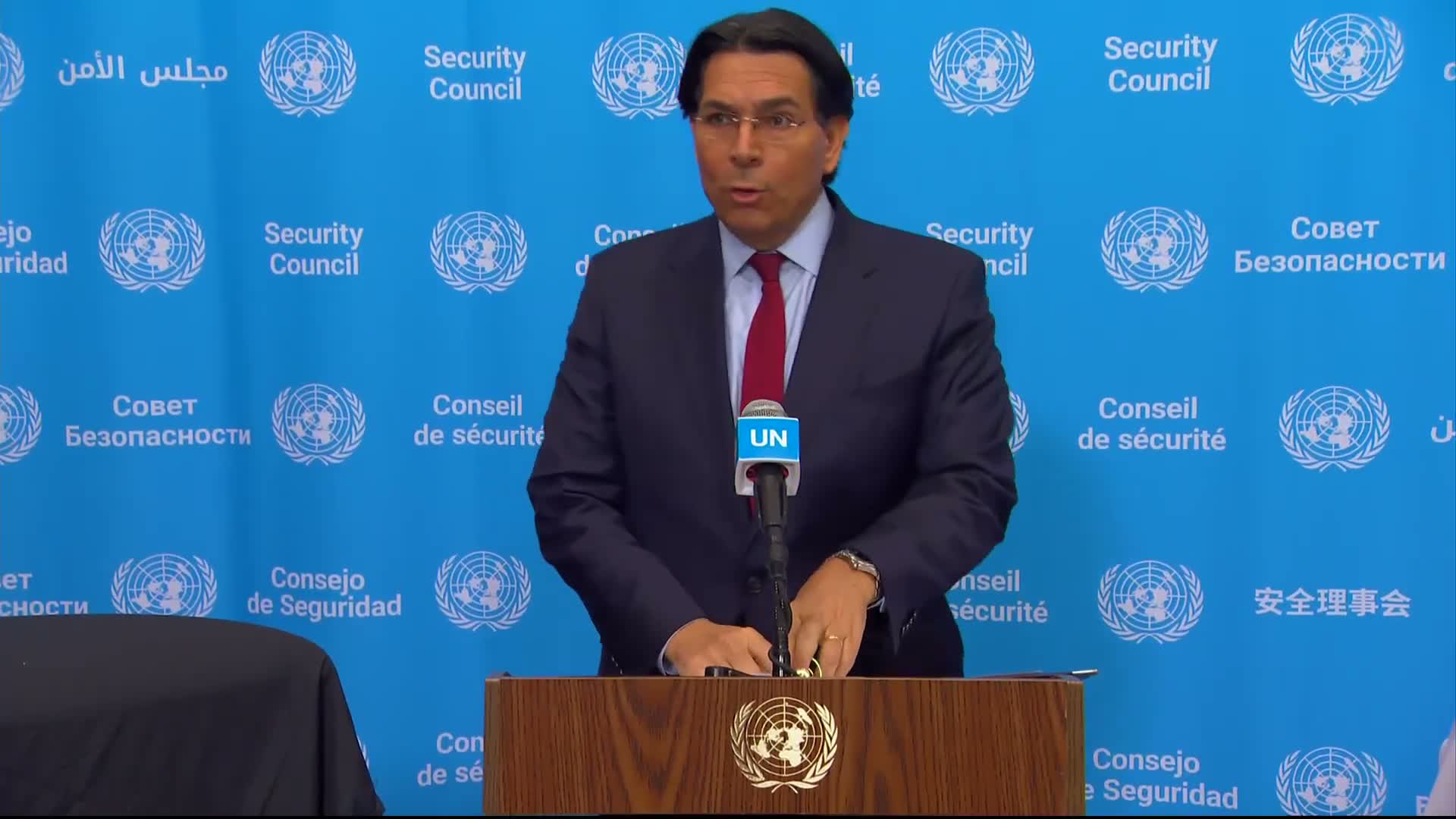
Summary
Danny Danon, Israel—s ambassador to the United Nations, told reporters that Iran has fired missiles and drones across the region "indiscriminately," citing claimed totals and warning that some drones can carry more than 100 pounds of explosives. He said Israel and the U.S. are targeting military infrastructure and urged patience as operations continue.
Danny Danon, Israel—s ambassador to the United Nations, told reporters on Monday that Iran has launched a widespread missile and drone campaign that has struck "airports, hotels, homes" across multiple countries and must be countered before diplomacy can proceed.
Danon opened the briefing by saying the strikes were not only aimed at Israel but at its neighbors, listing the United Arab Emirates, Bahrain, Saudi Arabia, Kuwait, Qatar, Oman, Iraq, Jordan and others. "More than 780 missiles fired. More than 1,600 rounds launched. 6 days, 13 countries," he said, describing the barrage as "indiscriminate aggression" and asserting that Iran—s forces are firing at civilian population centers.
The ambassador framed Israel—s response, conducted in concert with the United States, as narrowly targeted at military infrastructure. "We target missile launchers. We target command centers. We target terror. We do not target civilians. They do," Danon said.
Danon displayed and described what he called an Iranian Shahad attack drone, saying it was "not a prop, not a toy, a weapon," and warning it can travel long distances and "carry more than 100 pounds of explosives," a capability he said could, in time, reach cities in Europe and the United States. Those technical assertions and the specific counts Danon cited were presented by the ambassador as Israeli assessments and are not independently verified in this briefing.
Reporters pressed Danon on several fronts in a question-and-answer session. Pamela Falk of U.S. News & World Report asked about risks to global energy and the Strait of Hormuz; Danon said the United States and partners would ensure shipping lanes remain open and urged patience while the campaign continues.
Mary Ramati of Iran International asked whether reported succession developments inside Iran signaled a change in Tehran—s posture and whether the fall in strikes reflected a tactic or a loss of capacity. Danon said the reduction in missile activity was "not a tactic" but "reality," adding that Israeli strikes had degraded Iranian capabilities and that launches affecting Israel had dropped from "around 100" earlier to "maybe 20" now.
An unnamed questioner asked about orders in Beirut for civilians to leave certain areas and why Houthi forces appeared inactive in some theaters; Danon urged the Lebanese government to act against Hezbollah, credited public statements from Lebanese officials and said Israel seeks to minimize civilian casualties by warning civilians to move away from Hezbollah facilities.
When asked how Israel would persuade skeptical Americans that the campaign benefits U.S. security, a questioner identified as Zack was told to consider Iran—s actions over decades and the threat Danon described as "radicalism" that must be confronted. Linda Fasulo of NPR asked whether Hamas was acting as a proxy and whether Gulf states were coordinating; Danon said Israel shares intelligence with willing partners and judged Hamas currently unable to mount significant new attacks.
Edith Ledera of The Associated Press asked whether Israel supported diplomatic efforts to end the fighting; Danon said diplomacy would follow military steps to "finish the job" of dismantling capabilities, arguing that negotiations must come after those objectives are met.
On whether Israel planned a large-scale offensive in Lebanon akin to 1982, Danon said Israel had "no desire" for such an operation but would act if Hezbollah continued rocket fire, and he described an increased Israeli presence on the northern border to guard against escalation.
The briefing offered Israeli assessments and claims about Iranian operations, damage and intent; Danon repeatedly framed the campaign as a necessary response to what he called an escalating, regional threat. Several of the specific figures and technical descriptions he offered were presented as Israeli government assessments and were not independently corroborated during the session. The U.N. mission, regional governments and independent analysts were not present in the briefing to confirm those numbers.
The session ended after a short closing exchange; no formal vote or international decision was announced at the briefing.