Get AI Briefings, Transcripts & Alerts on Local & National Government Meetings — Forever.
Russell County supervisors split on $217,000 forensic-audit bid; board directs staff to seek schools-only proposal
Loading...
Summary
After public calls for transparency, the Russell County Board of Supervisors debated hiring UHY to perform a $217,000 forensic audit. Facing budget pressures and a projected $300,000 CSA shortfall, the board declined to approve the full countywide bid and directed staff to obtain a schools-only bid for consideration.
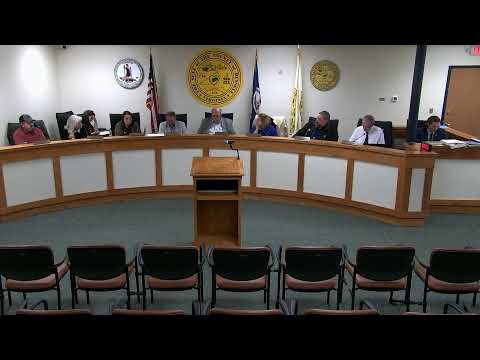
The Russell County Board of Supervisors on March 2 debated whether to hire UHY to perform a countywide forensic audit quoted at "$217,000 and some change," heard public calls for quick action, and ultimately directed staff to seek a narrowed, schools-only bid for further consideration.
Public commenter Wanda Burke urged the board to act, saying the audit promised when taxes were raised has been delayed: "I feel like we're just kinda pushing it aside and pushing it aside," she told the supervisors, adding that PSA records are now with the state police and that residents are demanding transparency. The plea helped focus discussion on both the audit's price and the county's ability to pay.
County Attorney (reporting on the audit options) summarized the forensic-audit committee's recommendation and the vendor price, stating, "The price breakdown as we see here, $217,000 and some change." Board members debated whether that figure included travel or per diem costs and whether the scope could be split by government entity (for example, schools only, PSA only, or BOS-only work).
Treasurer/board member Nate Kaiser argued the county had unanticipated revenue available and could cover the audit without raising taxes, citing year-to-date collections: "We're over $390,000 in tax collected in machinery and tool" and "in public services taxes, we've collected, over budget by $446,000... a total of, 836,506.82," he said. Other supervisors, including the chair, cautioned against relying on one-time revenue and emphasized mandatory, state-directed costs such as CSA (Comprehensive Services Act) obligations.
County Administrator and other board members outlined the fiscal risk from CSA, reporting a projected roughly $300,000 in additional CSA costs this fiscal year and noting high monthly costs for a very small number of individual cases (one child was described as costing approximately $20,000 per month). Those program-driven, mandatory costs were the main counterargument to immediately approving a countywide, one-time audit expense.
After procedural motions and a substitute motion to approve the full UHY bid, the board voted on how to proceed. It did not approve the full countywide UHY contract at this meeting. Instead the board directed the county attorney (and a designated board representative) to return to UHY and request an official, narrowed bid limited to auditing the schools and to report back; members said they wanted to compare the narrower school-only cost to the full bid before deciding on a countywide audit.
The meeting record shows the board asked the county attorney and county staff to negotiate or solicit a schools-only proposal from UHY and to present findings at a future meeting. No final countywide forensic audit contract was executed or funded in this session.
The board also discussed other budget and service items during the meeting, including project updates for VDOT Route 71 and the Route 1958 (Hanceville) intersection, grant renewals, and a $5,000 donation for the animal shelter. The board approved a $10,000 renewal for Southwest Virginia Legal Aid (Project Pathfinder) and accepted the Moose Lodge donation. The board also approved a request from the Cleveland life-saving crew to acquire a low-mileage rescue truck.
What happens next: the county attorney and designated board member will return with a school-only audit bid from UHY (or comparable cost breakdowns) for the board to review. The board also directed the budget committee to continue examining CSA and other mandatory obligations as it decides how to reconcile audit requests with fiscal constraints.