
Detroit Wayne Integrated Health Network highlights expansion of mobile crisis, urgent care and youth services
Get AI-powered insights, summaries, and transcripts
Subscribe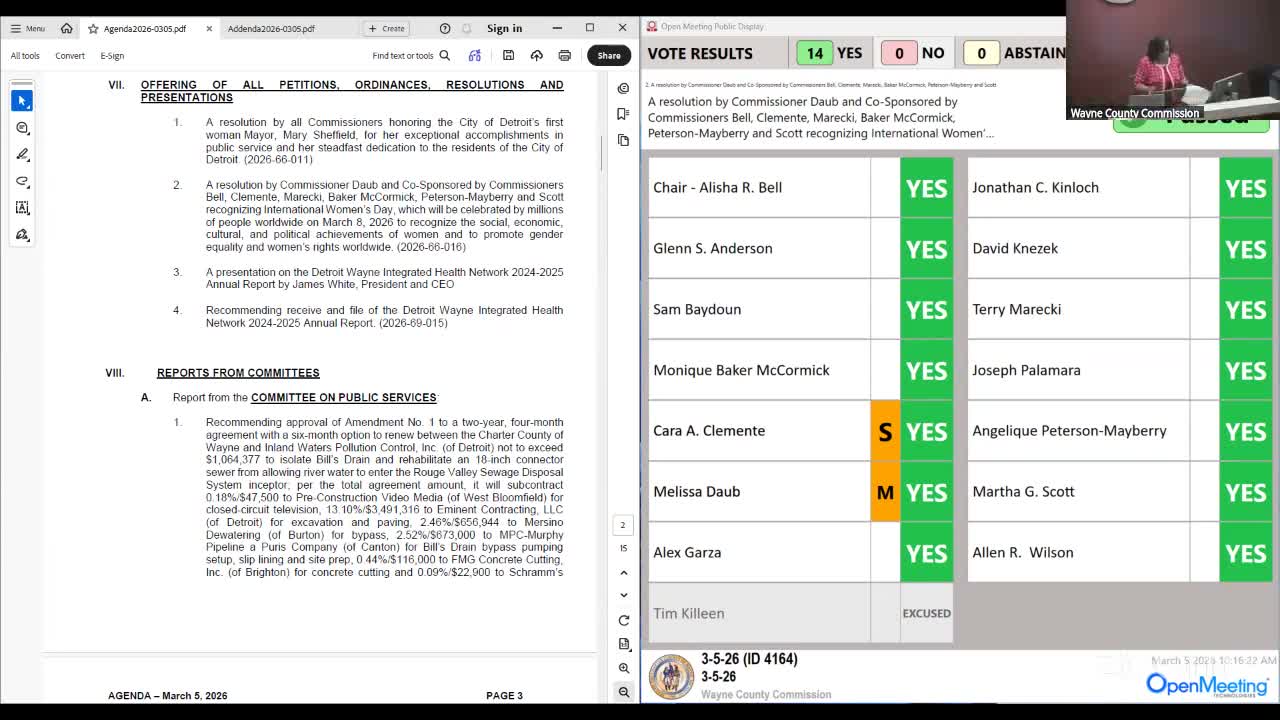
Summary
At the Wayne County Commission meeting, DWIN President and CEO presented the network’s 2024–25 annual report, reporting roughly 123,000 members, over 400 providers, 4,031 crisis-center presentations in June 2024, and that more than half of mobile-crisis encounters result in people remaining at home; commissioners moved to receive and file the report.
James White, president and chief executive of the Detroit Wayne Integrated Health Network, presented the network’s 2024–25 annual report to the Wayne County Commission and outlined recent expansions in crisis response, mobile services and youth programming.
White told commissioners the network serves “over a 123,000 members” across Wayne County and works with “over 400 providers” to deliver mental-health, substance-use, autism and developmental-disability supports. He emphasized mobile crisis teams and a behavioral health urgent care center as central elements of the network’s strategy.
“Over 50 percent of these encounters result in the person remaining in their home,” White said of mobile crisis responses, arguing that on-site crisis care reduces hospitalizations and unnecessary police involvement. He said the network has delivered thousands of mobile-crisis responses since opening its crisis center at 707 Milwaukee and reported 4,031 presentations to the urgent care center in June 2024; mobile-crisis contacts were reported at about 4,740.
White described a planned expansion, including a second crisis center near 7 Mile expected to open in late fall or early winter. He also said the network is developing a long-term psychiatric and geriatric facility at the former Riverview Hospital site (described as part of a 52-bed facility focused on long-term psychiatric and geriatric care).
Commissioners asked for operational and outreach details. Commissioner Peterson Mayberry commended recent Narcan trainings and urged more town halls and school outreach to reduce stigma and increase awareness. White said the network plans community engagement events, school partnerships, and “mobile clinic” days to increase visibility and access across Wayne County.
Several commissioners asked for clarifications about service counts and program partnerships. White said the 4,031 crisis-center presentations were logged in June 2024 and that mobile-crisis encounters numbered roughly 4,740 since the program’s start; he said he would follow up with precise annual service counts on request. Hector Roman, speaking later as county IT director on an unrelated item, confirmed county procedures for equipment disposal when commissioners raised questions about other agenda items.
After the presentation, the commission moved to receive and file the DWIN annual report; the motion to receive and file was made, supported and carried.
The network left commissioners a printed packet of program details for distribution to constituents, and White invited commissioners to upcoming walkthroughs of the new site and outreach events.