Get Full Government Meeting Transcripts, Videos, & Alerts Forever!
Get email alerts on the Healthcare topic
No spam. Unsubscribe anytime.
South Peninsula Hospital reports growth, points to EHR transition and staffing expansions
Summary
South Peninsula Hospital CEO Ryan Smith told the Kenai Peninsula Borough Assembly the hospital has grown outpatient and surgical volumes and reported increased operating revenue and staffing costs; he described an Epic electronic health record conversion being repaid via borough-supported lease arrangements and said the hospital is expanding behavioral health services and employee housing.
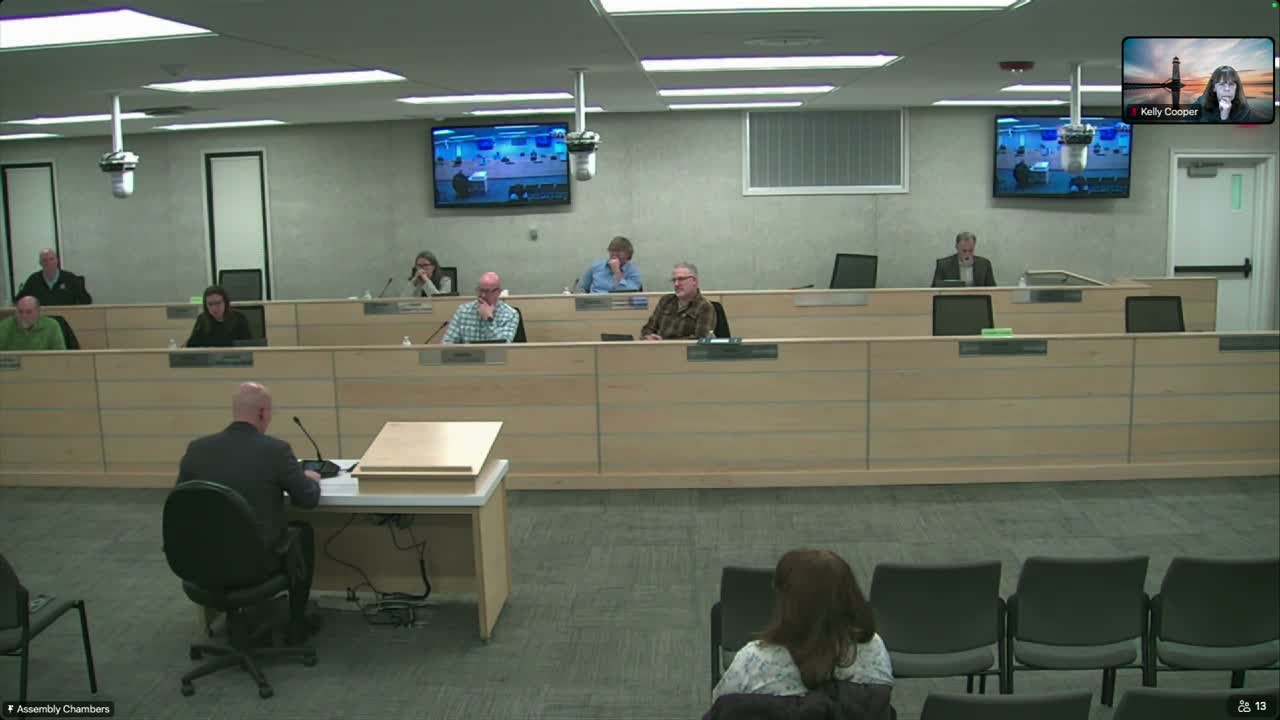
Ryan Smith, chief executive officer of South Peninsula Hospital, told the Kenai Peninsula Borough Assembly on Nov. 18 that the hospital has seen significant growth in outpatient volumes and is adjusting operations to meet demand.
Smith said the hospital’s operating revenue has risen substantially over the past decade (the presentation cited growth from about $70 million to roughly $168 million), and that salaries and wages have risen over the same period (presenter cited an increase from about $45 million to $109 million). He reported a net income of $9 million for 2025 and described a $5 million estimate for the current year in the presentation.
Why it matters: the hospital is a primary provider on the southern peninsula; changes to its finances, staffing and information systems affect access to care and local budgets.
Smith described increases in clinical activity (he reported higher counts for surgeries, outpatient visits, emergency room visits and infusion visits) and said the hospital is evaluating campus expansion to serve growing ambulatory needs. The presentation noted the hospital has two operating rooms and one procedure room and that surgical case volumes in those rooms have risen.
Smith briefed the assembly on a recent conversion to the Epic electronic health record. He said the hospital paid Epic implementation invoices and submitted them to the borough; the hospital is repaying the borough through lease payments over a multi-year schedule (he indicated a roughly five-year repayment timeline). "We submitted those invoices to the borough, and we are currently paying the borough back in the lease payments," Smith said.
On workforce and services, Smith said the hospital has added clinical staff, including its first full-time neurologist on the southern peninsula, the first full-time pediatrician for the area, and new specialty coverage (including dermatology and reconstructive plastic surgery). He also noted an expansion of behavioral health staffing — including adding a full-time psychiatrist — and described ongoing collaboration with local behavioral health partners and a community health needs assessment to inform service planning.
Smith outlined nonclinical investments: the hospital opened an employee childcare center licensed for 62 children (a soft opening with a small initial cohort), and he described a long-term lease arrangement that allowed the hospital to pursue a 25-unit employee housing project intended to relieve local housing pressure. Smith also identified infrastructure work being planned or under way (presenter referred to a $5 million infrastructure update to purchase new generators and upgrade systems).
On capital and bonds, Smith said bond repayments are scheduled so that, if no new bonds are issued, the hospital would be left only with a mill levy for capital improvements, noting payoff years for outstanding bonds in the presentation.
Smith closed by thanking the assembly and offering to answer questions.
Assemblymembers asked follow-up questions about the Epic conversion repayment and behavioral health capacity. Smith reiterated the repayment plan to the borough and outlined steps taken to expand behavioral health services and partnerships to meet local needs.
The assembly did not take formal action on hospital items during the meeting.