Get Full Government Meeting Transcripts, Videos, & Alerts Forever!
Get email alerts on the Property Tax Assessment Cap topic
No spam. Unsubscribe anytime.
Kenai Peninsula Borough mayor asks Alaska Legislature to let municipalities cap year-to-year property assessment increases
Summary
The borough’s mayor told the legislative committee that sharp valuation spikes have strained residents and urged the Assembly to request state permission under Title 29 to allow a 5% (or higher) cap on annual assessment increases; the committee pulled the item from the consent agenda for fuller debate at the evening assembly meeting.
Mayor Michicky asked the Kenai Peninsula Borough Assembly’s legislative committee on Monday to back Resolution 25-046, a request that the Alaska Legislature allow municipalities under Title 29 to cap year-to-year increases in the full and true value of real property.
The mayor told the committee the borough recently experienced “a 34% over 3 year increase in valuations,” and said that sudden spikes in valuations — even when mill rates remain steady — create acute hardship for residents on fixed incomes. “This is about permission,” she said, arguing the resolution would give local officials the option to draft an ordinance that could limit annual valuation increases to around 5% so the borough can “smooth that curve” and avoid sharp peaks that hit working families and seniors.
The request is not an ordinance and would not itself change assessments; if the Legislature grants authority, the borough would need to draft and adopt a local ordinance spelling out what properties are covered and how exceptions or triggers would work. Assemblymember Cooper said she wants to be added as a cosponsor and emphasized that significant code and drafting work would follow if the state grants the requested authority. Assemblymember Neeson voiced support and also asked to be added as a sponsor.
Several assembly members raised implementation questions. Assemblymember Bridal, while supporting the concept, asked whether any cap should also limit decreases in assessed values after events such as property loss or disaster, noting that triggers would be required to address such situations. Assemblymember Hicks asked whether any future ordinance would apply only to primary residential property or to commercial properties and trusts as well.
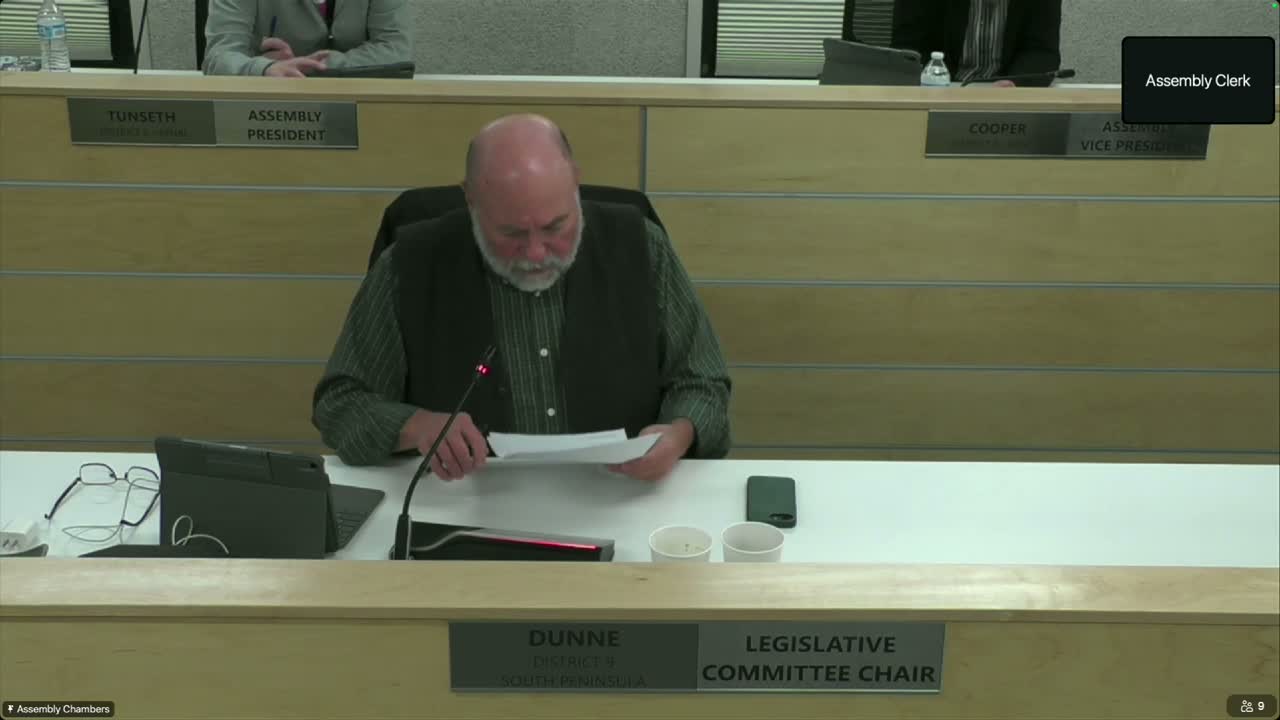
Chair Dunn flagged public comment filed with the committee packet, including a detailed letter from Soldotna resident Tyson Cox, and said he planned to remove the resolution from the consent agenda so the full Assembly can discuss unintended consequences at the evening meeting. The mayor said there is some legislative interest in the subject and that the borough would seek support from organizations such as the Alaska Municipal League; she offered to provide longer historical valuation data if members wanted more analysis.
Members also questioned language in the proposed resolution that caps the “full and true value” increase rather than the assessment, and the mayor replied that Title 29 terminology limits available phrasing; she said ordinance language could use different terms if the borough ultimately drafts a local policy.
The legislative committee took no formal vote on the resolution; Chair Dunn adjourned the committee at 5:08 p.m., and the item was scheduled for further discussion by the full Assembly later that evening.