
Missouri committee weighs bill to let short-term programs access Workforce Pell grants
Get AI-powered insights, summaries, and transcripts
Subscribe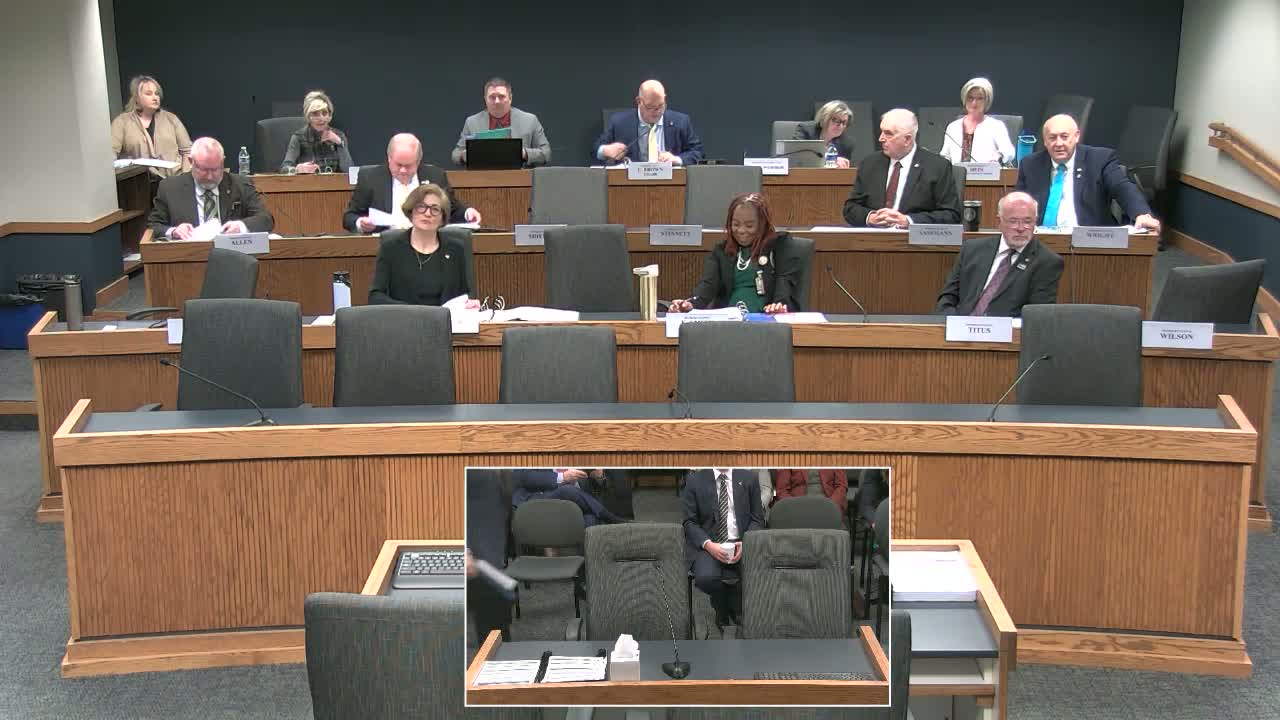
Summary
House Bill 2585 would align state workforce statutes with federal rules and create a process for short-term training programs to qualify for Workforce Pell; witnesses from community colleges and business groups supported the bill while lawmakers pressed for clarity on board composition, reporting metrics and staffing.
House Bill 2585, presented to the Committee on Higher Education and Workforce Development as the bill to operationalize the federal Workforce Pell program, seeks to update Missouri statutes so short-term, high-value training programs can become eligible for Pell grants.
The sponsor (listed on the daily agenda as Representative Casteel) spoke to the committee and then identified himself as Representative David Castile (97th District) when presenting the bill. He said HB 2585 would align Missouri’s workforce board statutes with the Workforce Innovation and Opportunity Act, add a new section (620.514) to operationalize federal workforce programs and provide criteria tying program eligibility to outcomes and earnings data.
Committee members asked how many institutions would qualify; whether smaller and rural programs would be disadvantaged; how frequently high-wage or in-demand designations would be updated; who would staff the board (Department of Economic Development vs. the Department of Higher Education and Workforce Development); and how the state would collect and audit outcome data such as completion, placement and earnings.
Witnesses in support included Brian Milner, president of the Missouri Community College Association, who told the committee all 12 community colleges believe they have programs likely to be eligible and outlined five broad program categories: construction/building trades, health care, IT, manufacturing and transportation/logistics. Milner summarized federal eligibility criteria described in the hearing: a minimum of 150 clock hours (about eight weeks), a 3-year rolling data process, value-added earnings measured against 150% of the federal poverty level, and program thresholds including a 70% completion rate and a 70% job-placement rate on a three-year rolling average.
Witnesses and committee members also discussed a 12-semester cap on Pell eligibility overall and practical challenges in collecting earnings data for completers who move across state lines. Committee members urged clearer statutory language on who staffs and supports the board and on board membership so the state can act quickly if federal Workforce Pell rules create an opportunity as early as July 1, 2026.
The Missouri Chamber and other business groups voiced support, saying workforce shortages make the program a priority for employers. Susan Heegard of the Midwestern Higher Education Compact gave an informational presentation on regional higher-education data and the compact’s work convening states on issues such as workforce Pell, cost savings and reciprocity agreements.
The hearing ended with no committee vote; sponsors and witnesses said they would provide follow-up information on board membership, staffing and specific statutory cross-references.
What’s next: committee members asked for clarifying language on board composition, staffing and the 150%-of-poverty threshold; sponsors and witnesses said they would provide additional details and documentation.