
Hearing on bill to replace 'imminent danger' with 'predictable harm' spotlights court-ordered treatment and legal concerns
Get AI-powered insights, summaries, and transcripts
Subscribe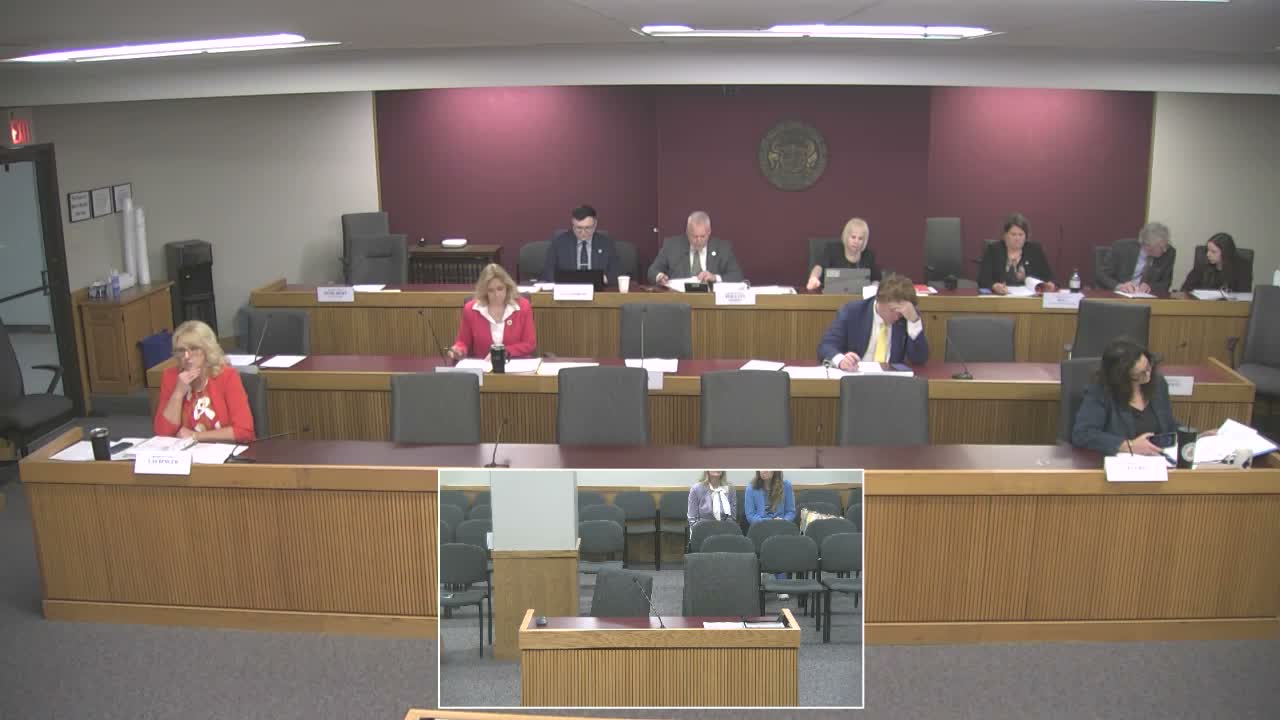
Summary
Representative Tricia Burns told the Committee on Legislative Review that House Bill 25 12 would let courts act earlier by allowing a 'qualified petitioner' to seek court‑ordered long‑acting injectable treatment for people with severe psychotic disorders; opponents warned the measure raises constitutional, clinical and statutory conflicts, citing statutes 632.704 and 632.707 and concerns about forced long‑term injectables.
Representative Tricia Burns introduced House Bill 25 12 to the Committee on Legislative Review, saying the measure would replace the current "imminent danger" standard with a "predictable harm" standard and create a process for a "qualified petitioner" to seek court-ordered treatment for people with severe psychotic disorders. Burns, who identified herself as the bill sponsor and representative for District 63, said the change is intended to give families legal tools when existing options such as guardianship and 96‑hour holds repeatedly fail to secure sustained treatment. "There is very little tools for family members of the severely ill," Burns said, arguing that repeated short hospital holds often end without meaningful treatment or family notice.
Burns described the bill as including due‑process safeguards and documentation requirements so courts could authorize interventions such as long‑acting injectable antipsychotics in documented, severe cases. She said some patients who receive long‑acting injectables show sustained improvement and that earlier intervention could prevent episodes that later result in incarceration rather than treatment.
Committee members pressed Burns on how the proposed "predictable harm" standard differs from the existing 96‑hour psychiatric hold. Burns said the bill seeks to create a pattern-of-behavior approach backed by documentation rather than relying on a single 96‑hour encounter. Representative Fuchs, citing a family experience, asked whether the bill would move up the point of intervention; Burns answered that it would, to try to prevent deterioration of severe psychotic illness.
Lisa Pinette, testifying for Armervine in opposition, urged the committee to clarify several provisions she said raise legal and clinical problems. Pinette cited Missouri statutes 632.704 (emergency detention and physician authority to administer antipsychotics during evaluation) and 632.707 (interfering with execution of court orders) and said the bill as drafted could permit long‑term injectable treatment against a patient's will, raise questions about the standard for "lacks the capacity to make an informed decision," and create liability and criminal penalties for clinics that decline to comply with court orders. "This is against their will … these are long term injectables," Pinette said, asking for clearer checks and balances and for the sponsor to address the concerns.
Burns responded to the clinic‑compliance concern by saying there are situations in which injection clinics turn patients away even when a court order exists, and that the bill aims to address those practical barriers alongside due‑process protections. Members and the sponsor also discussed the downstream question of bed capacity and post‑hospital care, acknowledging that enabling earlier court‑ordered treatment would require additional treatment resources.
With no further testimony, the committee concluded the hearing on House Bill 25 12. No committee vote on the bill was recorded at the hearing.