Get Full Government Meeting Transcripts, Videos, & Alerts Forever!
Lawmakers and industry back combining film/TV tax-credit buckets and extending sunset to spur more productions
Summary
Sponsors presented bills to merge two $8 million film-credit buckets into a single $16 million pool and extend the sunset to 2035; industry witnesses said the change would make Missouri more competitive and support infrastructure and workforce development.
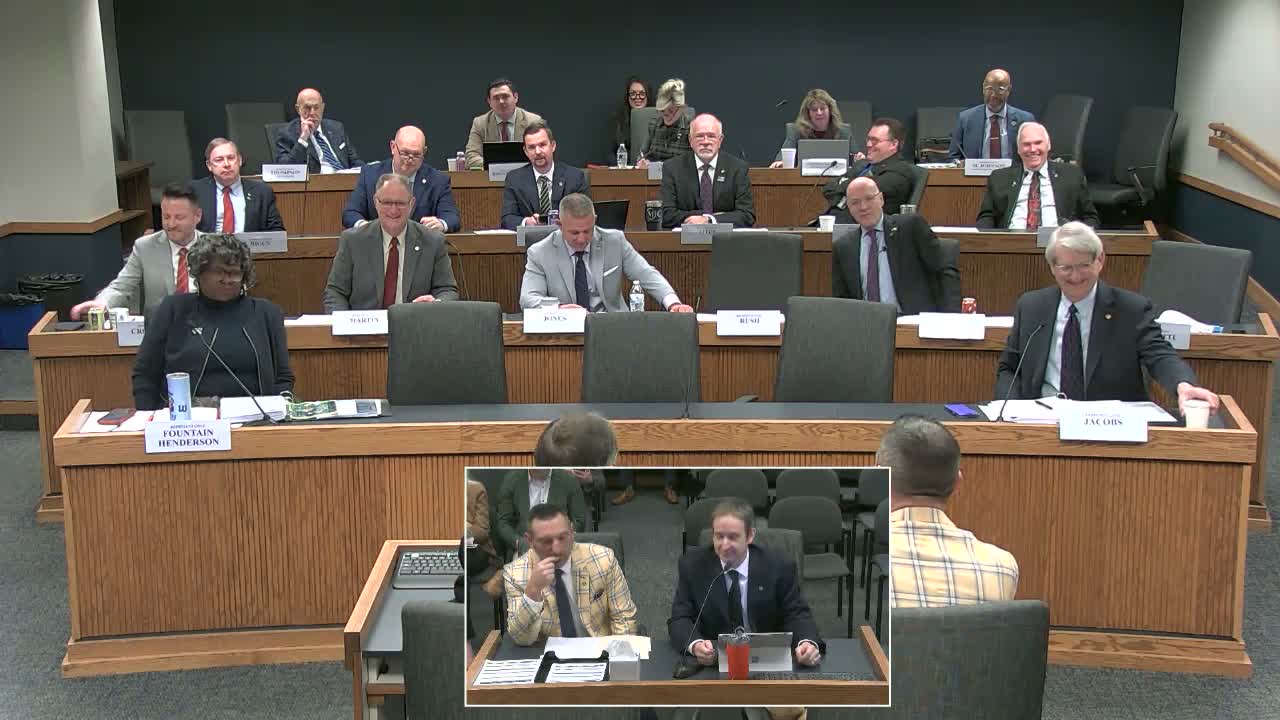
Representatives Colin Wallenkamp and Jeff Vernetti told the committee their bills would make Missouri's film and television tax incentive more competitive by combining two $8 million buckets into one $16 million pool and extending the program’s sunset to 2035. "If it's simply one bucket with $16 million, the industry can decide for itself which one they want to use," Wallenkamp said, arguing the change would avoid forcing productions into an artificial choice that…
Already have an account? Log in
Subscribe to keep reading
Unlock the rest of this article — and every article on Citizen Portal.
- Unlimited articles
- AI-powered breakdowns of topics, speakers, decisions, and budgets
- Instant alerts when your location has a new meeting
- Follow topics and more locations
- 1,000 AI Insights / month, plus AI Chat