Get AI Briefings, Transcripts & Alerts on Local & National Government Meetings — Forever.
Committee hears competing views on HB 3,088, a bill targeting anti‑steering, gag and most‑favored‑nation contract clauses
Summary
Representative Dane Deal presented House Bill 3,088 to limit contract terms (anti‑steering, anti‑tiering, gag clauses, most‑favored‑nation) that proponents say restrict consumer choice and drive up health care costs. Insurers and market advocates supported the bill; hospital groups warned it could harm rural providers and disrupt negotiated contracts.
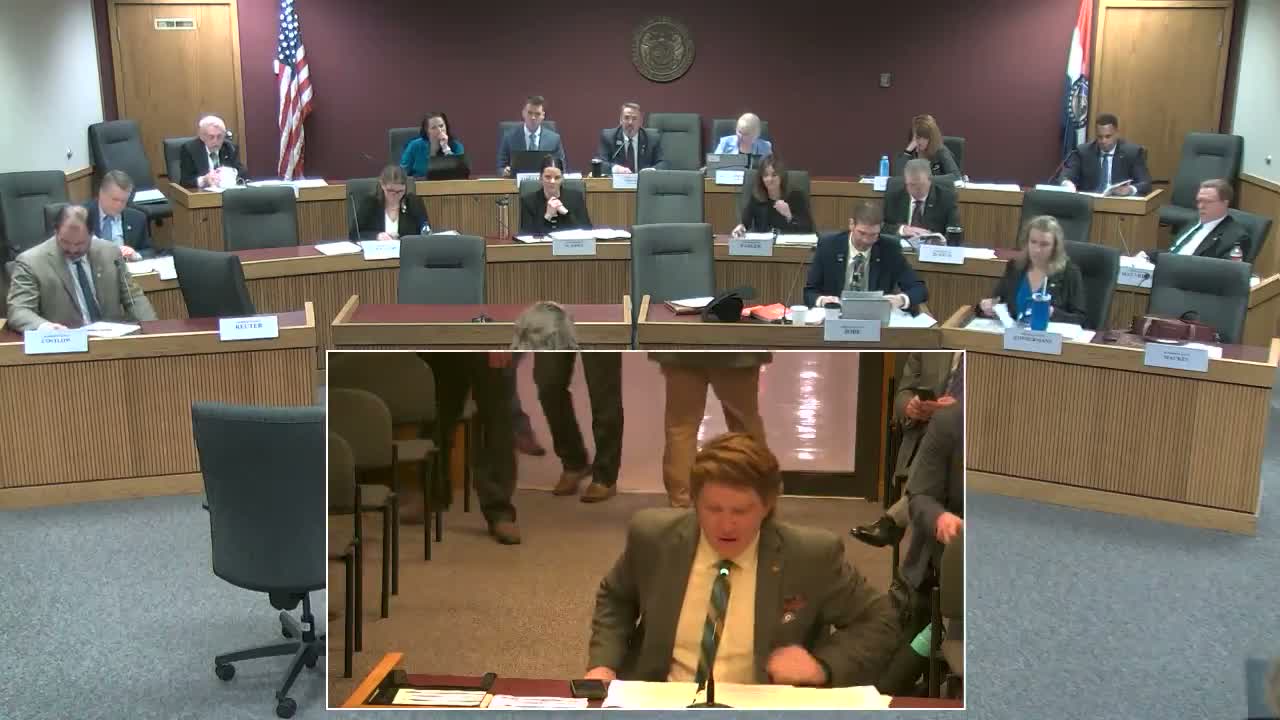
Representative Dane Deal introduced House Bill 3,088 as an anti‑consolidation, pro‑consumer measure aimed at contract clauses he said can prevent price‑shopping and lock patients into higher‑cost providers. Deal described the bill's targeted clauses — anti‑steering, anti‑tiering, gag clauses and most‑favored‑nation provisions — and said the intent is to preserve local options and protect rural hospital access.
Supporters described concrete examples. Adam Meyer (Cicero Action) and Hampton Williams (Missouri Insurance Coalition) explained how anti‑steering and anti‑tiering clauses can prevent insurers from offering tiered cost‑sharing or apps that push patients to lower‑cost providers; they argued the measures would promote competition and bend the health‑care cost curve. James Harris (FGA Action) and Josh Haines (Elevance Health) added that right‑to‑shop tools and cash‑back incentives can be blocked by restrictive contract terms and urged preemptive state action.
Opponents, led by Eric Vanderweerd of the Missouri Hospital Association, said many rural hospitals operate on margins near break‑even and rely on negotiated contract terms to ensure predictable revenue and network adequacy. Vanderweerd urged that the bill be carefully redrafted to avoid unintended consequences and suggested allowing full contract renegotiation rather than striking terms unilaterally.
Committee members asked detailed questions about market effects, network adequacy, the 340B drug‑pricing program, and whether the bill would advantage insurance carriers at hospitals' expense. Supporters said the bill mirrors actions taken in other states and is intended to protect patients and payers alike; opponents said the drafting lacked guardrails and could destabilize provider finances. The committee concluded the hearing without final action.