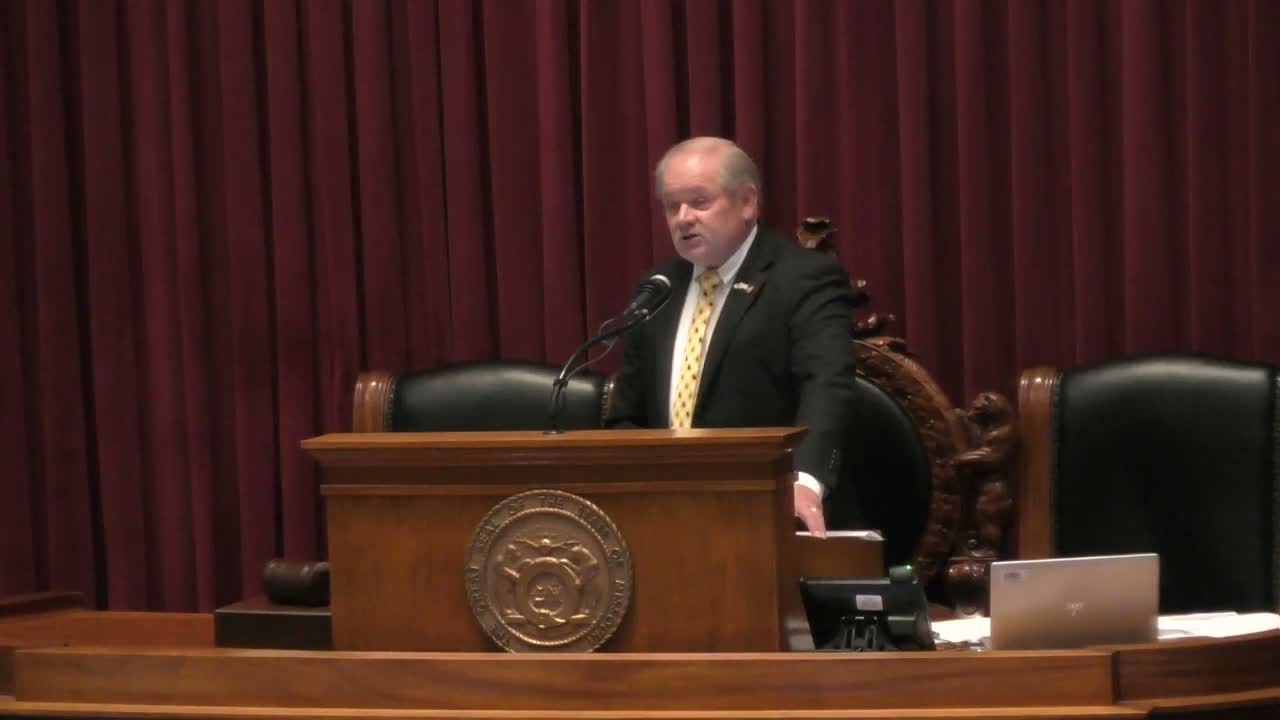
House endorses committee substitute to restore voting rights for people on probation or parole
Loading...
Summary
The House adopted a committee substitute (combining HB2592, HB2787 and HB2834) to restore voting rights to Missourians on probation or parole who are not incarcerated. Sponsors argued the change promotes reentry and civic engagement; members asked practical implementation questions about early voting and provisional ballots.
Representative (S26) presented the committee substitute combining HB2592, HB2787 and HB2834, saying the measure "restores the right to vote to Missourians who are currently on probation or parole." The sponsor framed the bill as an issue of civic reintegration and public safety: individuals living and working in communities, participating in treatment and complying with supervision should not be denied the ballot if they are not incarcerated.
Several members recounted constituent stories motivating the bill, including formerly incarcerated residents who could not vote while serving lifetime supervision or long-term parole. Corrections and elections committee members described the committee process and said the measure was vetted; one sponsor noted the corrections committee vote was 14–0 and the rules committee 11–0. The floor discussion focused on administrative questions: how polling-place staff or local election authorities would determine eligibility at the point of voting, how provisional ballots and early votes would be handled if a voter later became incarcerated, and how many people are affected statewide. The sponsor said the policy draws an existing bright line: if a person is incarcerated they cannot vote; once no longer incarcerated, even if on parole or probation, they may register and vote.
Some members raised concerns about the potential political effects of expanding the electorate and asked for data on the number of affected voters; proponents said the count is not overwhelming and argued civic reintegration reduces recidivism. After debate the House adopted the committee substitute and ordered it perfected and printed.