
House advances property-tax reform package aimed at stabilizing levies
Get AI-powered insights, summaries, and transcripts
Subscribe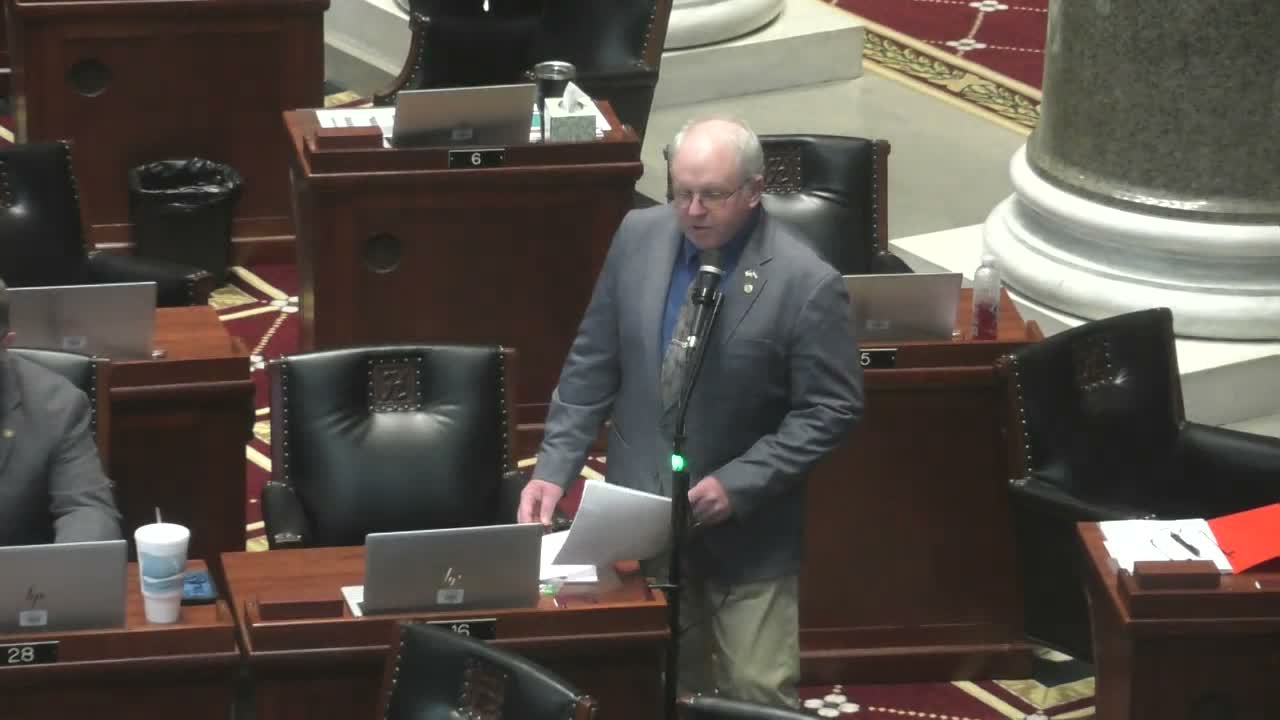
Summary
The Missouri House approved House Committee Substitute No. 2 for House Bill 2780 after extended debate. Sponsor Rep. Cooper said the package splits earlier omnibus proposals and focuses on Hancock 'siloing' by subclass, a school-levy base change, commercial inspection protections and a procedural Hancock "fix."
Representative Cooper, the bill sponsor and chair of the special committee on property tax reform, presented House Committee Substitute No. 2 for House Bill 2780 as a narrowed, four-part package aimed at easing sudden property-tax spikes for homeowners and stabilizing local levies. "This is round 2 of ... house bill 27 80," Cooper said, then outlined four components: applying Hancock rollbacks by subclass, adjusting school levy-base language, extending 15% physical-inspection protections to commercial property, and a "Murphy Hancock" fix that prevents a new levy from taking effect until the prior one expires.
Supporters described Hancock-by-subclass as the bill’s cornerstone. Cooper said separating real property, commercial, ag and personal property into distinct subclasses prevents an assessment spike in one category from being masked by static or declining values in others, and ensures rollbacks, when appropriate, affect the correct subclass. "By having each subclass fall under Hancock provisions on their own ... the rollbacks will take effect within that subclass," he said.
Members pressed the sponsor about schooling funding and the foundation formula. Several lawmakers asked how the bill’s negotiated change of a school-minimum levy figure (committee-amended to $2.20 from earlier proposals) would interact with the foundation formula and potential state or federal reimbursement. Cooper said the $2.20 figure was a committee compromise and emphasized the bill is not intended to defund schools: "What I'm not trying to do is to defund schools," he said, adding districts below the prior base would start at $2.75 under the amendment so taxpayers in those districts would not see an immediate increase.
The bill also contains a provision requiring on-site inspections for commercial property assessments that increase by more than 15 percent, similar to a current residential requirement, and a procedural fix governing when a new levy can take effect relative to an expiring levy.
After extended questioning and floor discussion by members from both sides of the aisle, Cooper closed and the House adopted the committee substitute and ordered it perfected and printed. The sponsor urged the body to send the bill to the Senate so senators could continue work and bring back any further changes.