
House orders perfected bill to narrow Hancock cap to 3% when inflation exceeds 3% and adopts amendments on assessment methods
Get AI-powered insights, summaries, and transcripts
Subscribe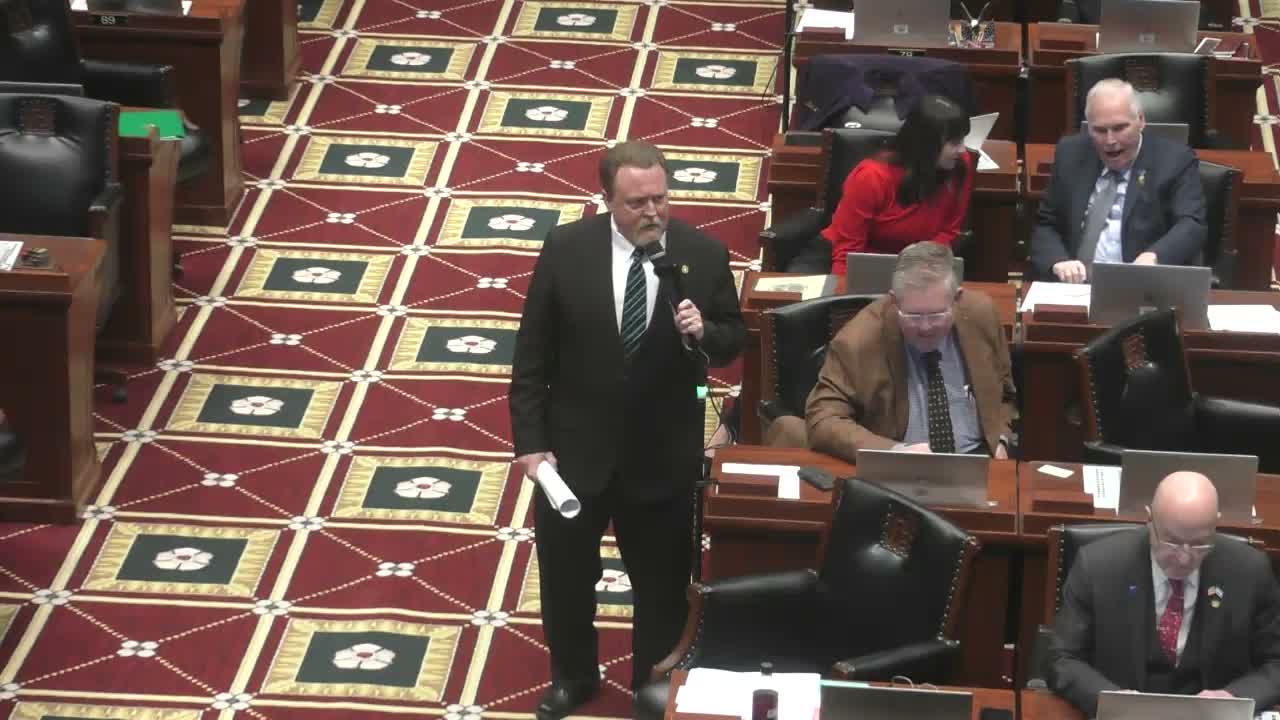
Summary
Representative from Saint Charles led passage to perfect House Bill 1800 as amended, which would limit new revenue growth from reassessed property to 3% (when CPI exceeds 3%) and incorporates an amendment changing valuation guidance and compliance ranges for assessors; floor debate raised concerns about under‑assessment and impacts on schools and local taxing entities.
Representative from Saint Charles presented House Bill 1800, which would limit additional revenue generated from reassessed property to a 3% cap when inflation (CPI) is above 3%, narrowing an existing higher threshold used in some cases. The sponsor said the change protects families by limiting the rate at which taxing entities can increase revenue when inflation spikes.
Representative from Andrew offered Amendment 2 as a substitute that requires assessors to use the cost approach reconciled with other valuation methods and adjusts compliance ranges for assessors; supporters said the change helps underassessing rural counties and provides a pathway to compliance. Opponents argued reducing targets to a 70% lower bound risks underassessment and could shift burdens to schools and other taxing entities.
Floor debate included questions about how often the CPI exceed 3% (members cited 17 times in 40 years or roughly a third of years), the interaction with reassessment cycles and the Hancock rollback process, and whether title language changes narrowed or expanded the bill’s coverage. After extended debate the House adopted the amendment and ordered House Bill 1800 as amended perfected and printed.
Next steps: House ordered HB1800 as amended perfected and printed; further committee or floor steps will determine final form and fiscal impacts.