Alaska Senate hearing on SB 161 draws sharp divisions between subsistence tribes and Gulf fishing interests
Loading...
Summary
At a March 4 Senate Resources Committee hearing, tribes, conservation groups and some sport‑fishing organizations urged a ban on gear that makes substantial bottom contact to protect salmon and seafloor habitat; processors and trawl representatives warned the statewide ban would harm coastal communities. The committee set SB 161 aside for further consideration.
The Alaska Senate Resources Committee heard more than three hours of testimony on March 4 on Senate Bill 161, which would prohibit trawl and dredge fishing gear that makes "substantial bottom contact" in state waters beginning in 2028 and direct the Department of Fish and Game to study seafloor impacts and bycatch over the previous decade.
Senator Mike Cronk, the bill sponsor, told the committee the measure would both ban gear that contacts the sea floor and require a comprehensive ADF&G study into habitat and bycatch impacts. "This bill would ban the use of any trawler dredge gear or fishing gear that makes substantial bottom contact with the sea floor starting in 2028," Cronk said. He framed the bill as protecting the resource and carrying out constitutional duties to manage fisheries for "the maximum benefit of the people of Alaska."
Tribal leaders and conservation organizations gave the bill broad support. Brian Ridley, chief and chair of the Tanana Chiefs Conference, described profound declines on the Yukon River and said tribes had borne conservation burdens while ocean interception continued. "Salmon is our identity, ceremony, and cultural continuity," Ridley said, arguing that SB 161 would create protective corridors while studies were completed. Richard Peterson, president of Tlingit & Haida, said state waters are not biologically separate from federal waters and urged targeted protections and transparency on habitat health and bycatch.
Environmental groups including Oceana and Alaska Environment emphasized seafloor damage and long recovery times for corals and sponges. "Bottom trawling is widely recognized as one of the most damaging and disruptive fishing methods for seafloor ecosystems," Lauren Hines of Oceana told the committee.
Industry witnesses warned of economic harm in Gulf communities if the bill advanced. Patrick O'Donnell, president of the Alaska Whitefish Trawlers Association, said bottom trawling is already restricted in many state waters and that Kodiak processors and family‑owned trawlers rely on the fisheries that would be affected. "The Kodiak trawl fleet supports processing and seven families per vessel," O'Donnell said, urging the committee to weigh local economic consequences.
Several fisheries analysts and community development representatives urged a more targeted, science‑driven approach. Charlotte Levy, fishery analyst for Aleutian East Borough, said only a small fraction of statewide harvest comes from state waters but that those landings are critical to small under‑58‑foot boats and processors; she warned a statutory statewide ban would be a blunt tool for a narrow footprint.
Commissioner Doug Vincent Lang of the Alaska Department of Fish and Game described existing closures and management actions by the state and federal councils and noted data gaps about how often pelagic trawl gear contacts the bottom. The commissioner said most trawl activity occurs in federal waters and that observer and electronic monitoring coverage vary by fishery. "The best available information indicates that bottom trawls have greater impact on seafloor habitat than pelagic trawls," he said, and summarized ongoing gear‑inventory and monitoring work the department and industry are pursuing.
Committee members asked detailed questions about where trawling occurs, the composition of the fleet, and monitoring differences between state and federal fisheries. Several senators acknowledged limited state authority (0–3 miles) while noting a desire to prioritize subsistence and inshore communities.
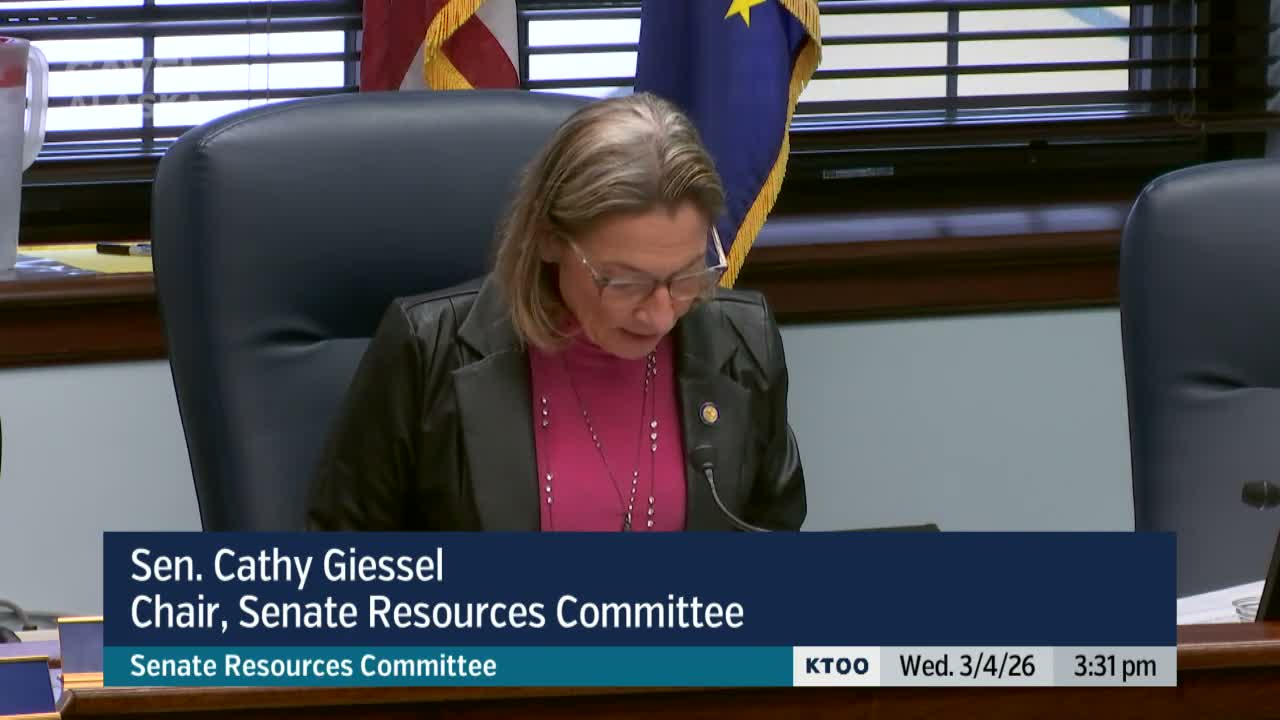
After invited and public testimony from representatives of tribes, conservation groups, processors, local fishermen and affected communities, Chair Giesel announced the committee would set SB 161 aside for further consideration and closed the hearing. No committee vote was recorded; the bill will return for later consideration.
The committee is scheduled to meet next on March 9, 2026.