Committee reviews multi‑compact bill to join interstate medical, PA, psychology and EMS licensure compacts
Loading...
Summary
HB 352 would add Alaska to interstate licensure compacts for physicians (IMLC), physician assistants, psychologists (PSYPACT) and EMS personnel (REPLICA); supporters said compacts improve access, information-sharing and surge workforce capacity while preserving state authority, but psychologists and others raised concerns and requested more outreach.
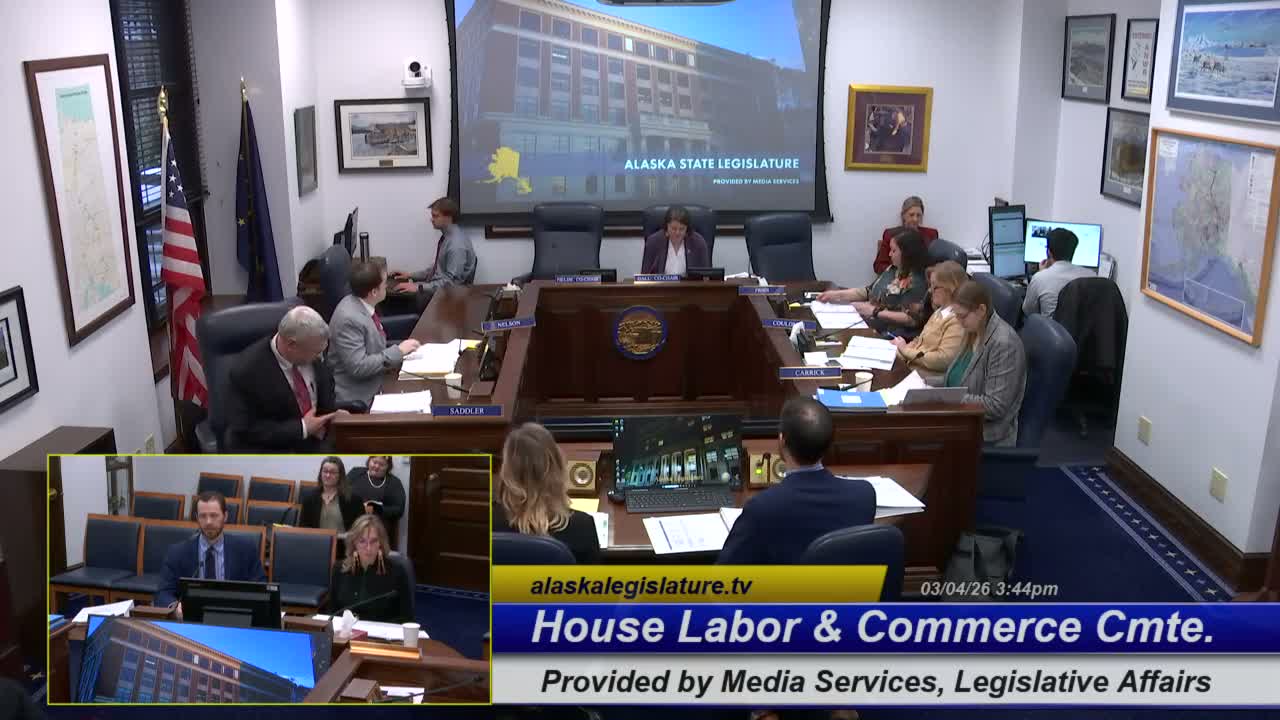
Cochair Zach Fields presented House Bill 352 on March 4 as a multi‑compact vehicle to meet parts of Alaska’s Rural Health Transformation Program commitments and to solicit stakeholder input. The bill would authorize Alaska to join four interstate licensure compacts: the Interstate Medical Licensure Compact (IMLC), the PA licensure compact, the psychology interstate compact (PSYPACT), and the EMS personnel licensure interstate compact (REPLICA).
Courtney Owens, staff to Representative Fields, summarized each compact’s framework. She said compacts create shared credentialing pathways or compact privileges that expedite licensing for eligible clinicians while leaving each state’s regulatory authority intact; most compacts require fingerprint-based background checks and participation in centralized data systems for reporting adverse actions.
Pam Benson, executive director of the Alaska State Medical Association, testified that the medical association now supports joining the IMLC, calling it a commonsense way to reduce licensing workload while maintaining Alaska’s medical practice standards. Benson told the committee there is no direct cost to the state and that applicants pay licensure and compact processing fees.
Megan Hall, a practicing physician assistant and past president of the Alaska Academy of Physician Assistants, supported the PA compact and said it would reduce delays and administrative burdens that slow the entry of qualified PAs, particularly important in remote parts of Alaska and for military families.
On PSYPACT, Margo Rigunden of the Alaska Psychological Association presented preliminary survey results showing mixed membership views: roughly half strongly support adopting PSYPACT but members flagged concerns including the compact’s ineligibility for non‑APA graduates, potential reduced enforcement by license‑home states, and local practice impacts. Rigunden emphasized the board plans more member outreach before taking a formal position.
Supporters of the EMS compact — including Brian Webb of the Department of Health’s Office of Emergency Medical Services and Dr. Michael Levy, an EMS physician — said REPLICA would reduce regulatory burden for surge deployments (for example during wildfire seasons or major projects), improve notification of disciplinary actions through a national database, and preserve local agency control and medical direction.
Members asked about fingerprint fees and fiscal impacts. Sylvan Robb, director of the Division of Corporations, Business and Professional Licensing, said a fingerprint-based background check currently carries a $75 fee to cover Department of Public Safety processing; Robb said efficiencies from compacts might improve processing but that immediate state savings are uncertain. Committee members also asked about potential effects on labor unions and reimbursement; witnesses and staff said compacts do not inherently change state scope-of-practice laws or reimbursement rates and that participation would be voluntary for most professionals.
The committee did not vote on HB 352. Members asked staff and sponsors to continue stakeholder outreach (noting the psychology board’s on‑going membership polling and potential union concerns) and signaled the bill will be revisited in subsequent hearings once additional input is collected.
The committee scheduled follow-ups and recommended some components might be advanced separately if stakeholders indicate uneven support across compacts.