Alaska committee hears case for licensing respiratory therapists to align with national standards
Loading...
Summary
The House Labor and Commerce Committee heard testimony supporting HB 362 to establish licensure for respiratory care practitioners, with supporters saying licensure would improve patient safety, formalize standards, grandfather current practitioners and align Alaska with other states; the committee set an amendment deadline.
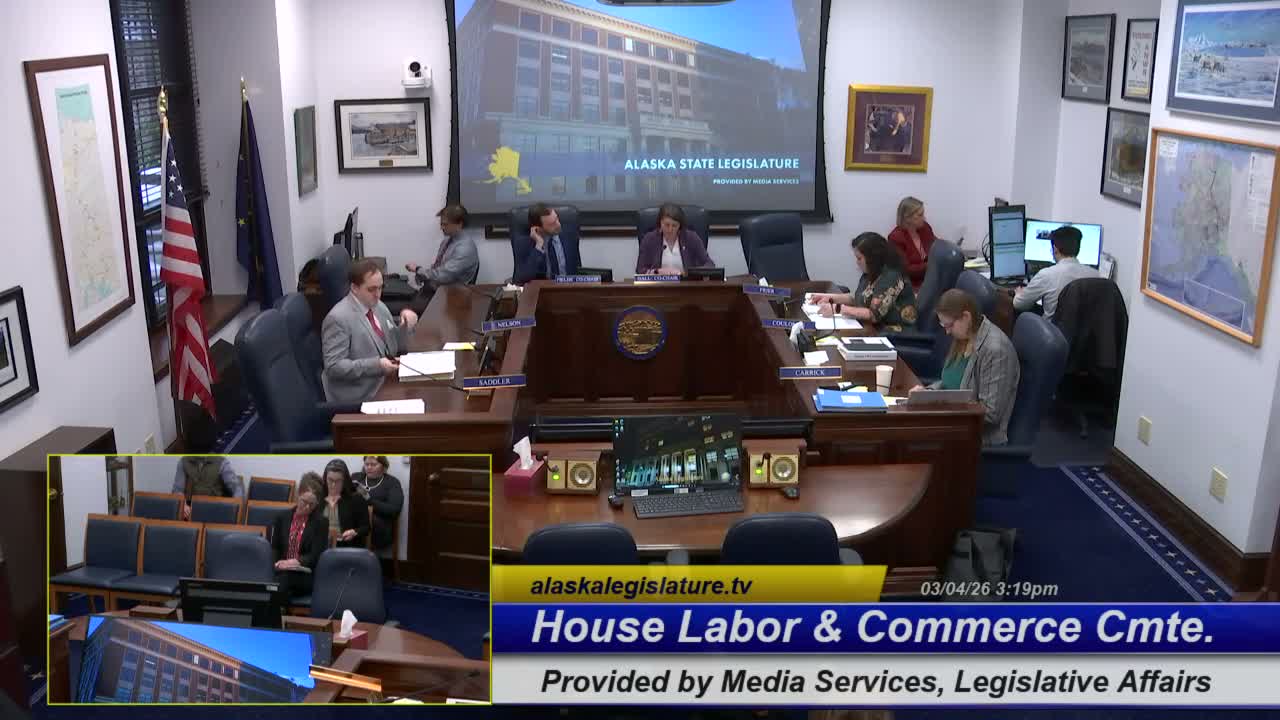
Representative Carolyn Hall, cochair of the House Labor and Commerce Committee, introduced House Bill 362 on March 4, saying the measure would establish a licensure framework for respiratory care practitioners in Alaska and bring the state in line with national standards.
The bill would add respiratory care practitioners to professions regulated by the Department of Commerce, Community and Economic Development and create a new chapter (AS 8.90) setting licensing requirements, scope of practice and penalties for practicing without a license. Committee staff said the bill includes a grandfather clause allowing currently practicing certified individuals up to one year to obtain licensure and lists an effective date of Jan. 1, 2027.
Angela Euler, a registered respiratory therapist and president of the Alaska Society for Respiratory Care, testified in support. Euler told the committee that respiratory therapists ‘‘are often at the patient’s bedside during their most vulnerable moments’’ and that licensure would provide ‘‘transparency, accountability, and a mechanism’’ for ensuring clinicians who manage ventilators and airway emergencies meet uniform standards. Euler said Alaska currently has roughly 200 respiratory therapists and that there are no in‑state accredited respiratory therapy programs.
Committee members focused questions on terminology (‘‘respiratory care practitioner’’ versus ‘‘respiratory therapist’’), national certification and education requirements, workforce supply and whether licensure would affect pay or billing. Euler said national pathways require completion of an accredited education program and passing National Board for Respiratory Care credentials; she said the registered respiratory therapist (RRT) credential is becoming the national floor and the certified credential is being phased out.
A committee member representing human-resources interests said employers already require credential checks but lack a central licensing authority to verify practitioners’ disciplinary histories. Committee staff noted Sylvan Robb of the Division of Corporations, Business and Professional Licensing was available to answer implementation questions.
Procedurally, the committee did not vote on HB 362 but set an amendment deadline for Monday, March 9, at 10 a.m. Testifiers were asked to submit written testimony and supporting materials to the committee record. The bill's sponsor and staff said the committee will consider amendments and revisit the measure in subsequent meetings.
The committee's discussion left open implementation details, including whether licensure would change billing or pay and how Alaska might expand in‑state training; testifiers offered to follow up with research on billing and workforce effects. The committee will take HB 362 up again as it develops amendments and receives additional stakeholder input.