
Alaska Department of Health outlines FY27 budget, defends audit work and flags rural transformation risks
Get AI-powered insights, summaries, and transcripts
Subscribe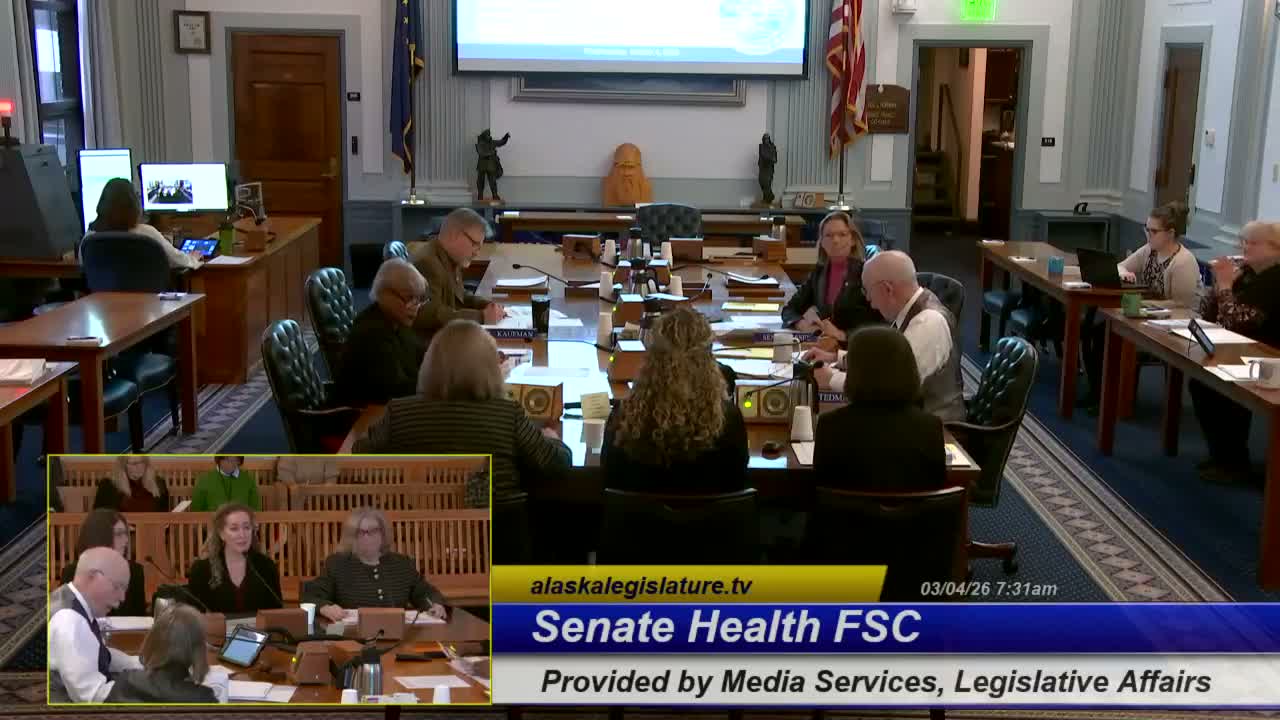
Summary
The Department of Health presented a $4.52 billion FY27 governor's amended budget, highlighted Medicaid and eligibility-system investments, and defended responses to 18 FY24 audit findings while lawmakers pressed on sustainability of rural transformation funding.
The Alaska Department of Health on March 4 presented the governor's amended FY27 budget totaling $4,518,610,800 and outlined steps to address 18 findings from the FY24 statewide audit.
Commissioner Heidi Hedberg opened the subcommittee briefing and introduced senior staff to walk legislators through line items and corrective actions. "Each of the policy commitments have a different time frame associated with them," Hedberg said, describing how missing policy milestones can trigger clawbacks and affect future awards tied to federal transformation funding.
Why it matters: The budget and audit updates set the terms for the Legislature's review this month, and they frame whether multi‑year federal awards tied to the so‑called Rural Health Transformation program can be implemented sustainably without creating ongoing state obligations.
Medicaid, FMAP and weekly payments Pam Halloran, assistant commissioner, said Medicaid remains the largest portion of the department budget and walked the committee through projected federal authority and general‑fund match needs. Deputy Commissioner Emily Ritchie told the committee that two timing and formula changes largely shape near‑term Medicaid projections: periodic "check‑write" timing that temporarily raises weekly payment volume, and an expected change to the regular FMAP that would reduce general‑fund obligations by roughly $10.8 million in FY27.
"That's every week the Medicaid program ... pays providers who have submitted claims to Medicaid," Ritchie explained, using the department's term for routine weekly payments and adding that the department is not behind on weekly payments overall. She said provider‑specific delays often stem from enrollment problems and that the department is implementing a provider portal to automate enrollment and payment processes.
Behavioral health, eligibility systems and service continuity Halloran said the Division of Behavioral Health requested $97.4 million for FY27 and that COVID appropriations reversed out of the base account explain much of the year‑to‑year change. The department asked for new federal authority to support a Crisis Contact Center and for a $21 million authority increment to modernize eligibility systems — a change Halloran said would support roughly 241,000 Alaskans who rely on benefits processing, automated renewals and online tools.
On maintaining a virtual contact center, Halloran warned that discontinuing the contract would place the state at risk of failing federal and state timeliness rules; she said the department lacks sufficient in‑house staffing capacity to absorb the workload without the contract.
Health Innovation RDU and rural transformation dollars Halloran described a new Health Innovation and Transformation RDU to house the Rural Health Transformation program with a FY27 federal‑authority request of $272.2 million allocated as multi‑year authority through FY29 to align with federal award timelines. A legislator pressed whether statutory or legislative policy steps tied to that funding are prerequisites to receiving later tranches.
Hedberg said some policy commitments are evaluated annually and that awards are graded against outcome metrics; if the state does not meet commitments that can prompt clawbacks and reduced future awards. "It really is predicated on the commitments that were made to the policies," Hedberg said, adding that the department asks applicants to explain how projects will be sustained after federal funds expire.
Audit findings and department response Hedberg presented the State Year '24 audit summary: of 18 findings, the department disagreed with one, eight were resolved in 2025, four are expected to be resolved by 2026 and five by 2027. She grouped findings into federal‑program issues under Division of Public Assistance — including pandemic EBT (P‑EBT), SNAP recertification timelines and reconciliation procedures, TANF documentation and Medicaid eligibility errors — and finance and management issues like interagency COVID billings and revenue shortfalls. Hedberg said the division has increased staffing, authorized overtime, added contract support, strengthened reconciliations and advanced IT modernization milestones.
State Auditor Chris Curtis told the committee auditors "are always looking back and when budgets are always looking forward," noting the office is preparing the FY25 single audit and that preliminary FY25 single‑audit materials will be discussed March 17 with a final public release expected around April 22–23. Curtis said that because audits look backward, it can be hard to certify resolution status until auditors can validate the department's changes.
Legislators' questions and next steps Lawmakers pressed department leaders for more detail on disputed audit findings, sustainability plans for temporary federal transformation dollars and the financial implications of fully implementing salary studies and other position changes. The chair scheduled follow‑up work and signaled the subcommittee would continue its review in subsequent meetings; the next meeting was set for March 10.
The committee did not take formal votes during the session. The department offered to provide additional documentation and to work with the auditor’s office and legislative staff as the fiscal review continues.