
Staff outlines possible geothermal lease program to capture commercial tax credits
Get AI-powered insights, summaries, and transcripts
Subscribe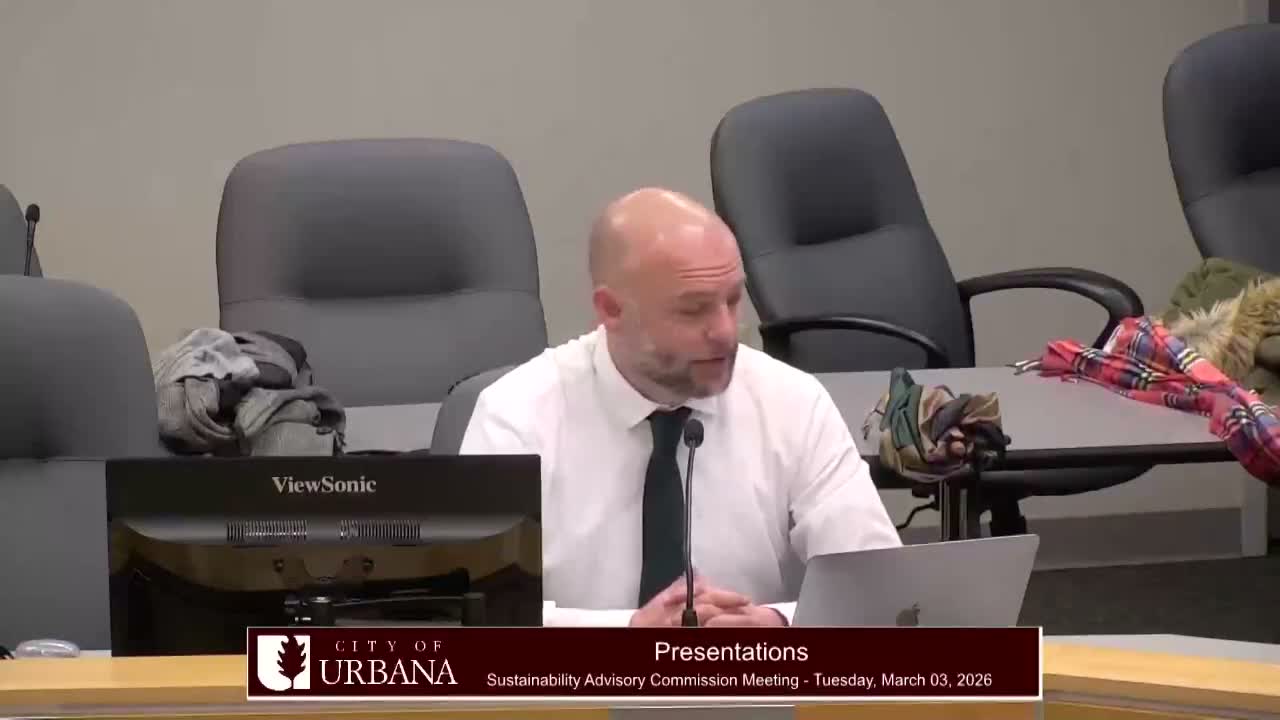
Summary
City staff told the Sustainability Advisory Commission they are evaluating a commercial lease model for residential geothermal installations that could let businesses capture commercial federal tax credits and lease systems to homeowners; commissioners asked about buyout terms, eligibility and local incentives.
Scott, the city staff presenter, told the Sustainability Advisory Commission the city is evaluating an emerging commercial geothermal lease or bulk-purchase model that could let a business own a geothermal heating-and-cooling installation at a residence and lease it to the homeowner. "Residential tax credit for geothermal installations has been eliminated," Scott said, "but the commercial geothermal 30% federal tax credit remains."
Why it matters: the model could lower or eliminate upfront costs for homeowners, shift the tax-credit benefit to a commercial owner and reduce household reliance on fossil-fuel furnaces, according to Scott. He said the structure could include a low-dollar buyout at the end of the lease term ("probably it's a $1 buyout if you make it to the end of let's say, a 25 year term") though exact terms would depend on vendor contracts.
Commissioners pressed staff on specifics. A committee member asked how a homeowner would be affected if they sold the house before a long-term lease expired; Scott said the lease might be paid off at closing or be transferable by assignment. Commissioners also asked whether property-assessed clean energy (PACE) financing could apply; Scott said PACE in Illinois is only available for commercial properties, and that a commercial owner using a PACE-like structure would keep obligations with the property rather than the person.
Scott described additional incentives that could change lease economics: a vendor believes qualifying domestic-manufactured components could add a 10% domestic-content bonus, and some areas qualify for an energy-community 10% bonus. "30% commercial plus 10% domestic content and, for some folks, 10% energy communities incentive could be a 50% right off the top," Scott said.
Limitations and next steps: Scott emphasized staff are still in early vendor conversations and "we're not definitely gonna move forward with a program this year." Commissioners asked for maps showing which census tracts or areas would qualify for the energy-community bonus and for clearer buyout and transfer terms; staff said they will continue vendor outreach and report back.
The commission did not take formal action. The next related item in the staff report moved on to U‑Cycle collection and other operational updates.