
Connecticut committee hears sharp debate over MEWAs and a state "Connecticut option" study
Get AI-powered insights, summaries, and transcripts
Subscribe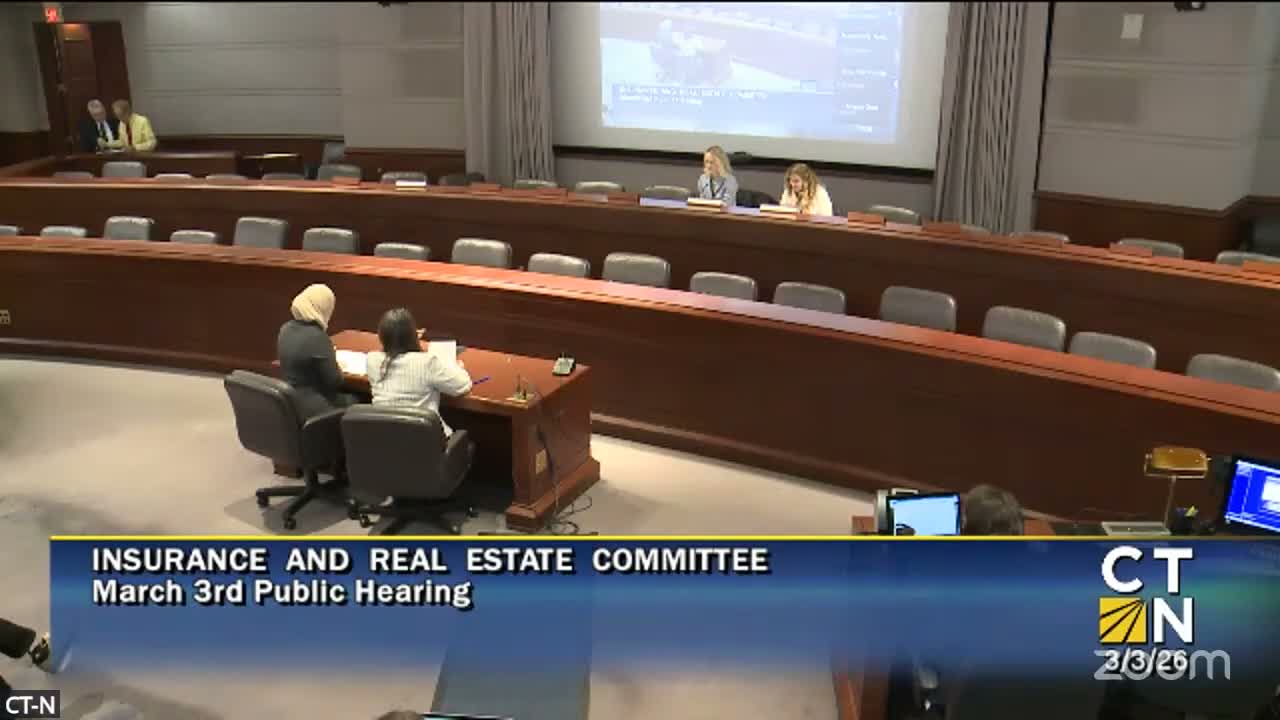
Summary
Lawmakers and witnesses traded sharply opposing views at the Insurance and Real Estate Committee hearing over HB 5378, with business groups and small employers backing association health plans (MEWAs) as an affordability tool and public‑health advocates and the Office of the Health Care Advocate warning of underwriting risks and potential market harm.
The Insurance and Real Estate Committee spent hours on March 3 hearing competing arguments over HB 5378, a bill that would authorize regulated multiple‑employer welfare arrangements (MEWAs) and require a study of a state‑level “Connecticut option” for health coverage. Business groups and small‑employer advocates told the panel the change could give them the buying power to offer stable, lower‑cost plans. “This legislation is a practical, market‑based solution,” Katie D’Agostino, president and CEO of the Central Connecticut Chambers of Commerce, said in testimony supporting the bill.
Opponents warned MEWAs can reproduce the problems that led to past failures: underwriting that prices small employers out of coverage, insolvency risk, and uneven access. “I appreciate the opportunity to testify in opposition to House Bill 5378,” said Gretchen Shugart of the Commission on Racial Equity in Public Health, who said employer‑level underwriting could widen racial and disability‑related disparities by shifting costs onto higher‑need workers and employers.
Sean King, general counsel for the Office of the Health Care Advocate, struck a mixed tone: he urged completing a study of a Connecticut option — an approach that would leverage state purchasing power — and said OHA opposes establishing MEWAs as a primary form of coverage in Connecticut because the proposed design could allow underwriting and adverse selection. “OHA opposes the ongoing pursuit of establishing MWAs as a form of insurance coverage in the state of Connecticut,” King said.
Senators and representatives probed witnesses about evidence and experience from other states. Supporters pointed to examples in Virginia, Maryland, Maine and Montana and said association plans are already working for many small employers. Opponents and several lawmakers urged that a thorough, independent study be completed first, and some urged that any authorization be coupled with strong Department of Insurance oversight, clear reserve and solvency requirements and consumer protections such as guaranteed issue and minimum actuarial values.
Small‑business and trade groups said the bill would help employers offer competitive benefits and retain staff. “When a small employer cannot offer affordable competitive health benefits, it becomes more than a line item — it becomes a recruitment and retention problem,” said D’Agostino. Several nonprofit and worker‑advocacy witnesses, however, said MEWAs historically have left participants exposed to unpaid claims and recommended exploring alternatives: basic health programs, targeted subsidies, or a state‑run option.
The committee also heard the Insurance Department’s interim commissioner outline companion regulatory work and consumer‑protection proposals in the agency bill (HB 5373). Lawmakers said they will weigh amendments to add clearer solvency standards, reserve formulas tied to enrollment and claim volatility, and other guardrails before taking further action. The panel did not vote at the March 3 hearing; members said they expect follow‑up language as drafters refine study and oversight provisions.