
Scurry County commissioners back resolution urging state to reallocate a slice of motor fuels tax to county roads
Get AI-powered insights, summaries, and transcripts
Sign Up Free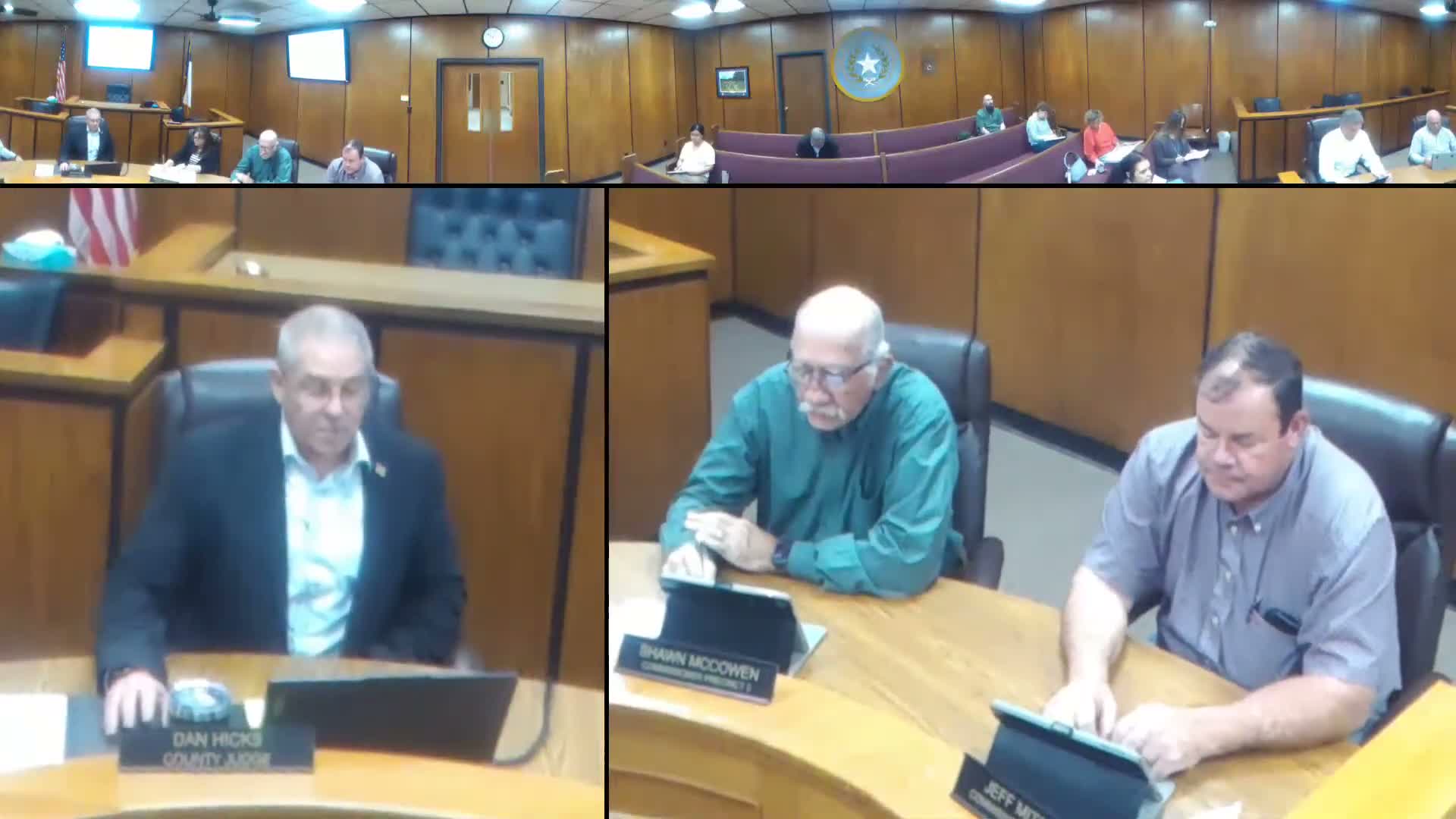
Summary
The Scurry County Commissioners Court approved a resolution supporting state legislation to divert a small portion of the state motor fuels tax to county and road district highway funds, aiming to reduce reliance on local property taxes and boost county road maintenance funding.
The Scurry County Commissioners Court voted to approve a resolution urging state lawmakers to revise the state motor fuels tax allocation so counties receive a larger share to address road maintenance and safety needs.
The presenter, identified in the transcript as the County Judge, said the draft resolution—authored by a county judge in Cass County, Travis Ransom—would shift a fraction of the state motor fuels tax away from existing allocations and toward the county and road district highway fund used for local road maintenance. "State motor fuels tax was set at 20¢ per gallon in 1991 and has remained unchanged in the decade since," the County Judge said, adding the presenter’s calculation that a one-twentieth diversion of the tax could generate roughly $190,000,000 annually (statewide) to benefit counties.
Court members said the proposal could lessen reliance on local ad valorem property taxes for road and bridge funding; the presenter noted Scurry County’s road-and-bridge budget is about $4,300,000 and that the proposed change would not necessarily cover all county needs but would provide additional support. The presenter also said electric-vehicle fees could help compensate for motor fuels revenue that shifts under the proposal.
The draft resolution was presented as already having been circulated to other counties and the presenter told the court that other counties had adopted similar resolutions. A Committee member stated they had read the resolution and supported it; the court moved and approved the resolution as presented (the transcript records the motion, a second and a vocal vote but no roll-call tally).
The transcript records no further procedural steps at the meeting for sending the resolution to state lawmakers; the court’s approval on the record was the only formal action recorded in the transcript.