Get Full Government Meeting Transcripts, Videos, & Alerts Forever!
Get email alerts on the Schools And Taxes topic
No spam. Unsubscribe anytime.
Council frames school funding floor at $7M and vets a 2¢/1%/1% tax package pending state aid
Summary
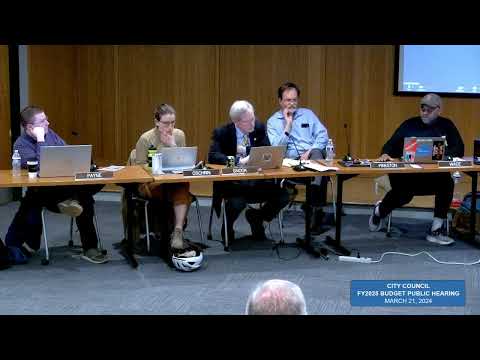
After public comment, councilors debated the school request and a proposed tax package; they signaled $7 million as the local school funding floor and tentatively relied on a package the budget models (2¢ real-estate, 1% meals, 1% lodging), with contingency steps if state aid arrives.
Councilors spent a large portion of the forum debating how much to commit to local schools and which revenue sources to use. Multiple councilors and members of the public said schools remain a high priority; staff recapped that the school board’s original request was $12 million and later revised to $9 million while staff had identified $6 million in the initial proposed budget.
After discussion, councilors coalesced around a ‘‘floor’’ approach: adopt a budget that provides a $7 million local match to schools now, and establish contingency plans to adjust the local share if the General Assembly enacts legislation (for example, an LCI hold‑harmless measure) that would provide additional state support. Several members asked staff to prepare scenarios that would show how to undo or reprogram funds if additional state dollars arrive after adoption.
On revenue, staff reminded council the proposed budget is modeled on a tax package of 2¢ on real estate, 1% meals and 1% lodging (the advertising number for the realestate tax was 3¢ to allow flexibility). Councilors debated regressivity and business impacts — several business and restaurant representatives said raising the meals tax again would harm small operators — and some members expressed a preference for leaning more on the real estate tax instead of additional meals taxation. A councilor suggested a smaller meals‑tax increase (for example, 0.5%) as an alternative.
No final ordinance vote was taken at the forum; councilors gave staff direction to model contingencies tied to likely state outcomes and to prepare budget language based on the 2¢/1%/1% scenario with options for adjustments should state revenues change.