Get Full Government Meeting Transcripts, Videos, & Alerts Forever!
Get email alerts on the Battery Storage topic
No spam. Unsubscribe anytime.
Residents urge Skagit County to halt proposed battery storage project, citing fire and environmental risks
Summary
Multiple residents told the Skagit County Board of Commissioners on Feb. 3 that proposed lithium battery energy storage systems pose fire, air-toxicity and long-term environmental risks and urged the county to pursue local restrictions or stronger oversight.
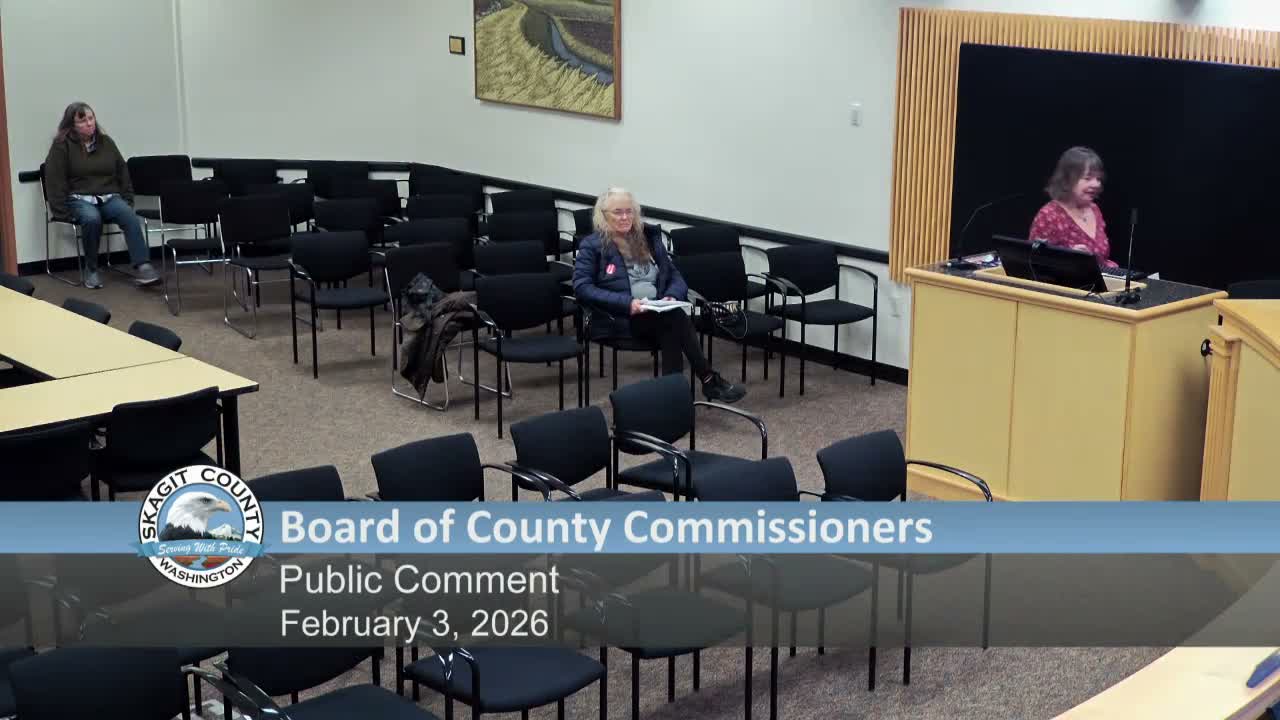
At the Feb. 3 Skagit County Board of Commissioners meeting, residents used the public-comment period to press commissioners to block a proposed battery energy storage facility and to pursue local ordinances to limit lithium-battery installations.
Elke McCartney of Anacortes told the board she has repeatedly spoken against the project and warned of what she described as safety and environmental harms. “These battery energy storage systems are not efficient whatsoever,” McCartney said, adding she believes they lose performance with each charge cycle and that an explosion would release toxins across the valley. “Please don’t let this happen,” she said.
Mount Vernon resident Ingrid Hinton also urged county action, pointing to restrictions in Pierce and Thurston counties and calling on Skagit County to consider similar measures. Hinton criticized a county planning staffer described in the discussion as Josh Adams, saying he lacks fire-response experience and questioning whether the county has the right technical reviews in place.
An online farm owner said a catastrophic event at a battery facility “wouldn’t just affect the land that it sits on” and described multigenerational family farms at risk.
The speakers cited a range of technical claims—operational lifespans, efficiency losses per cycle and toxin releases—that were presented as residents’ concerns and were not verified during the meeting. Commissioners thanked the speakers but did not take a formal vote or announce immediate regulatory action at the session.
What happens next: speakers requested that the county review permitting and public-safety planning related to battery installations. The board acknowledged the comments and moved on to other agenda business; no ordinance or staff directive was recorded during the meeting.