
Cornwall Central staff outline $3.5M budget gap; UPK funding and three capital propositions framed for May vote
Get AI-powered insights, summaries, and transcripts
Subscribe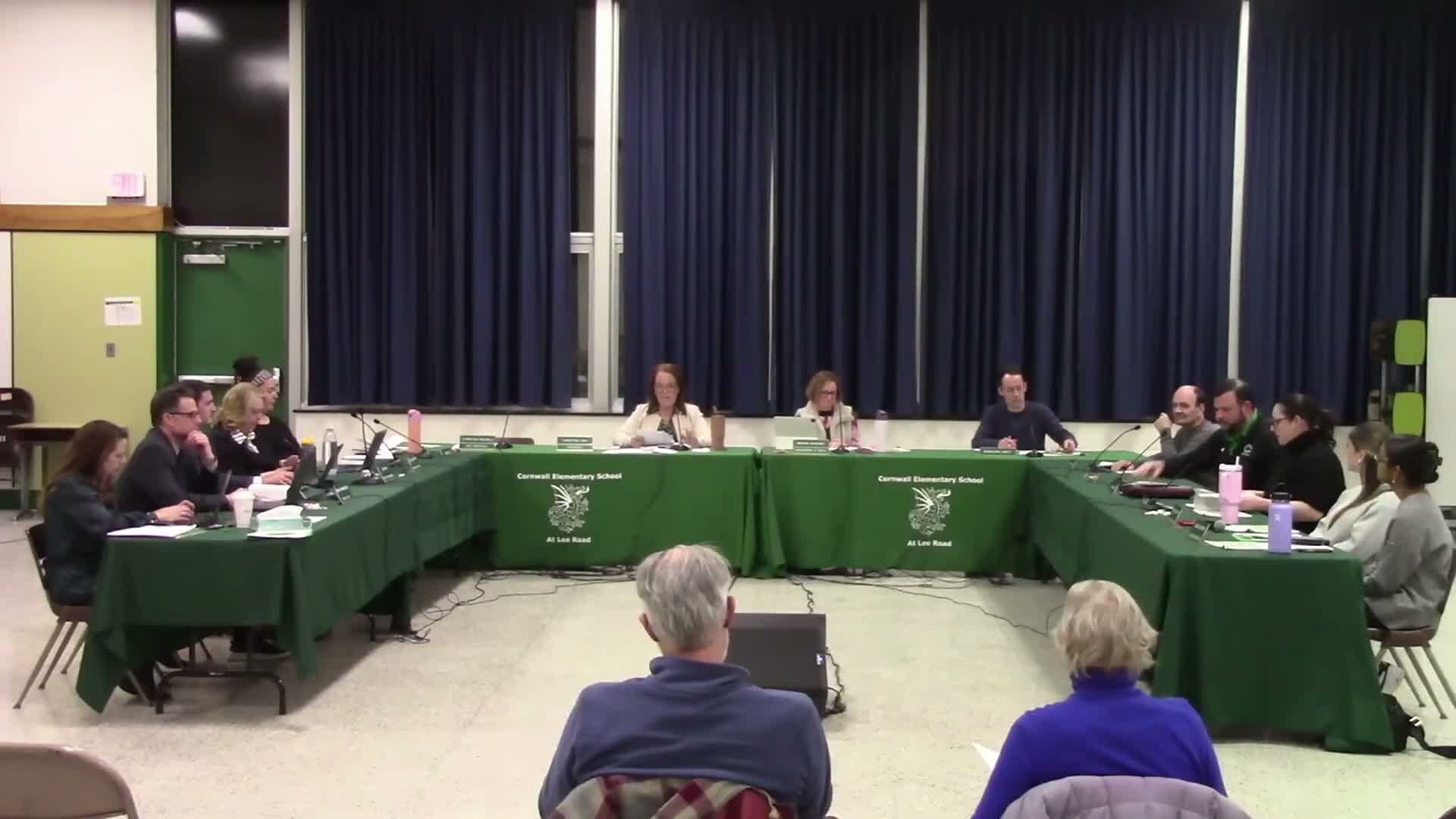
Summary
District business official Mr. Fink presented a preliminary 2026–27 rollover budget with $97.0 million in expenditures, about $94.0 million in projected revenues and a roughly $3.5 million shortfall; the board discussed relying on assigned fund balance, a possible 3% levy, and uncertain UPK state aid ~ $480,000. The board reviewed three capital propositions to appear on the May ballot.
Mr. Fink, who led the board through a detailed budget presentation, said the Cornwall Central School District’s preliminary 2026–27 rollover budget shows roughly $97.0 million in expenditures against about $94.0 million in revenues, producing a projected shortfall of about $3.5 million.
That gap, he said, assumes rolling most 2025 programs forward and factors a projected 3% tax levy and an estimated $400,000 increase in state aid. ‘‘We have a shortfall of about 3.5,’’ Mr. Fink said, noting that assigning $2.5 million from fund balance would leave the district with just over $1 million to close.
The presentation framed the primary cost drivers: salary increases (roughly $2.3 million), a roughly 7% increase in health insurance that Mr. Fink estimated will add about $1 million, and a $1.3 million rise in debt service that is largely offset by new building aid tied to recent capital work. He told the board the district’s assumptions include a maximum tax cap estimate of about 5.36 and that a full 5.36 cap would yield roughly $2.8 million; the staff used a working 3% levy assumption in the preliminary figures.
Why it matters: the board must reconcile the shortfall before finalizing the budget that will go on the May ballot. Mr. Fink outlined next steps—reengage the leadership team, reexamine proposed expenditures and return with options to close the remaining gap.
Board members asked about options. One member listed typical levers — increase the levy, apply more fund balance, reduce program spending as a last resort, or delay transfers to capital — and pressed Mr. Fink on how much UPK (universal prekindergarten) funding might help.
On UPK, Mr. Fink said the governor’s proposed budget includes funds that could provide about $480,000 to the district, but he cautioned that the proposal is not final and carries restrictions. ‘‘That is $480,000 that we could redistribute,’’ Mr. Fink said, but he warned the board it would be risky to count on that money until Albany finalizes the state budget and the district fully understands program parameters and allowable uses.
Mr. Fink also summarized the three capital propositions scheduled for the May 19 ballot: Proposition 1, a $44.5 million tax‑neutral package of districtwide improvements; Proposition 2, a $21.1 million package focused on additional classroom space (which Mr. Fink said is contingent on Proposition 1 passing); and Proposition 3, a $14.6 million athletic fields project at the high school (which would require 1 and 2 to pass).
The presentation included program‑level figures: out‑of‑district special education placements (27 BOCES students at an average cost of about $90,000 per student; additional non‑BOCES and residential placements with higher per‑student costs), transportation statistics (27 buses on a three‑tier system and partnerships with West Point Tours), and planned capital transfers for security and door hardware projects, including an estimated $300,000 additional transfer to finish door hardware work.
What comes next: Mr. Fink said staff will return with more refined options for closing the remaining gap as state aid figures solidify. The board and administration also discussed timing and restrictions on any UPK windfall and possible impacts on fund balance planning. The board did not take a formal vote on budget adoption at the meeting.
The district has posted that budget information will be available on the website within a day or two of the meeting.