ESL enrollment surges in Chambersburg Area SD; teachers call for more staff and consistent programming
Loading...
Summary
In a district podcast, Chambersburg Area SD Superintendent Chris Bigger and ESL teacher Anna Offit said English learner enrollment has roughly doubled in a decade to about 1,300'1,500 students across 22 languages. Offit called for more staff, consistent programming, and stronger family supports as the district pursues its Schools of Distinction goal by 2030.
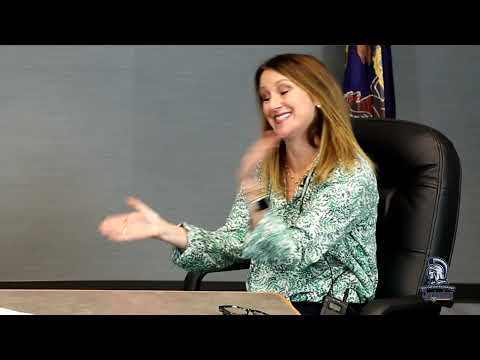
In a district podcast, Chambersburg Area SD Superintendent Chris Bigger interviewed Stevens Elementary ESL teacher Anna Offit about a steep rise in students needing English-language services and how the district is responding.
Offit said the number of identified English-language learners has grown substantially over the past decade. "This district, we had about 700 identified ESL students" roughly 10 years ago, she said, and "there's actually 1,500 in the program, but I believe around 1,300 that are being pulled and seen." She added that students in the program represent "22 different languages," with Spanish the largest group followed by Haitian Creole.
Why it matters: the increase changes classroom composition, staffing needs and family engagement. Offit described how identification has tightened, so the district now "captures a few more students," and how elementary ESL typically involves daily targeted pullout instruction of about 30 to 45 minutes for focused language supports.
Instruction and outcomes: Offit laid out how services vary by grade and proficiency. Students are assigned levels (1'to 5) based on annual testing; level 1 students "really do not know a lot of English," while students at higher levels may show conversational fluency but still lack academic language. On typical timelines, she said, Pennsylvania aims for exit within six years and that academic language development usually takes about "5 to 7" years, though conversational English can emerge sooner.
Classroom practices and teacher supports: Offit emphasized that many classroom teachers already use ESL strategies. "You walk into almost any classroom and you will see a teacher as almost being an ESL teacher," she said, listing techniques such as picture supports, word banks, sentence frames and think-alouds. She argued vocabulary-building is the most effective lever to move English learners quickly and said teachers need "more time and more people" to support students.
Family engagement and newcomer needs: Offit described varying family backgrounds, literacy levels in home languages and, in some cases, home languages that have no written form. She shared a case example of a fourth grader who arrived with no prior schooling and needed basic instruction in holding a pencil and counting, underscoring the wide range of academic starting points among newcomers.
Program vision and curricular choices: Looking ahead to the district's Schools of Distinction goal for 2030, Offit said she hopes for a community where students are literate in English and their home languages: "I look forward to moving our ESL friends along and having a community where they're truly bilingual." On the idea of offering Spanish as a fifth special in elementary schools, Bigger asked how that might work; Offit called it "very interesting" and noted differences between native Spanish speakers and learners when considering curriculum.
What the podcast did not announce: there were no formal policy changes, vote outcomes or new budget commitments presented during the interview; the conversation focused on current practice, needs and long-term goals.
The district aims to make all schools "schools of distinction" by 2030, and Offit said consistent programming across buildings and additional staff support will be important to meeting that objective.