Get Full Government Meeting Transcripts, Videos, & Alerts Forever!
Get email alerts on the Fire Fee topic
No spam. Unsubscribe anytime.
Weston officials propose square-footage fire fee, say it’s needed to hire nine firefighters and secure federal grant
Summary
Village officials proposed a square-footage fire fee (most homeowners: $40–$60/year) to close a projected 2026 budget gap, hire nine firefighters and secure a three‑year FEMA SAFER grant that pays most early-year wages; residents questioned fairness, TIF use and whether voters should decide by referendum.
Weston officials and SAFER fire leadership told about 50 people at a public meeting that a new square-footage fire fee is the best available option to close a projected budget shortfall, add nine firefighters and allow the village to accept a three-year FEMA SAFER grant that would fund most of the new positions’ wages in the early years.
“Fire fees cannot be used to fund EMS services,” SAFER Fire Chief Josh Finke told the room when describing the statutory limits on how the fee may be used. Officials said the fee would pay for fire and rescue operations only and would be calculated primarily on above‑grade square footage, with a proposed flat $15 charge for detached accessory structures and a $15 minimum for land with no structure.
The village’s finance director, Jessica Trumpet, and Administrator Jamie Gabbert said the board is considering a fee that would result in most homeowners seeing an increase of about $40–$60 in 2026; the precise rates and a formal ordinance would need board approval. Gabbert said the village must also apply a statutorily required levy adjustment if a fee replaces levy funding for fire operations.
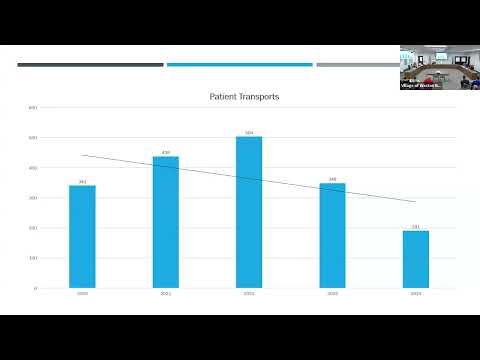
Why the fee now: staffing and a grant Finke and staff described rising call volumes (about 4,000 calls annually, they said) and chronic staffing shortages that leave apparatus undercrewed. He said the department wants to hire nine firefighters (three per shift) so both engines in the district can routinely operate with three personnel each, improving on‑scene crew size and firefighter safety.
To reduce the near‑term cost to residents, the district applied for a federal SAFER grant in June. Finke said the SAFER award would cover approximately 65% of wages and benefits for the new hires in year one and two, 35% in year three and none thereafter; the multi‑year grant total for the municipalities’ staffing portion is roughly $1.7 million. "If the board decides to hold a referendum now, we would have to forfeit any grant funding," Finke warned, noting referenda timing could delay or eliminate access to those federal dollars.
Residents pressed officials on fairness, rates and alternatives During the Q&A many residents asked whether the fee could be tied to assessed value rather than square footage, whether businesses or entities in TIF districts would pay, and whether the fee might grow unchecked. Officials said the proposed design uses above‑grade square footage (including attached garages, excluding basements) and would apply to commercial properties, nonprofits and municipal buildings under the statutory fee structure.
Several residents urged a referendum so voters — rather than the six‑member board that would set the fee — decide. Some speakers said past capital spending and TIF decisions make them wary of new recurring charges. Officials acknowledged the political concern but reiterated that a referendum held outside the current grant window would likely forfeit the grant and risk losing the opportunity to hire staff while the department’s operational shortfall continues.
Budget context and constraints Trumpet and Gabbert explained that Wisconsin levy limits tied to net new construction constrain how much additional revenue the village can raise through the property tax levy; they said last year’s reassessment moved tax burdens for some homeowners and that TIF adjustments have reduced increment revenues available to increase levy capacity immediately. They estimated the village could not cover SAFER’s full request of about $300,000 from existing levy capacity alone.
Officials also described recruitment challenges: a recent effort yielded 11 applicants for paid part‑time/on‑call roles but only one applicant completed medical and psychological screening; staff said they maintain an eligibility list of candidates but still face difficulty converting applicants into fully available firefighters.
What happens next No formal action was taken at the meeting. Gabbert and staff said the board of trustees will consider the item at its next regular meeting (the board meets the third Monday of each month; staff mentioned August 18 as the next date when the item could return). Officials encouraged residents to review board packets and to contact staff with follow‑up questions.
The meeting record and presentation will be posted on the village’s website and on YouTube, according to Gabbert.