Committee recommends annexation of county parcels including family farm despite residents’ concerns
Loading...
Summary
The Public Service Committee recommended annexation and associated zoning changes for several county 'pockets' (including the Nicely family farm) to the governing body, rejecting a proposed amendment to delay two parcels for one year; residents urged more time and protections while staff described administrative steps, fees and statutory protections.
The Cheyenne Public Service Committee on March 2 voted to recommend annexation of multiple county 'pocket' parcels — including the Nicely family property proposed as an 'urban farm' — to the governing body, following extended staff presentation, public comment and debate.
Planning Director Charles Bloom summarized staff work on the annexation package and explained how an 'urban farm' use would be handled administratively, noting that a $100 site‑plan application would be the city’s lowest fee and that homeowners who must connect to city sewer could face an approximate connection review fee of about $1,200. Bloom sought to reassure critics that annexation was not a land‑taking: "That is not the case. There'll be no land conveyance. We will not be acquiring any property."
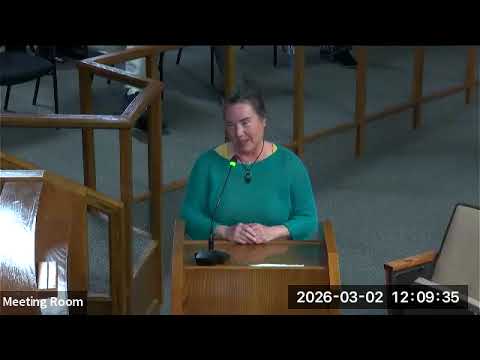
Residents and farm operators urged caution. David Nicely, whose family operation is among the parcels, described the process as stressful and said the city’s outreach had been insufficient: "What we're doing is normal, and we shouldn't have to fill out an abysmal amount of paperwork to do it." Other speakers, including a representative of Y Fresh Farms and owners of Parcel 7, asked for clearer definitions, more time to respond to a long set of staff questions and assurance that existing uses (livestock, home occupations) would be protected.
During committee consideration, Doctor Aldridge proposed an amendment to approve most parcels now but delay Parcels 4 and 7 with a date‑certain effective date one year out to allow fence repairs and codification of the urban‑farm definition. City Attorney John Brody warned that creating multiple effective dates inside a single ordinance raises statutory and administrative complications (including survey/MILR issues) and suggested delaying the entire ordinance instead of splitting effective dates. After debate, the amendment failed and the committee voted to recommend the annexation and associated zoning package to the governing body for adoption at the next meeting.
Key clarifications recorded in the hearing: planning staff said county permit limits (for example, a 25‑customers‑per‑day limit mentioned in county approvals) are county conditions that may not automatically apply after annexation; staff also said historical uses properly recorded with the city are protected under state statute. Planning staff said many enforcement and permitting questions can be handled through site plan review and the unified development code process.
Next steps: The committee’s recommendation will go to the governing body at its next meeting for final action. Residents and property owners may still seek clarifying meetings with planning staff.