
Judiciary committee hears split over $5.9 million Streeter award as AG urges remand of two claims
Get AI-powered insights, summaries, and transcripts
Subscribe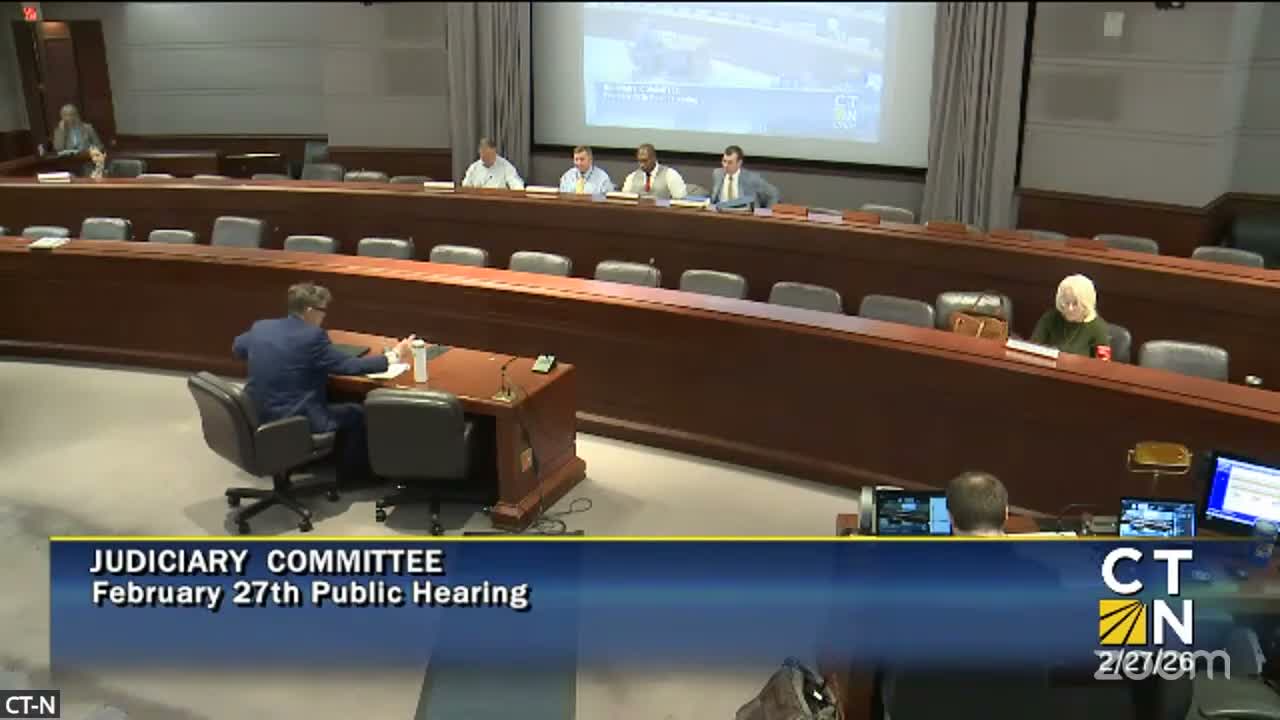
Summary
The Judiciary Committee questioned claims commissioner Robert Shea about his use of pardon hearing testimony to find "grounds consistent with innocence" in high-dollar wrongful-incarceration awards. The attorney general urged remand of two awards, saying pardons alone do not meet the statutory standard.
Claims commissioner Robert Shea and the attorney general—lashed publicly on Feb. 27 over whether pardons and silence from the Board of Pardons and Paroles are sufficient to satisfy Connecticut—s wrongful-incarceration statute.
Shea told the Judiciary Committee he reviewed pardon hearings, habeas rulings and other records before finding two claimants eligible for compensation and awarding an approximately $5.9 million payout in the Streeter matter. "I reviewed the record," Shea said, describing his process for determining whether a pardon could be considered "grounds consistent with innocence." (Robert Shea)
Deputy Attorney General Eileen Meskel told the committee the Office of the Attorney General objected to the two decisions now before the legislature (referred to in testimony as senate joint resolutions 7 and 8). Meskel said those awards rested on insufficient evidence and that "there is no presumption in 54-102uu ... that a claimant's assertion of innocence is accepted simply because the board did not rebut it on the record." (Eileen Meskel)
Representative Fishbein and other committee members pressed Shea on the legal basis for applying negligence principles in one case (Stewart) rather than strictly following the statutory triggers in 54-102uu (vacatur, reversal or pardon tied to innocence). Shea acknowledged the tension: he said some claims were remanded by the legislature and that in several matters he reviewed the full legislative resolution and the record before reaching decisions.
Family members of a murder victim urged the committee to deny an award to Streeter, who was pardoned and later found eligible by the claims commissioner. Terrence Gamble II and his mother, Joyce Gamble, described the family's pain and said they do not accept the claim of innocence. "For him to play on my forgiveness, that's wrongdoing," Joyce Gamble said.
Jennifer Zacchene, chair of the Board of Pardons and Paroles, told the committee that in her 18 years the board has not granted pardons on the basis of actual innocence and routinely evaluates rehabilitation, education and community contributions. "Pardons reflect findings about rehabilitation and character, not a determination of innocence," she said.
Meskel asked the committee to either deny the awards or remand the two decisions to the claims commissioner for fuller evidentiary hearings, saying the AG—s office would not oppose a remand. "At a minimum, we ask that it be remanded back and have the statutory process follow," she said.
Members across the aisle expressed concern about both protecting taxpayers and ensuring that people wrongfully deprived of liberty are fairly compensated. Some lawmakers said they would favor remanding cases for further fact-finding rather than making an immediate decision.
What happens next: the committee must decide whether to confirm the claims commissioner's awards, deny them, or remand the cases for additional hearings and evidence. The AG suggested remand as the minimum relief; claimants and victims urged opposite outcomes based on their views of the record.
Ending: The hearing did not produce a final vote; members said they would take the competing requests under advisement as the committee explores whether the statutory standard and procedural practice need legislative clarification.