
Design team unveils 30% plan for Pulse Memorial in Orlando; sign and building removal set for coming weeks
Get AI-powered insights, summaries, and transcripts
Subscribe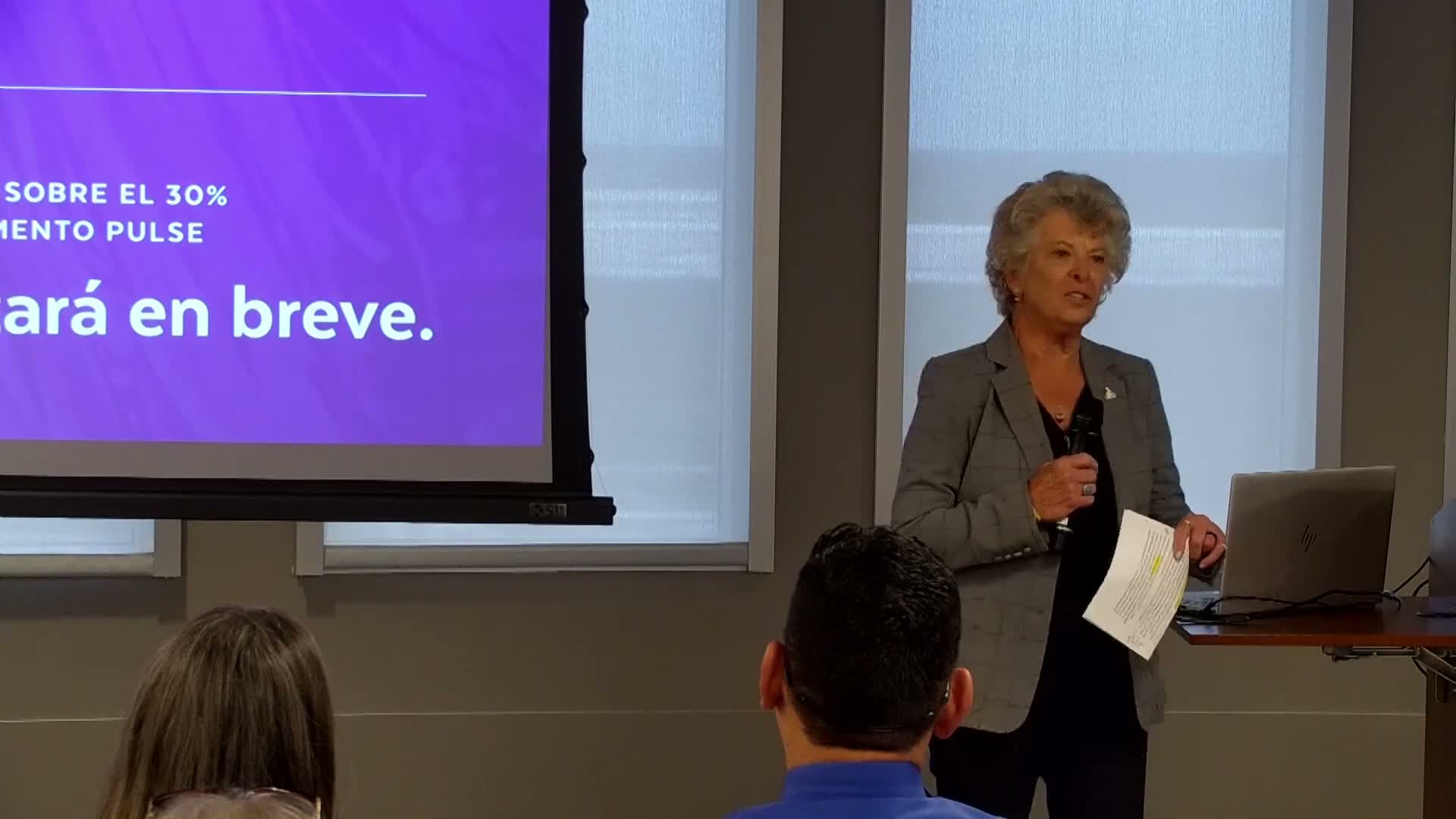
Summary
City of Orlando staff and the design team presented a 30% concept for the Pulse Memorial, describing the Angel Ellipse, visitor pavilion, names and water wall treatments, plans to salvage portions of the original Pulse nightclub, and a timeline that includes sign removal next week and construction start targeted for Sept. 26, 2026.
City of Orlando staff and the design team presented a 30% design package for the Pulse Memorial at a public meeting, outlining site layout, interpretive elements and a preliminary schedule that calls for removal of the Pulse sign and building in the coming weeks and construction to begin Sept. 26, 2026.
Donna Wyche, liaison to the Pulse Memorial Advisory Committee, opened the meeting and framed the session as a progress update: "This is a 30% design meeting, and that means 30%." She reminded attendees that public comment would be taken at the end of the presentation and that the design package is early and subject to change.
Why it matters: The design translates more than a memorial concept into a place intended for visitation, reflection and ongoing community use while attempting to retain material connections to the Pulse nightclub. The committee that guided the project's Design Control Document included survivors, family members and community leaders; city staff said committee input was central to early decisions.
Design highlights and interpretation: Jorge Borrelli, design principal and president of Borrelli and Partners Architects, led the team’s overview and introduced key designers and interpretive partners. Dan Michael Turbovich, the project's senior and lead architect, described a roughly 3,500-square-foot visitor pavilion that the city is targeting for LEED certification and which will allocate about half its interior for exhibits and half for support and amenity space. "Pulse nightclub is not an abstraction for us," Turbovich said, as he explained the team’s intent to balance public-facing exhibit views with interior experiences for reflection.
The memorial plan centers on an Angel Ellipse — a metal canopy and processional arc encircling the Memorial Plaza — with gradient rainbow banding and colonnades that will carry individual tributes. Designers said names of the 49 people killed will appear both on a water wall and in the colonnade, a decision driven by committee discussions; the team also raised the possibility of displaying flags alongside names to reflect national origins where families supported that option. Nico Guillen, creative director, described the water wall and reflecting pool as linked elements intended to create a slow, meditative movement of water around the names.
Material continuity: The design team said it will remove the existing facility but salvage and reuse meaningful elements of the original nightclub where feasible. The team plans to remove and reinstall a section of the dance-floor material, salvage the breaching wall for placement at the obelisk, and reuse concrete from the original building in paving and other site features so the new site retains physical ties to the former Pulse nightclub.
Landscape and survivor spaces: The plan includes a survivors' common adjacent to the Memorial Plaza and a survivor's wall. Designers proposed an olive tree as the specimen "survivor's tree," citing its cultural symbolism of peace and endurance. The Prism Plaza at Orange and Esther will incorporate pulse-inspired banding and a stylized tower referencing the original sign to orient visitors toward the east and sunrise.
Schedule and next steps: Steve (Gomez Construction's lead), speaking for the construction partner, said the Pulse sign will be removed next week and the building removal will begin the following week, with material removal to follow. The team expects 60% drawings to be due May 8 and plans a subsequent public hearing on the 60% package. The current target for the start of construction is Sept. 26, 2026, with an anticipated one-year construction period. The designers emphasized that many materials and specific elements remain at early design levels and will be further refined in the 60% and later packages.
Public input and procedure: Wyche reiterated that this presentation represents a 30% package and invited attendees to provide feedback after the meeting or during the scheduled public-comment period. City staff and the design team said they will return with the 60% package and hold another public hearing when that milestone is submitted.
The meeting closed with a restatement of the memorial’s mission to provide sanctuary, reflection and culturally and linguistically competent remembrance for the 49 lives taken on June 12, 2016, and thanks to the committee, design team and city staff for their work.