
Senate repeals Community Protection Program after heated debate over safety and civil rights
Get AI-powered insights, summaries, and transcripts
Subscribe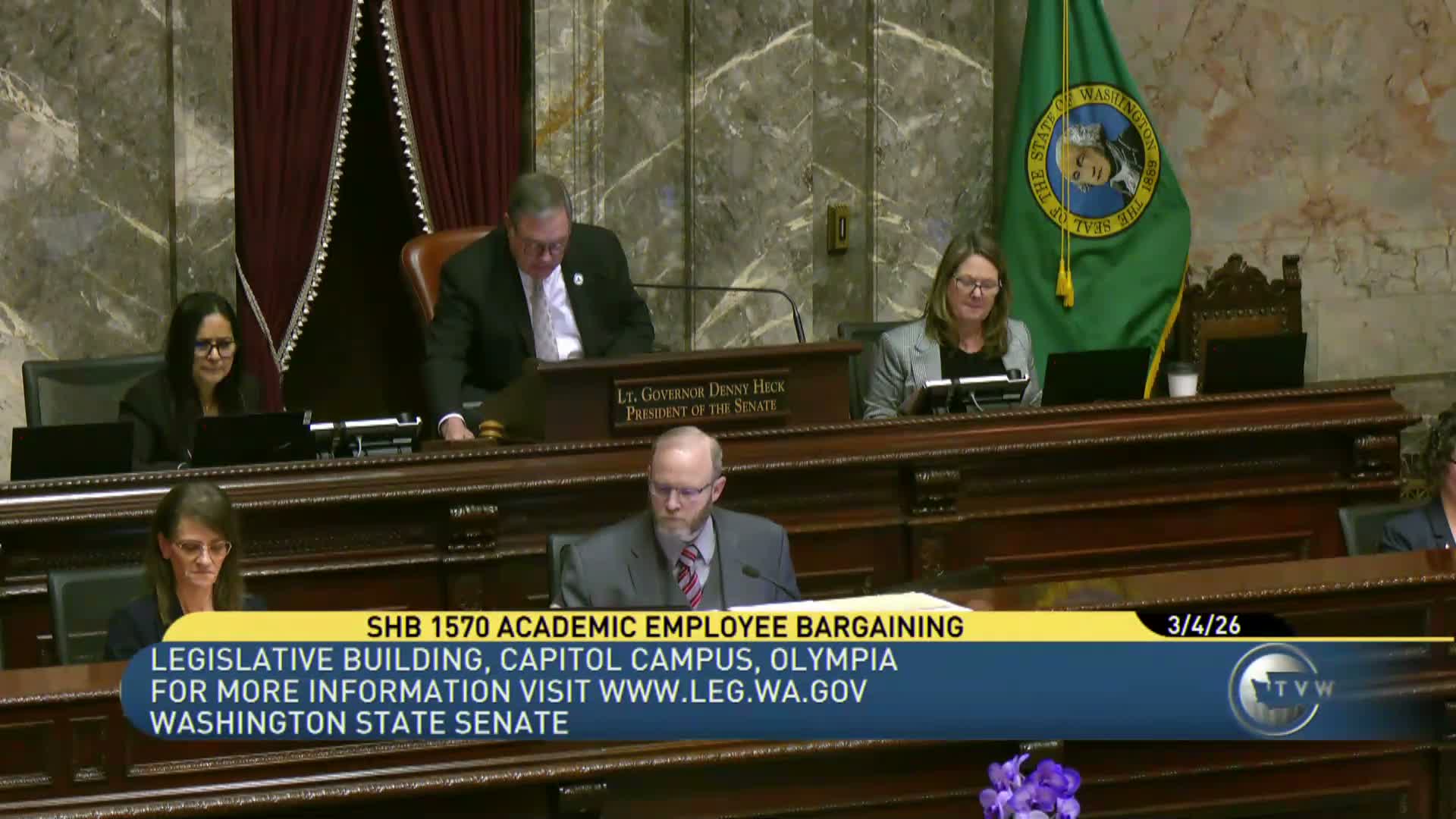
Summary
The Senate on March 4 voted to repeal the Community Protection Program, directing the Department of Social and Health Services to transition participants to newer DDA waiver services. The measure spurred a prolonged floor fight over public safety safeguards, buffer zones and whether the program had been coercive.
The Washington State Senate voted to repeal the Community Protection Program (CPP) on March 4, passing Substitute House Bill 1390 as amended by the Senate by a roll-call majority of 29 yeas to 20 nays.
Senator Claire Wilson, who led the floor motion to advance the measure, said the CPP is an “antiquated and overly intrusive program” that has kept many people with intellectual and developmental disabilities enrolled for long periods with severe restrictions on daily life. “This bill repeals the CPP program, and it directs the Department of Social and Health Services to transition all participants into different DD services that are now available,” Wilson said, telling colleagues the available waiver services are more humane and better tailored to individual needs.
Opponents, including Senator Christian and others, argued the repeal risked public safety and urged additional safeguards. In floor debate, Senator Christian warned the change would place people with violent histories into community settings with other vulnerable individuals, calling the move “a disaster” and urging a no vote. The senator’s remarks drew immediate objections for inflammatory language from other members of the chamber.
Lawmakers proposed and voted on numerous amendments aimed at narrowing the repeal’s effects. Amendments that would have excluded people convicted of certain violent offenses from the transition or required local buffer zones were debated and defeated on roll call. For example, an amendment to exclude those convicted of certain violent offenses failed; senators who supported it said it would preserve public safety while opponents said the populations and statutes being conflated were different and required separate statutory processes.
Multiple senators urged care in designing transition plans. Senator Dhingra, who has experience in units that handle violent-offender commitments, repeatedly cautioned colleagues not to conflate CPP with the separate framework governing sexually violent predators and other civil-commitment statutes. “These are all different things,” she said, urging colleagues to vote no on amendments that blurred statutory lines.
Supporters of the repeal pointed repeatedly to reports and oversight findings that they said showed CPP to be ineffective and coercive. Senator Grama read passages from an ombudsman report describing restrictions on participants’ communications and privacy and recounted cases in which people remained in CPP for decades with little prospect of discharge. “This program doesn’t work. It’s a violation of civil rights,” she said.
Several amendment authors sought compromise protections — ranging from periodic assessments and prosecutorial review to distance buffers from schools and childcare — but the chamber rejected them in successive votes. The Senate ultimately adopted a striking amendment by the Committee on Human Services that the sponsor described as primarily technical and that included transitions to more modern waiver services and updated agency names and effective dates.
On final passage the presiding officer announced the result and declared that the bill had received a constitutional majority. The motion and the recorded roll call show that Substitute House Bill 1390 as amended by the Senate was declared passed, 29 yea, 20 nay (one excused noted earlier during the session).
What’s next: the bill was signed in open session by the president of the Senate; the measure’s implementation will depend on Department of Social and Health Services rulemaking and the concrete transition plans the department develops for currently enrolled participants.