Senate committee advances bill to expand PSC and tighten intervention rules; advocates warn it could curb residential voices

Kentucky Senate (committee) · March 5, 2026

Get AI-powered insights, summaries, and transcripts

Subscribe
AI-Generated Content: All content on this page was generated by AI to highlight key points from the meeting. For complete details and context, we recommend watching the full video. so we can fix them.

Summary

Senate Bill 8, as amended by a committee substitute, would expand the Public Service Commission to five members, set professional qualifications and a five‑mile transmission CPCN threshold, and add new intervention disclosure rules; housing and ratepayer advocates warned Section 2 could limit nonprofit intervention.

Senator Brandon Smith, chair and sponsor presenting Senate Bill 8 with Committee Substitute 2, told the committee the bill modernizes Kentucky’s Public Service Commission and its review processes, including raising the transmission review threshold and strengthening professional qualifications for commissioners.

"The purpose of senate bill 8 is to modernize Kentucky's Public Service Commission to better handle the increasingly complex utility regulation," Smith said, outlining substitute changes such as increasing the certificate of public convenience and necessity (CPCN) review trigger from 1 mile to 5 miles for transmission construction, and expanding the commission from three to five members while preserving current commissioners’ terms.

Key reforms and structure: The substitute would expand the PSC from three to five members, add professional‑qualification language, create political‑balance limits on appointments, and make limited administrative attachments to the auditor of public accounts. The substitute also adjusts the CPCN threshold for transmission projects from 1 mile to 5 miles to reduce regulatory bottlenecks on routine upgrades.

Intervention provisions and advocacy concerns: A contested portion of the substitute (described as Section 2 in testimony) tightens the standard for outside parties seeking to intervene in PSC cases, requiring a showing of a direct and unique interest and disclosure of funding. Chair Smith said the intent is transparency and to keep proceedings focused on rates and reliability.

Consumer-advocacy testimony: Tony Curtis, executive director of the Metropolitan Housing Coalition, testified that the subsection would "silence the voices of residential customer advocates" by imposing a "clear and convincing" standard and effectively barring nonprofits that represent low‑income or fixed‑income households from intervention in PSC cases. Audrey Ernstberger, an attorney with Kentucky Resources Council, said the language could displace residential advocates even while allowing larger commercial interests to intervene.

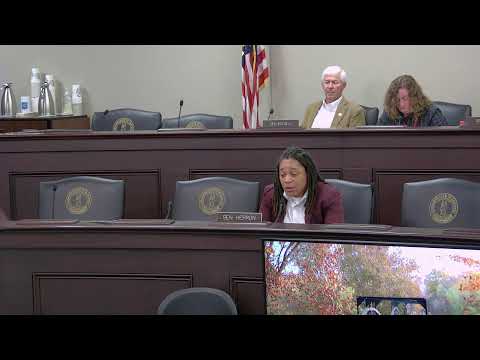
Committee action and votes: Committee members discussed the intervention standard and whether an administrative standard should be preserved rather than adopting a civil‑court 'clear and convincing' test. After testimony and discussion, the committee moved, took roll call, allowed members to explain votes on the record, and reported SB 8 as amended by the substitute favorably with the expression that it should pass on the floor.

What remains unresolved: Witnesses urged the committee and subsequent floor members to clarify or remove provisions that would unduly restrict community and nonprofit intervention; the transcript does not show final statutory language changes beyond the committee substitute nor a floor schedule.