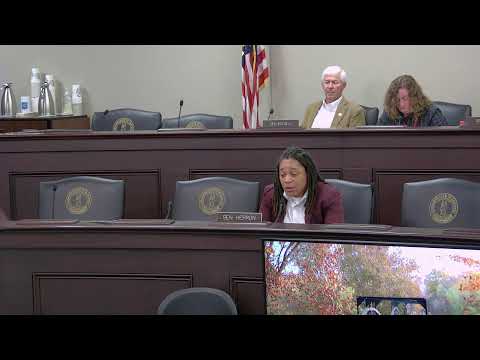
Sen. Philip Wheeler’s bill to rein in utilities and boost local planning advances from committee
Loading...
Summary
The Senate committee reported SB 213 favorably after sponsor Sen. Philip Wheeler said the measure would require triennial integrated resource plans, treat exclusive utility service territories as revocable privileges, and allow large new loads to choose alternative suppliers to spur development in Eastern Kentucky.
Senator Philip Wheeler, sponsor of Senate Bill 213 and the bill’s presenter to the committee, said the measure is a consumer-driven response to rising electric costs and weak planning by investor-owned utilities.
“Senate Bill 213 is an effort to try to, encourage utilities to do better planning,” Wheeler said, telling the committee the bill would require investor-owned utilities to file triennial integrated resource plans that are “least cost, risk based, and transparent.” He said the Public Service Commission (PSC) would be directed to promulgate regulations implementing those statutory requirements.
Why it matters: Wheeler told the panel that long-lived utility investments — transmissions, power plants and the like — can saddle customers with costs for decades. The bill would also clarify that exclusive monopoly service territories are privileges granted by the Commonwealth and not irrevocable franchises; when utilities are sold, the PSC could consider premiums paid over book value as attributable to that monopoly territory and act to protect ratepayers.
Key provisions and effects: Section 1 establishes mandatory integrated resource planning with PSC rulemaking authority. Section 2 affirms that service territories are a Commonwealth privilege and directs the PSC to consider premiums in utility sales. Section 3 lets large new loads (above 50 megawatts) make a one-time choice to receive power from an alternative supplier to help attract industry in capacity‑constrained parts of the state.
Sponsor’s case and local impact: Wheeler repeatedly framed the bill as a tool to reduce rates and attract industry in Eastern Kentucky, describing the region as suffering high rates that hinder economic development. He cited prior sale negotiations involving Kentucky Power and the need to prevent premium costs from falling to local customers. “You can’t live like that,” Wheeler said of extreme bills he described seeing in his district.
Committee reaction and next steps: Committee members asked clarifying questions about the phrase in the bill that the service territory is the property right of the Commonwealth and about how the PSC would implement the new planning requirements. The committee moved and seconded the bill; after members explained votes, the committee reported SB 213 favorably with the expression that it should pass on the floor.
What the committee did not decide: The committee reported the bill out of committee; floor consideration, any amendments from the House, and final enactment remain pending. The measure’s implementing regulations and the PSC’s rulemaking timeline were not specified during the hearing.