Lifetime Citizen Portal Access — AI Briefings, Alerts & Unlimited Follows
Senate committee chair urges reopening as shutdown leaves SNAP recipients and OTC drug approvals at risk
Loading...
Summary
The chair of the Senate Committee on Health, Education, Labor, and Pensions urged reopening the federal government, saying the nearly month‑long shutdown has furloughed about 1.4 million federal workers, put SNAP benefits at risk in some states, and allowed an over‑the‑counter drug user‑fee program to expire, jeopardizing approvals of new OTC treatments.
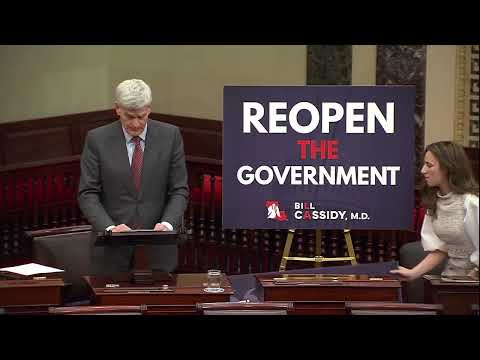
The chair of the Senate Committee on Health, Education, Labor, and Pensions said on the Senate floor that the federal government has been shut down for nearly a month and urged colleagues to reopen it, warning the shutdown is already harming families and patient access to new over‑the‑counter treatments.
"Mister president, the government has been shut down for nearly a month," the chair said, adding that "it's the longest full government shutdown in American history." He said about 1,400,000 federal employees nationwide are furloughed or working without pay and that 13,000 air traffic controllers have already missed a paycheck.
The chair highlighted looming cuts to the Supplemental Nutrition Assistance Program, saying SNAP benefits "run out November 1 in many states" and citing state-level figures: "In Louisiana alone, that's 804,000 individuals, including 312,000 children relying on SNAP." He framed the issue as immediate and humanitarian: "We are literally talking about food on the table."
On the political dynamics, the chair accused House and Senate Democrats of using the shutdown as leverage, citing an exchange he attributed to a House Democratic whip: "there'll be families that are going to suffer, but it is one of the few leverage times that we have." He said Republicans had proposed measures to pay furloughed federal workers and that such measures were blocked by Democrats.
Shifting to regulatory consequences, the chair said that his committee had worked in a bipartisan fashion to reauthorize the over‑the‑counter monograph drug user‑fee program (sometimes referred to in the transcript as "MUFA"), which funds review work that helps bring OTC drugs to market. "Because of this shutdown … for the first time in history, a user fee program has expired, meaning patient access to new over the counter treatments for common ailments is in jeopardy," he said, identifying the lapse as a direct operational effect of the shutdown.
The chair, who said he is a doctor, reiterated his broader policy priority of lowering health‑care costs for Americans across Medicare, employer‑sponsored plans and small businesses, and called for reopening the government before negotiating health‑care changes: "Open the government," he said. "Then let's have a conversation about the areas in health care we can address to actually lower premium cost and out of pocket cost for middle income Americans."
No votes or formal motions were recorded in the remarks. The speech closed with the chair urging immediate reopening as the necessary first step to address both the humanitarian impacts cited and the regulatory lapse he described.