
Residents press Richardson council for stronger short-term rental rules; staff proposes tighter registrations and enforcement
Get AI-powered insights, summaries, and transcripts
Sign Up Free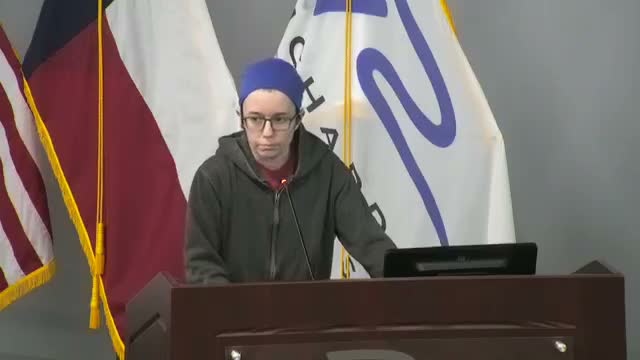
Summary
Residents urged the Richardson City Council to tighten short-term rental (STR) rules after reports of parties, parking and repeated calls for service. Staff outlined registration changes, software to identify listings, clearer revocation grounds and a plan to study density and occupancy limits.
Several Richardson residents told the City Council they want tougher rules for short-term rentals, citing late-night parties, parking congestion and repeated police and code calls that they say have eroded neighborhood quality of life.
At least three neighbors who spoke during public comment described clusters of STRs in small subdivisions and high-impact incidents. "This problem feels bigger than one private citizen can possibly address," said Lauren Pekka of Sun Valley Drive, who described repeated stormwater flooding at her property but also supported better STR enforcement. Ellen Beamer said her Spring Park Meadows neighborhood of 86 homes now has four STRs within about 750 feet and argued "these are businesses operating in neighborhoods" that should be restricted or more tightly regulated. Rachel Upson, whose Owens Park neighborhood is surrounded by investor-owned STRs, said the city's $100 annual registration fee "cannot begin to financially cover" the repeated police and code responses her neighbors have reported.
Why it matters: Council members framed the debate as a balance between homeowners'property rights and neighborhood impacts. Staff and the city attorney warned that courts have split on the extent to which municipalities can broadly prohibit STRs, so any restrictive measure will need strong, study-backed findings and careful drafting to survive legal challenge.
What staff proposed: Director of Community Services Lindsay Turman told the council the city has 92 registered single-family STRs and 43 pending registrations. She outlined several recommended ordinance updates: expand the definition of owner to capture responsible parties, require applicants to list all advertising links and update registration changes within 72 hours, require a guest-safety certificate and display of a current registration certificate at the property, require collection and remittance of applicable hotel-occupancy taxes, and clarify and expand the grounds and procedures for revoking a registration.
Legal context: Assistant City Attorney Joe Gorfida cautioned that "we're still operating in a gray area" of case law. He said outright bans of STRs in all zoning districts have not been upheld elsewhere and noted conflicting rulings in Dallas and Tarrant counties now before higher courts. "If there are going to be restrictions, they need to be backed by study or findings that show a legitimate governmental purpose," Gorfida said.
Enforcement and data: Police Chief Gary Tittle said 2025 calls for service tied to STRs were lower than 2024 (38 calls to 26 locations in 2025, versus 78 calls to 46 properties in 2024), but acknowledged that unregistered STRs remain a concern. Staff said the city is procuring STR-detection software that will index dozens of platforms and make it easier to identify unregistered listings.
Council points of emphasis: Members asked about occupancy limits (staff said the city can limit overnight occupants based on floor plans and minimum property standards), parking and alley-blocking enforcement (police noted those are illegal and enforceable), the legality and risks of a moratorium on new STRs (Gorfida said some cities have used moratoria but they have been challenged), and fee adjustments to cover software and enforcement costs (staff said a fee study will be part of the upcoming budget process).
Next steps: Council members asked staff to provide examples of the studies other cities used to support density or spacing restrictions, to return with clearer language on occupancy and density options, and to include cost-recovery and fee recommendations in the budget process. No vote or formal ordinance change occurred; the discussion was a staff briefing and request for feedback.
The council moved next to the police department's annual review; staff will return with suggested ordinance language and additional analysis on density and occupancy options.