Get Full Government Meeting Transcripts, Videos, & Alerts Forever!
Get email alerts on the Code Enforcement topic
No spam. Unsubscribe anytime.
Coweta commissioners debate selective enforcement and ask staff for 2016 policy minutes
Summary
Commissioners pressed staff about perceived selective enforcement by code officers; staff explained a 2016 policy change requiring complainant information to avoid anonymous disputes and agreed to provide the board the relevant minutes and to implement whatever policy the board adopts.
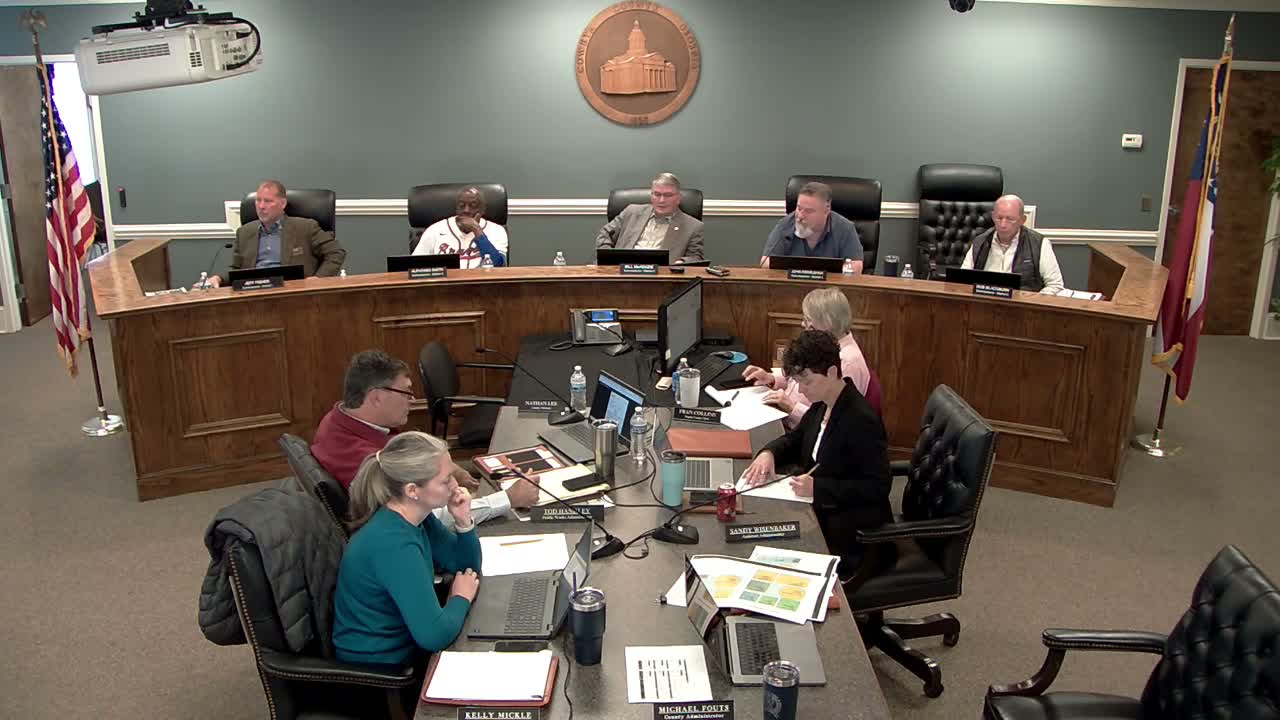
Commissioners questioned county staff on Feb. 12 about selective enforcement by code‑enforcement officers and whether officers should act on obvious violations observed during routine patrols. The discussion focused on workload impacts, legal evidence requirements and a 2016 policy change that now requires complainant name and phone number for many complaint types.
One commissioner described seeing multiple obvious violations along a route and asked why code officers could not simply act when a clear violation is observed. "If Tim is driving down the bypass and he sees something, and he knows it's an actual violation, why can't he just—" the commissioner asked. Staff explained the 2016 change was made after an incident in which complainant information was later disclosed via public records requests, which led the board to limit anonymous complaints to reduce frivolous or retaliatory disputes. The county’s code enforcement representative said the office can operate under either policy, but urged the board to consider the substantially increased workload and potential court burdens that would follow from proactive, county‑wide enforcement without complaint filters.
Staff committed to locate and provide the board minutes documenting the 2016 policy change and said they will implement the board’s direction on complaint procedure if the board elects to amend policy at a future regular meeting. Staff also outlined operational limits (jurisdictional differences with GDOT for state rights‑of‑way, evidence and witness requirements when cases proceed to court, and current staffing levels) that the board should weigh when setting enforcement expectations.
The discussion included reference to recent enforcement work the county has carried out (examples of removed unsafe structures and liens placed where properties were not remediated) and a willingness by code staff to address 'hot spots' that commissioners identify. Staff warned that a return to fully proactive enforcement would increase case volume significantly and could generate neighbor‑dispute complaints if the complaint intake process is not carefully managed.