
Housing industry opposes bill to extend door-knocking rights to elected officials in multifamily buildings
Get AI-powered insights, summaries, and transcripts
Subscribe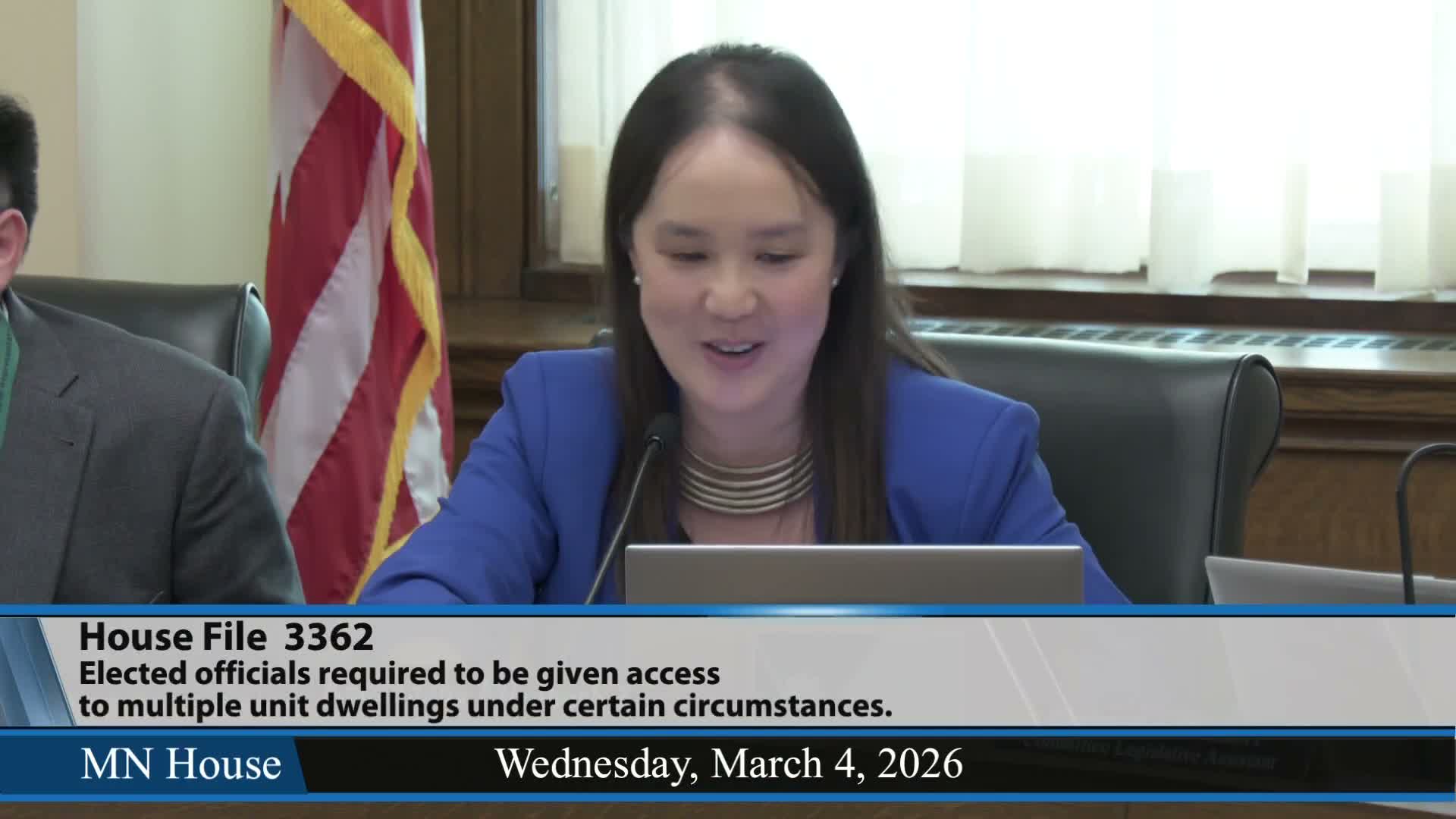
Summary
The committee laid over House File 33 62 after hearing opposition from the Minnesota Multi-Housing Association, which argued the bill would weaken tenant privacy and complicate building access protocols. Sponsors said the change would align elected-official access with candidate access.
The committee laid over House File 33 62 after members debated whether to let "elected officials" have the same statutory door-to-door access rights in multifamily buildings that candidates have during campaign season.
Cecil Smith, representing the Minnesota Multi-Housing Association, urged a no vote and described operational and safety concerns: "A multifamily building is not a public venue... expanding statutory access for elected officials beyond just campaign season risks weakening those protections and undermining residents' sense of security and privacy in their own homes," he said. Smith also noted practical burdens for property managers and cited the U.S. Supreme Court's Cedar Point Nursery decision on limitations to government-imposed access to private property.
Supporters said the change would help elected officials engage constituents. Chair Freiberg said he saw no practical distinction between candidates and elected officials when conducting outreach and described the proposal as "common sense." The committee adopted two offered amendments (one to restore presidential and vice presidential language and a second clarifying that staff could be excluded) and ultimately laid the bill over for possible inclusion, leaving room for additional drafting.
What happens next: HF 33 62 was laid over; the committee flagged tenant-privacy concerns and signaled it may revisit specific exemptions (for example, Secret Service) or seasonal limitations in future drafting.