
Committee gives favorable report to amendment trimming advice-and-consent for some appointees
Get AI-powered insights, summaries, and transcripts
Subscribe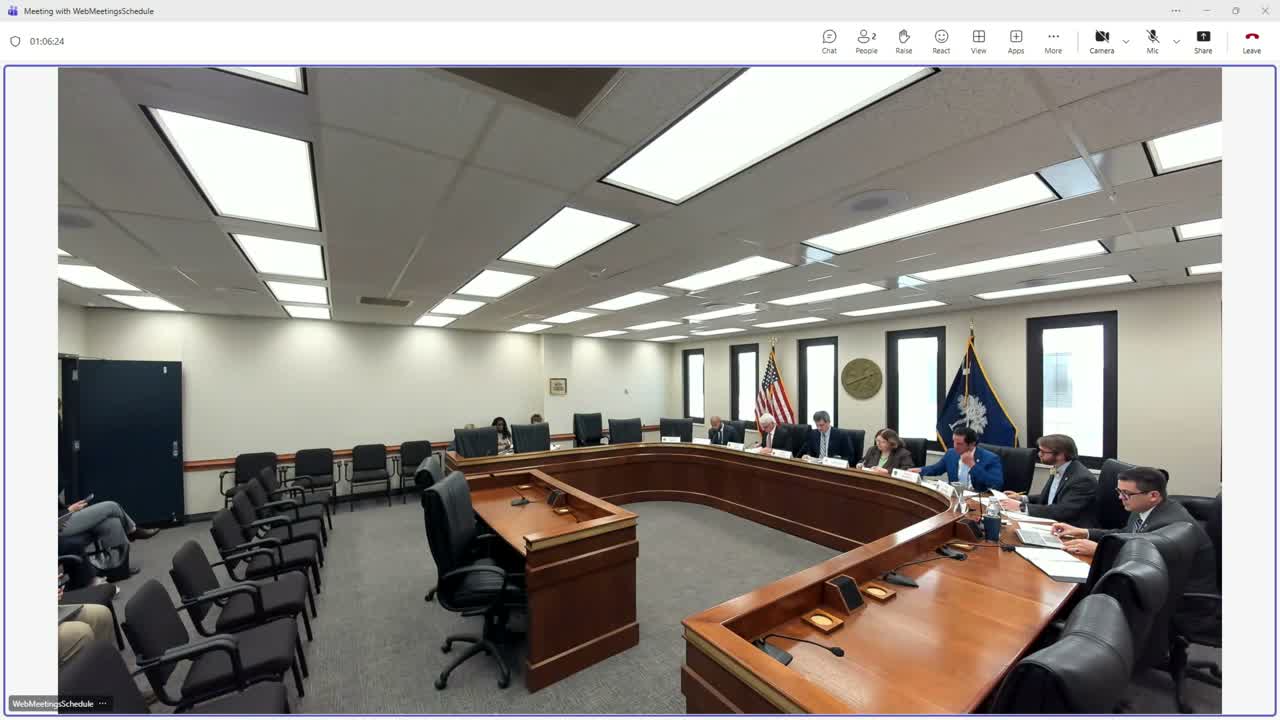
Summary
A legislative committee voted to give a favorable report to an amendment that would remove certain boards from the senate advice-and-consent process and add notification requirements; members pressed for oversight options, vacancy timelines and transparency measures.
A legislative committee voted to give a favorable report to an amendment that would remove some boards and commissions from the senate's advice-and-consent process and place a small number of other positions under that review, the chair said during a meeting.
The amendment, prepared by "Miss Vincent" and described to the committee by the chair, would remove the Forestry Commission from the list that requires advice and consent and would add what the transcript identified as a "Great Opportunity School" appointment to the advice-and-consent list. The chair said staff had circulated the amendment and that members raised no formal opposition when it was distributed.
Committee members framed the choice as a trade-off between streamlining appointments and preserving legislative oversight. "If we find there is a bad actor, that is dismantling an organization, tearing apart an organization from within," a committee member said, arguing the legislature needs a process to address noncriminal misconduct by appointees. The member pressed for a statutory hearing or similar mechanism if advice-and-consent is removed.
The chair replied that the governor retains authority to suspend or remove appointees in cases of criminal activity or malfeasance and pointed to existing oversight tools. "The governor has the authority to suspend or do fire in some cases," the chair said, adding that oversight committees and public scrutiny often prompt corrective action. The chair also noted constitutional options such as impeachment and lower-threshold senate procedures used in past cases.
Members discussed several practical safeguards that could accompany narrower advice-and-consent requirements. The chair proposed a statutory notification requirement that would obligate the governor to notify the senate—and file appointments with the secretary of state—when making appointments that are not subject to advice-and-consent so the public and legislators would know who is serving. Committee members debated whether to impose a strict time limit on how long an interim appointment may remain unfilled; one member cautioned that fixed deadlines could be gamed and preferred flexibility.
Several members cited difficulty finding qualified candidates as one reason to reduce confirmation burdens. The chair said disclosure and confirmation requirements can deter unpaid or per-diem appointees from serving and pointed to recent struggles filling posts at agencies such as the Department of Public Health.
After discussion, the chair asked if anyone objected to adopting the amendment as drafted; members indicated agreement and the committee moved the measure forward. The chair called for the vote and recorded a favorable report; earlier in the meeting the chair had described an amendment being sent out "unanimously." The transcript does not record a roll-call tally or identify a mover and seconder for the motion.
The committee closed the discussion and issued a favorable report; the transcript does not specify the next procedural step or a floor schedule for the bill.