
Calvert County Health Department details Destination Wellness program to reduce emergency use
Get AI-powered insights, summaries, and transcripts
Subscribe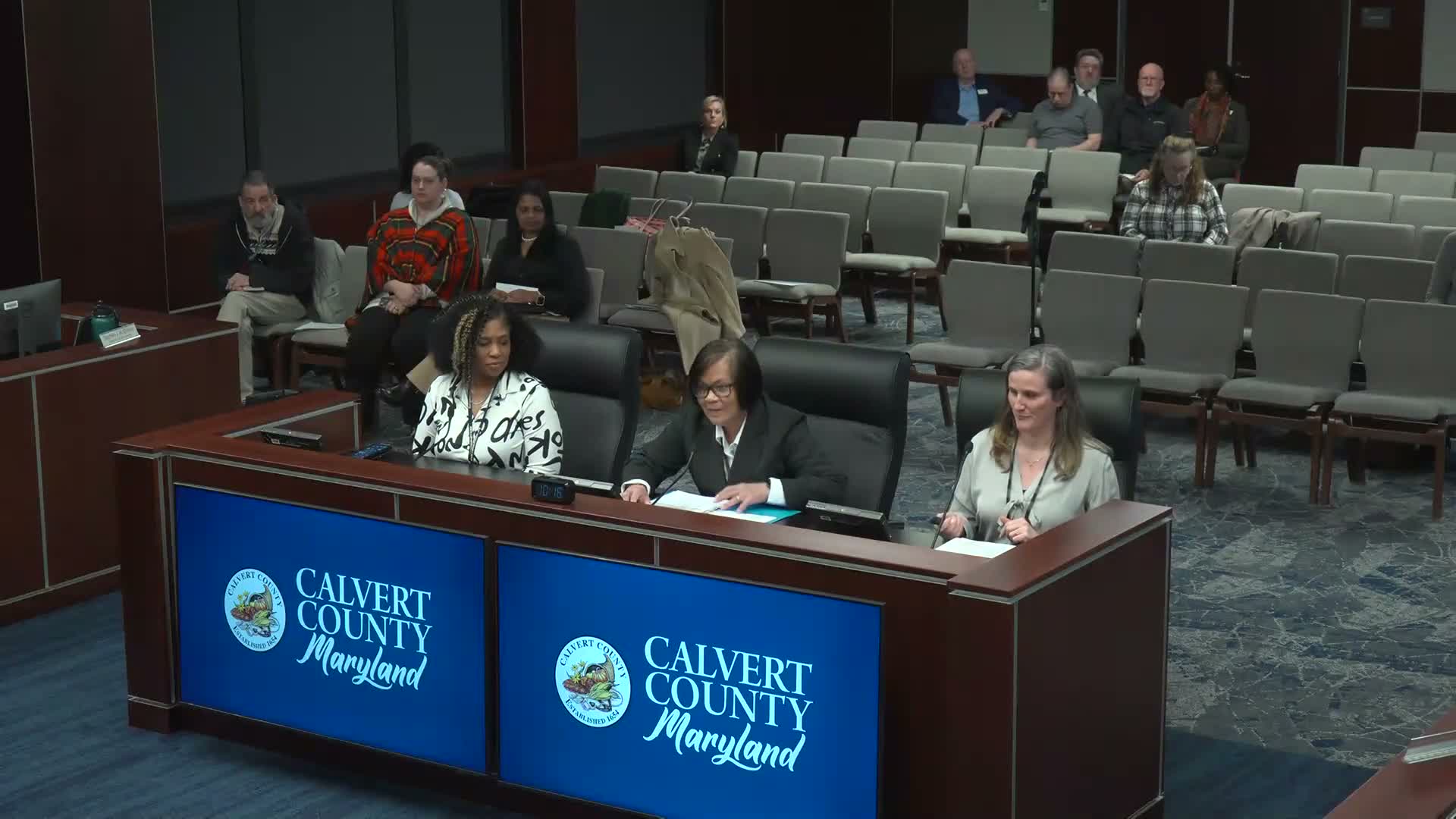
Summary
Health department presenters said the Destination Wellness program uses referrals, care plans and home visits to reduce avoidable ED visits and EMS transports; staff reported initial enrollments and a three‑year CHRC grant and said the program is working toward a mobile integrated health model.
The Calvert County Health Department told the Board of Health on March 3 that its Destination Wellness (DW) program identifies frequent users of emergency services and provides personalized care coordination, case management and care navigation to address social determinants of health.
Dr. Tani Zamora (presenter) said the program targets adults 18 and over who repeatedly use emergency departments, EMS or mobile crisis teams. She described a client‑centered model: referrals from hospital EDs, EMS, mobile crisis and primary‑care partners; consented enrollment; a social‑determinants screening and an individualized care plan; and followup including home visits and a mobile van when transportation is a barrier.
Dr. Zamora summarized outcomes and metrics: the program was established in July 2025 and by December had enrolled 41 clients; in January 2026 there were 19 new enrollments. Presenters said 80% of contributing factors to overuse were nonmedical, with housing instability (35%), food insecurity (25%), unreliable transportation (20%) and chronic medical conditions (20%) commonly identified. Staff reported 170 total referrals to date and 32 active clients.
Program funding is from a Maryland Community Health Resources Commission (CHRC) grant renewable for three years; staff said the grant supports year‑one operations and that additional data are required to produce robust cost‑savings analyses. A budget slide presented an estimated annual operating cost of about $200,200 and break‑even thresholds (for example, preventing 1.5 hospital admissions per month yields roughly $198,000 in annual savings).
Mika Blizzard, identified as the program manager, said the team includes a registered nurse case manager, a chronic‑disease nurse and community health outreach workers, and that the team coordinates monthly with Calvert Health and public safety. Speakers said the health department is working to incorporate DW services into a broader mobile integrated health model and will seek rural health transformation funding to scale the effort.
The Board of Health and commissioners welcomed the presentation and asked about referral sources, scalability and sustainability; staff noted plans to return with more outcome data as they accrue.
Next steps: staff will continue to collect data and report outcomes to the Board of Health; the department intends to seek additional funding opportunities to make the model sustainable.