Get Full Government Meeting Transcripts, Videos, & Alerts Forever!
Get email alerts on the Cip Priorities topic
No spam. Unsubscribe anytime.
Oceanside council workshop sets direction for CIP priorities, proposes annual fall check‑in
Summary
Consultants and staff presented a proposed framework for prioritizing the city’s capital improvement projects, emphasizing public safety, coastal resilience and staffing constraints; council directed staff to develop clearer, less subjective criteria and to return with a fall CIP workshop for earlier budget input.
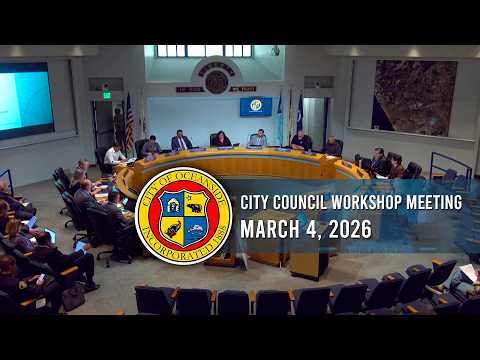
Oceanside City Council convened a workshop on capital improvement program (CIP) priorities where consultant Baker Tilly and city staff reviewed common themes from interviews, funding rules and project delivery constraints and sought council guidance on ranking projects for the FY26/27 budget and a five‑year CIP.
City Manager Jonathan Borrego told the council that the evening’s purpose was not to adopt a final CIP for FY26/27 but to reconfirm priorities and improve timing for budget decisions. Borrego and facilitator Al Zalinka urged the council to endorse a new practice: an annual CIP check‑in in the fall to give staff earlier direction before the April and June budget meetings.
City Engineer Brian Thomas outlined the legal and accounting framework that governs the CIP (Administrative Directive 54; Oceanside Municipal Code funding sections were cited), explained that capital projects typically have a minimum threshold and multi‑year life, and described five main funding pools: the general fund, enterprise funds, grants (HUD/CDBG and others), developer impact/impact fees (growth‑restricted), and special local/state taxes such as Measure X, TransNet and SB1 (transportation‑restricted). He cautioned that some funds are restricted to specific uses and that developer fee timing complicates five‑year forecasting.
Thomas and consultants stressed staffing limits as a major constraint: a target benchmark is about nine projects per project manager before delivery capacity becomes diluted. That staffing pressure, coupled with a long pipeline of projects, led consultants to recommend clearer prioritization criteria, stronger feasibility checks before adding new projects midcycle, and better public reporting on project status.
Council members discussed tradeoffs between funding fewer “high‑impact” projects (examples cited included ReBeach, the San Luis Rey River flood control project, police headquarters and Fire Station 8) and the cumulative benefit of many smaller neighborhood projects. Several members asked staff to present an achievable annual list tied to realistic staffing and dollar capacity rather than the full unfunded list, which was described in discussion as numbering in the dozens.
Consultant recommendations focused on transparency and process discipline: establish a clear review cycle, limit midyear ad‑hoc additions (consider a swap rule when new items are added), require feasibility validation and operating/maintenance cost estimates, and maintain reserves to avoid unfunded liabilities. The consultants and city manager agreed staff will bring more detailed, fleshed‑out criteria and a proposed fall workshop back to council for further discussion and possible adoption.
The council took no final votes on CIP adoption. The meeting closed with instructions that staff will present the FY26/27 budget workshop materials in April and return later in the year with the proposed annual CIP check‑in and clarified prioritization criteria.