Lifetime Citizen Portal Access — AI Briefings, Alerts & Unlimited Follows
Council reviews simplified mosquito plan; staff may authorize spraying after two consecutive positive trap weeks
Loading...
Summary
Environmental Services proposed reducing mosquito risk levels from five to three, moving to Risk Level 3 and considering ground spraying after a single trap location tests positive for two consecutive weeks, citing trap turnaround time and slow human-case reporting.
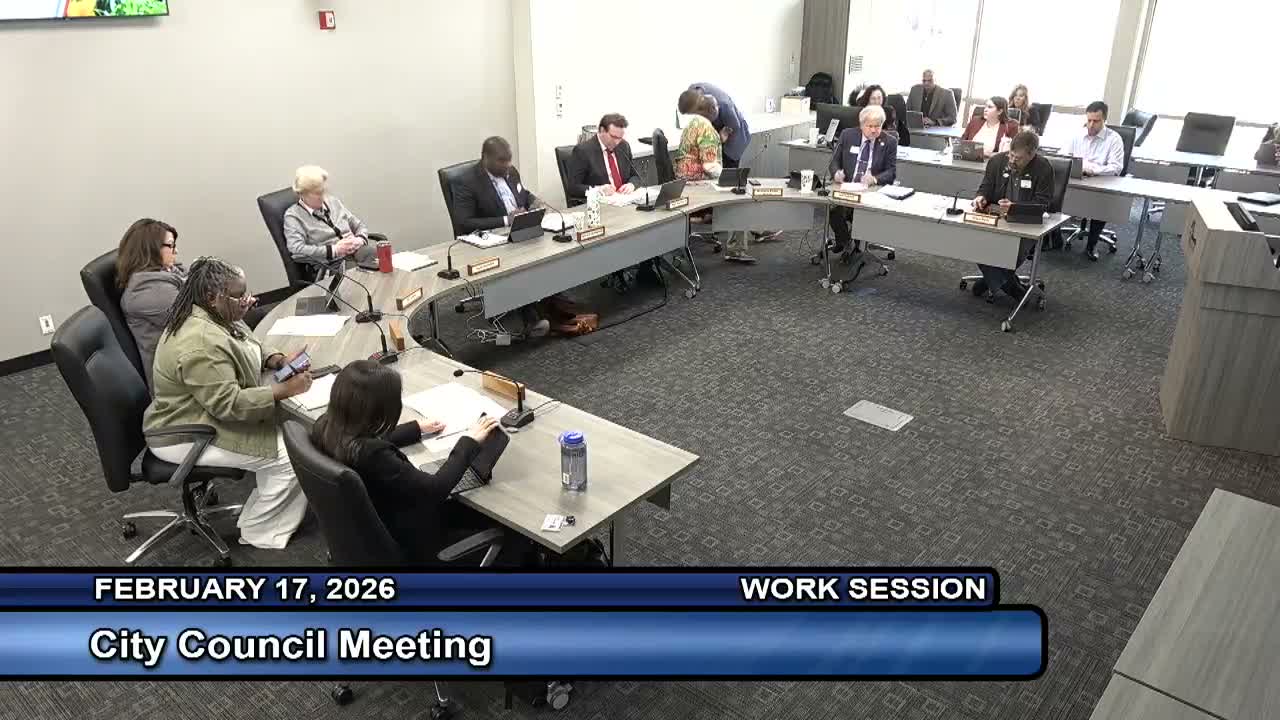
Michael Gagne of Environmental Services and Sustainability presented an update to the city's mosquito surveillance and response plan and recommended simplifying the plan from five risk levels to three.
Gagne said Denton's surveillance runs from May through October with weekly trapping done in partnership with the University of North Texas and laboratory analysis performed by the Texas Department of State Health Services. He explained that human West Nile virus cases can be reported up to six weeks after infection because of symptom development, medical testing and state confirmation, which makes human-case data a lagging indicator for operational response.
Under the proposed plan, the city would start the season at Risk Level 1. Risk Level 2 would be declared after any confirmed positive mosquito sample within the city, and Risk Level 3 would be reached when a single trap location tests positive for two consecutive weeks. At Risk Level 3, staff would be authorized to consider ground-level spraying after evaluating local characteristics (street access, open space, weather). Gagne said the plan would prioritize disease-transmission control — spraying only in response to West Nile virus positives, not for general nuisance control.
"Using two consecutive weeks gives us a known timing and allows us to respond quickly to active mosquito locations," Gagne said. He added that staff would seek a one-time resolution at the start of the season to authorize response actions rather than returning mid-season for separate approvals, enabling faster response when trap results arrive on Wednesdays or Thursdays and council meets on Tuesdays.
Council members asked whether the city has sprayed in recent years (Gagne said not since 2020), how spray areas are determined (roughly a quarter-mile in low-access neighborhoods up to about a mile in denser street grids), and whether the city will monitor environmental impacts post-spray. Gagne said the city uses ultra-low volume sprayers and contracts with a third-party licensed applicator; the city owns trailer-mounted sprayers and keeps insecticide in stock. Estimated monitoring costs are roughly $25,000 a year; a single-night spray event runs under $1,000 depending on mileage.
Council gave direction to update the plan as proposed, with several members asking for continued attention to environmental monitoring and public notification processes.
Why it matters: The change shifts the city's trigger for spraying from waiting on multiple human cases toward more timely mosquito surveillance, allowing quicker response to local mosquito activity while clarifying notification and targeting approaches.
Next steps: Staff will update the plan to three risk levels, pursue a seasonal resolution to authorize spraying if needed, continue surveillance and partner outreach, and add community outreach to explain triggers and protections.