Get Full Government Meeting Transcripts, Videos, & Alerts Forever!
Get email alerts on the Land Use Certified Recovery Residences topic
No spam. Unsubscribe anytime.
High Springs staff to draft ordinance after workshop on certified recovery residences
Summary
City commissioners discussed how to implement a state requirement to accept exemption requests for certified recovery residences, directed staff to draft a local ordinance for first reading, and asked for an overlay map and Orlando's use table to guide zoning decisions.
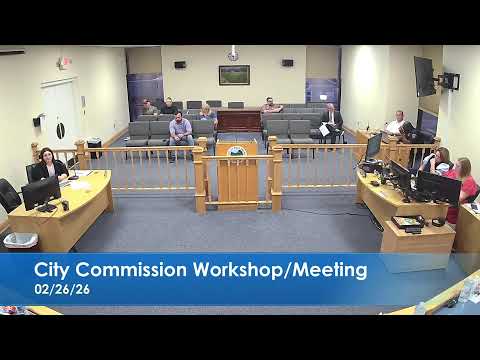
High Springs city commissioners on March 7 held a workshop-style discussion about how to implement a state law requiring local governments to create a clear application process for exemptions to the Land Development Code for certified recovery residences (CRRs).
City staff explained that CRRs already must be certified at the state level before seeking local exemptions and described the certificate requirements, which include a policy-and-procedures manual, drug-testing procedures, a good-neighbor policy, background checks, proof of insurance and fire/health inspections. The staff member leading the presentation said the statute (Senate Bill 954) obliges municipalities to establish a transparent exemption process and outlined the draft ordinance that would create that process.
The staff member told commissioners the draft currently proposes administrative approval but can be changed so the commission reviews applications; he flagged statutory deadlines that require the city to respond within 30 days if an application is incomplete and to issue an opinion within 60 days of a completed application. "Those 30 and 60 days happen fast," the staff member said, urging commissioners to weigh whether lower-level CRRs (levels 1-2) could be handled administratively while higher-level, staffed facilities (levels 3-4) come before the commission.
Commissioners pressed staff about zoning and location concerns: whether CRRs could be placed in subdivisions and how density should be limited. One commissioner cited Orlando's approach, which treats homes with six or fewer residents similar to single-family residences and requires larger facilities to locate in commercial zones. Commissioners asked staff to provide Orlando's permitted-uses table as a model and to prepare overlay maps showing 500-foot buffers from alcohol-serving establishments, package stores, schools, daycares and parks so the commission can see how potential setbacks would affect available sites.
Commissioners also raised the interaction with state law on offender-registry distance requirements and notification rules. Staff repeatedly noted that the city cannot override state statute and that any local rules must avoid discrimination or unlawful restrictions under the Fair Housing Act and the Americans with Disabilities Act.
As a next step, the staff member said he would draft the ordinance, send commissioners the Orlando use table and produce an overlay map with 500-foot buffers for review. He proposed bringing the ordinance back at the next meeting for first reading. Commissioners generally agreed and emphasized the need to balance protecting current neighborhood residents while providing legally defensible locations for CRRs.
The discussion did not include a vote; staff said the ordinance would return for the commission's first reading with the proposed changes and supporting maps and materials.