Get Full Government Meeting Transcripts, Videos, & Alerts Forever!
Get email alerts on the Utilities topic
No spam. Unsubscribe anytime.
Council hears updates to backflow prevention ordinance; effective date set for March
Summary
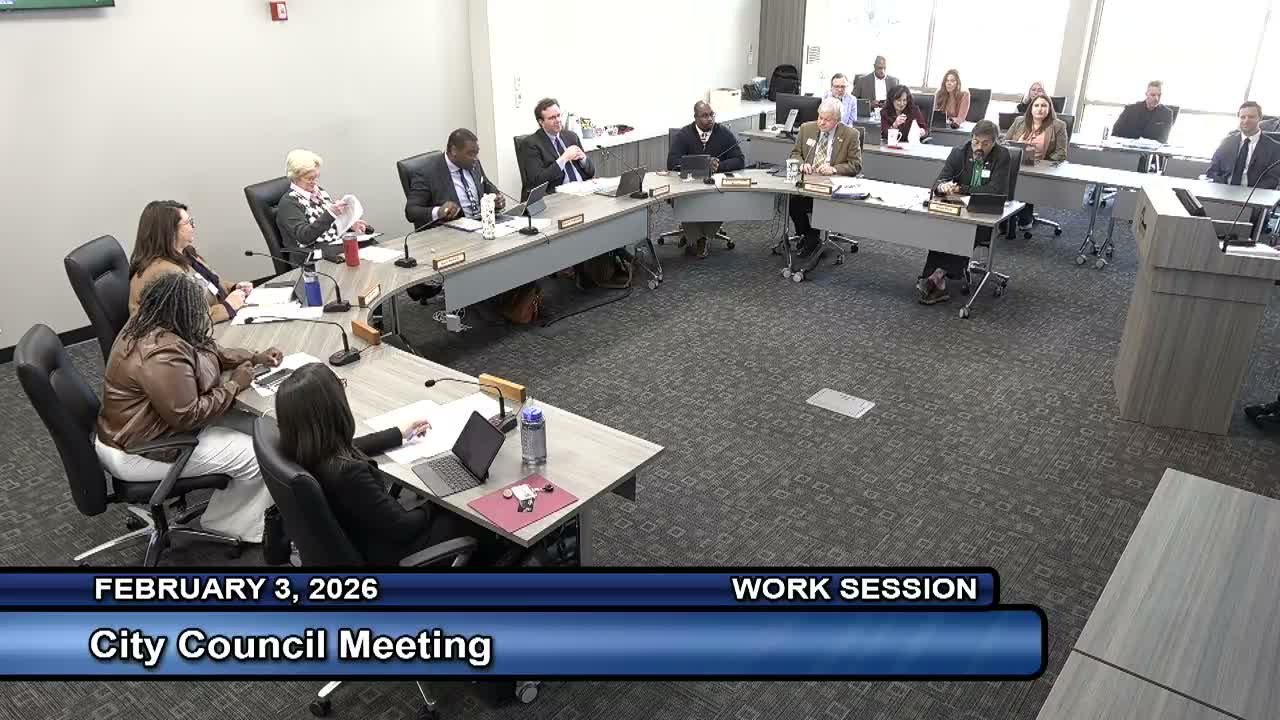
Staff presented proposed updates to Denton’s cross‑connection and backflow control ordinance to modernize standards, clarify enforcement and require testable assemblies for new nonresidential connections; staff said changes will not force existing systems to retrofit unless they undergo significant plumbing changes, and the effective date is planned for March 17.
Steven Gay, general manager for Water Utilities and Street Operations, presented proposed revisions to the city’s cross‑connection and backflow prevention ordinance, originally adopted in 1997. Gay said staff reviewed industry best practices and Texas Commission on Environmental Quality (TCEQ) requirements and concluded the ordinance needs modernization to address enforcement challenges and emerging hazards.
Key changes staff highlighted include clarified installation standards in the design criteria, elimination of atmospheric vacuum breakers for new irrigation systems (because they are non‑testable), refined hydrant‑meter requirements, expanded staff inspection access with reasonable notice, defined emergency shutoff procedures in contamination events, clarified service‑suspension authority for noncompliance, and authorization for fees that support program administration. Staff emphasized the update applies mainly to commercial and industrial (nonresidential) connections; existing compliant nonresidential systems would not trigger changes unless a significant remodel or new permit is sought.
Gay used a 2024 Grand Prairie backflow incident as an example of why aggressive protections matter; that event required a broad “do not use” advisory and distribution of bottled water. He said the city’s planned AMI (advanced metering infrastructure) rollout in three to six months will improve detection of reversal‑of‑flow events and provide better frequency data for micro backflow events.
Councilmembers asked for data on the frequency of events and costs. Gay said per‑unit device costs run roughly $2,000–$4,000 and that staff will supply historical metrics for redevelopment and device‑counts on request. The planned next steps are public notification in the Denton Record‑Chronicle and individual consideration by council next month, with an implementation date of 2026‑03‑17 listed in staff materials.
Staff said the ordinance will maintain compliance with TCEQ and provide a clearer enforcement path. Council did not take a final vote on the ordinance at the session; staff will publish notices and return for individual consideration.