Get Full Government Meeting Transcripts, Videos, & Alerts Forever!
Get email alerts on the Utility Billing topic
No spam. Unsubscribe anytime.
DME identifies 218 commercial billing adjustments totaling net $331,000; council backs customer-favoring changes
Summary
Denton Municipal Electric found 218 commercial accounts with billing adjustments over a 24-month review, recommending refunds to overbilled customers, six-month limits on underbilling backbills and retaining a two-consecutive-month demand trigger; council directed staff to proceed and supported staff recommendations.
Tony Puente, general manager of Denton Municipal Electric, presented the utility's review of electric billing and recommended ordinance and process updates after staff identified 218 commercial accounts requiring demand reclassification or billing corrections over a 24-month review period.
Puente said the adjustments represented a net recovered billing of about $331,000. Of those accounts, DME overbilled roughly 32 accounts and issued credits of about $51,000 (credits ranged from about $21 to more than $10,000; average credit roughly $1,600). The majority of the adjustments were underbillings affecting about 186 accounts, representing backbillings of roughly $382,000; average backbill was a little over $2,000.
Puente explained the underlying cause: when new commercial accounts are established, staff assign a rate class based on the applicant's estimated demand; actual usage or power-factor equipment changes can later show the account belongs in a different rate class. DME's current ordinance allows corrections up to two years; staff proposed retaining the existing two-consecutive-month demand trigger and keeping the 12-month lock-in period, but to limit recovery for underbillings to six months (prospective audits would be used for lock-in-period adjustments). Puente said the suggested approach would be customer-favoring for most situations.
"We're recommending that for any overbilling we go back as far as the error happened, but for any underbillings we're only going back six months," Puente said.
Councilors asked detailed operational questions about how customers are notified, how accounts are identified (manual work vs. automation), and whether customers can appeal a demand-classification decision. Puente said notices are printed on bills and that commercial customers generally use the invoice cloud to view details; DME is working to automate detection so staff and customer service teams can identify misclassifications monthly. He said appeal conversations generally occur at initial setup and that utilities sometimes offer demand forgiveness with justification (one referenced utility offered forgiveness for equipment-caused spikes).
On policy alignment, Puente said most peer utilities use one-month triggers (move after one month of exceeding the maximum) while Garland and Denton use a two-consecutive-month trigger; DME recommended keeping the two-month standard to reduce customer churn and repeated reclassifications.
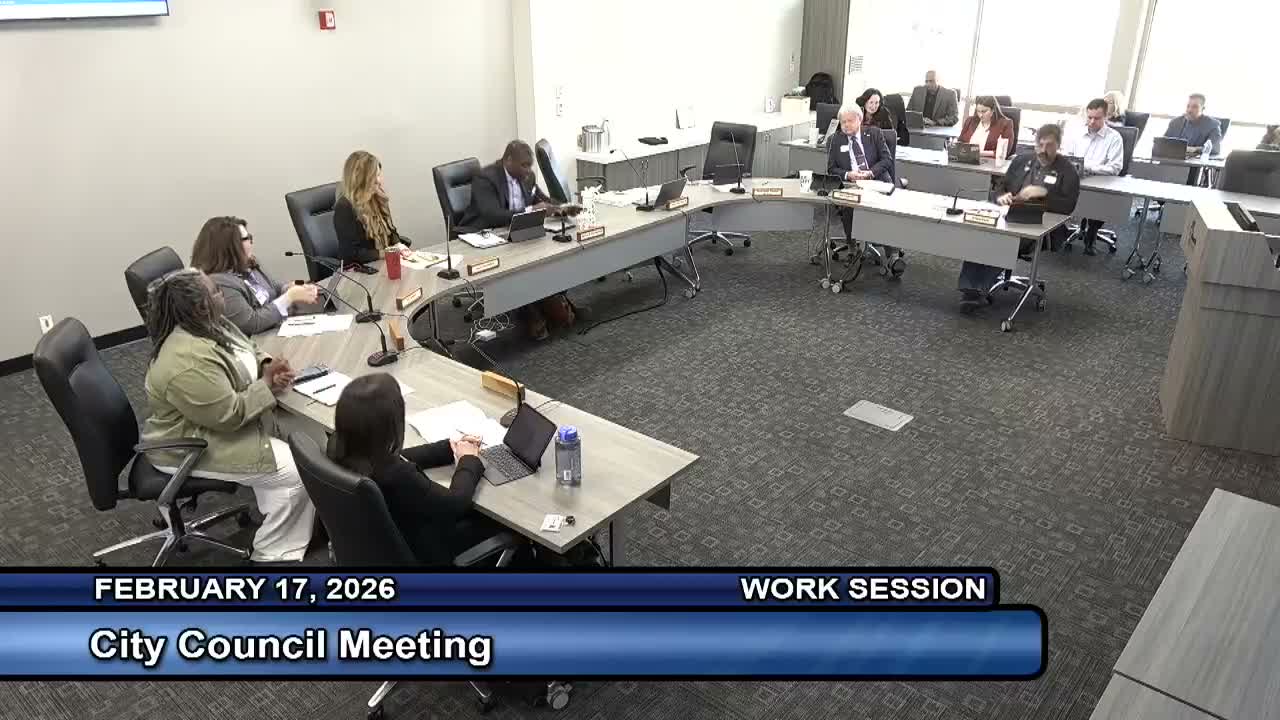
Council expressed support for staff recommendations and voted to provide direction to proceed with the proposed changes to billing procedures and outreach. Mayor Pro Tem and multiple council members praised staff for a customer-centered approach.
Why it matters: The adjustments affect commercial customers' bills and cash flow; changes to ordinance application and backbilling windows define how much customers can be charged retroactively and how quickly they must monitor use. Staff emphasized outreach and automation to reduce future misclassifications.
Next steps: Staff will implement the recommended six-month recovery limit for underbillings, maintain the two-month demand trigger, automate detection of anomalies and improve customer outreach; specific ordinance language will be prepared for future council action if needed.