Get Full Government Meeting Transcripts, Videos, & Alerts Forever!
Get email alerts on the Public Safety topic
No spam. Unsubscribe anytime.
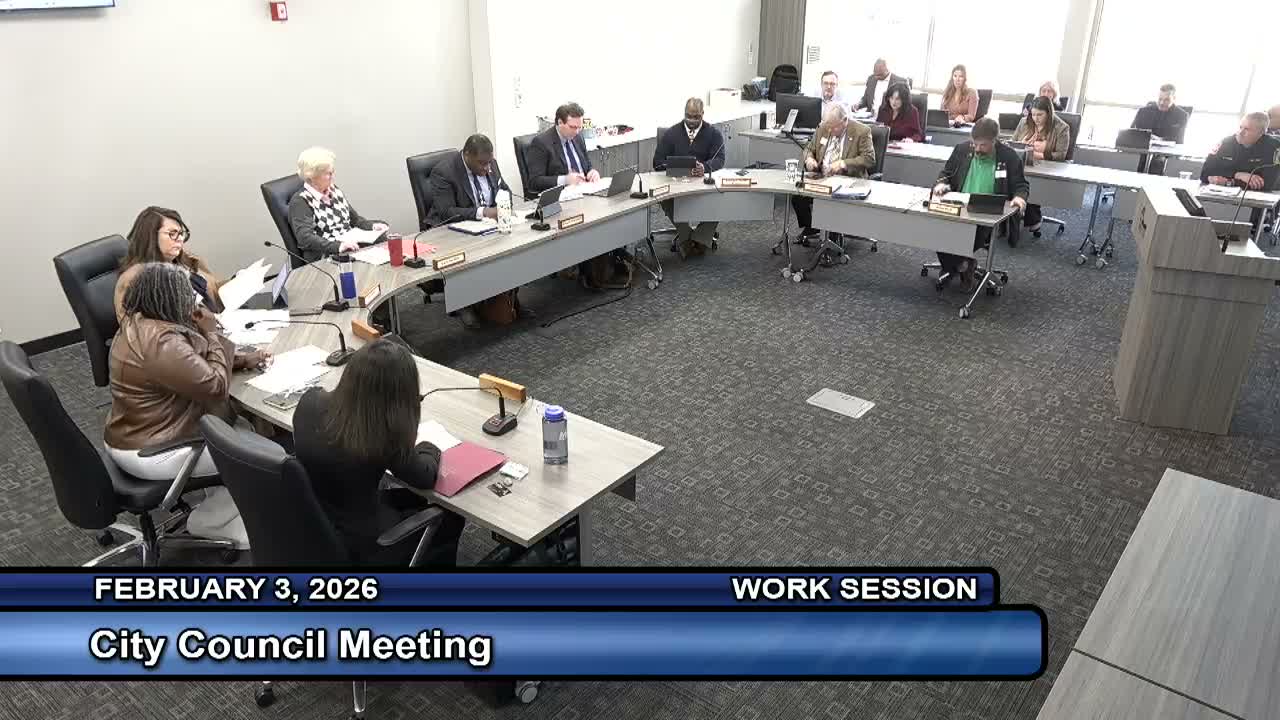
Council debates building permanent Southwest fire station as developer readies land
Summary
Denton Fire Chief Kenneth Hedges briefed council on a 3‑acre site in Hunter Ranch Phase 2 and recommended a permanent Station 10 to meet response-time standards; finance staff outlined $12.2M construction cost with about $900k annual debt service, and council directed staff to return with funding options after an extended discussion of timing and tax impacts.
Kenneth Hedges, Denton fire chief, told the City Council the city has the opportunity to move from a temporary to a permanent fire station in the Southwest by accepting a three‑acre conveyance from developer Hillwood in Hunter Ranch Phase 2. He said the current interlocal agreement (ILA) with Denton County Emergency Services District No. 1 expires in September and that without a replacement station residents in Robeson Ranch could lose ISO 1 rating — “they could go from ISO 1 to a 10 overnight,” he said, with homeowners’ insurance rising 30–50 percent.
Hedges described response‑time modeling using the NFPA 1710 framework and noted the city’s GIS maps undercount the station’s effective coverage because planned Phase 2 roadways are not yet in the database. He also said the developer’s agreement includes $5 million earmarked for public‑safety improvements.
Matt Hamilton, the city’s chief financial officer, said staff estimates a permanent station would require issuing about $12.2 million in bonds, producing roughly $900,000–$950,000 in annual debt service over a 20‑year term. He said projected property‑tax revenue from phase 1 of Hunter Ranch is expected to begin in December 2027 and could be $2.3–$2.5 million annually; that first‑phase revenue would initially cover a large share of the debt service.
Hamilton told council the city can shift $800,000 of existing project funding to pay early design costs to meet the developer’s quicker buildout schedule. He said the option to build a temporary modular station would cost about $1.2 million in setup and that choosing temporary now risks paying both the temporary cost and a later, more expensive permanent build.
Council debate split on timing. Some members said immediate construction of a permanent station is prudent to avoid duplicative cost and deliver full coverage sooner; others voiced concern about adding long‑term debt now and asked staff to model net‑neutral scenarios that would not materially increase the tax rate. The city manager and deputy city manager urged a near‑term CIP discussion to prioritize projects and explore whether bonds or other pay‑as‑you‑go options can mitigate tax impacts.
Council did not take a formal roll‑call vote on a bond issuance at the meeting; members expressed preliminary direction on the record, with several favoring the permanent option and others preferring the temporary option until additional budget analysis is complete. Council asked staff to return with financing scenarios, shorter amortization alternatives, and a plan that shows net‑neutral approaches to preserve operating flexibility.
Next steps: staff will return to council with refined cost and funding scenarios for design and construction, including the $800,000 design request and options to keep tax impacts neutral or minimized.