Judicial branch asks lawmakers for funds to protect judges, cover employer share of paid leave
Loading...
Summary
State court leaders told the House Judiciary Finance and Civil Law Committee the judiciary is facing rising threats to judges and staff and requested funding for a five-part security package plus money to cover the employer share of Minnesota paid family leave, and the committee laid the finance-file request over for further action.
The Minnesota Judicial Branch asked the House Judiciary Finance and Civil Law Committee on Tuesday for supplemental funding to protect judges and staff and to cover the employer share of the new Minnesota paid family leave program.
Jeff Schorba, the State Court Administrator, told the committee the branch’s top priorities are safety and security for judicial officers and staff and help paying the employer portion of paid family leave, which took effect in January 2026. “Given the uncertainty that we are having in the state, some of that may have been remedied a little bit by the forecast,” Schorba said, but he urged support for the request because courts were not included in final operational adjustments that helped the other two branches of government.
Chief Judge Michael Fritz of the 7th Judicial District described spikes in incidents reported to courts: “There were 211 incident reports filed statewide in 2024. In 2025, there were 310 incident reports made,” he said, noting that threats and disturbances in court facilities have risen sharply. Fritz recounted episodes including doxing, threatening telephone calls and repeated drone surveillance at judges’ homes to underline the need for expanded protections.
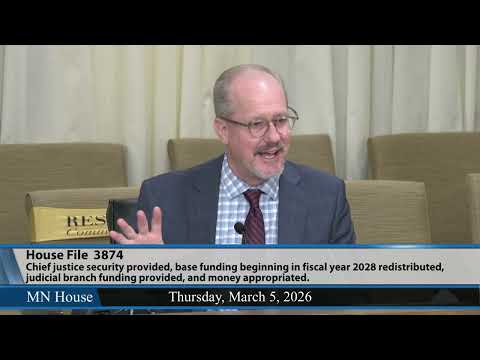
Schorba outlined five components of the security package: annual personal data–masking licenses for judges and court administrators; home-security support; two law-enforcement–experienced positions to strengthen threat assessment and coordination; limited travel security for the chief justice when she attends public events (about $100,000 for contracted escorts); and a one-time $1,000,000 courthouse security grant program for counties.
On paid leave, Schorba said the branch did not receive funding last session to pay the employer share and that absorbing the new recurring cost would be difficult. “If the state government is going to mandate this, that every branch, if they’re going to get funding, receive funding for it,” he said, arguing the judiciary should be treated consistently with the legislative and executive branches.
Committee members expressed sympathy for judges’ safety concerns but raised fiscal questions about fairness to small employers. Representative Bliss asked why the courts should receive funding when small private businesses must absorb the cost; Schorba replied that the branch had expected an operational adjustment and was not part of the final negotiations that allocated funding to the other branches.
The committee did not vote on appropriations Tuesday; the finance-file request (House File 3874) was laid over for possible inclusion in a future finance bill.