Residents and farmers press Cheyenne council over annexation and urban‑farm rules; amendment to delay parcels fails
Loading...
Summary
A heated public comment period and council debate on March 2 centered on the proposed annexation of several county 'pockets' (including a farm pursuing an 'urban farm' use). Residents said the schedule was rushed and asked for more time; an amendment to delay two parcels failed and the committee forwarded the annexation to the governing body for final action.
The Public Service Committee on March 2 recommended that the governing body consider an ordinance annexing multiple county pockets into the City of Cheyenne, after extended public comment and a failed amendment to delay portions of the annexation.
Planning Director Charles Bloom told the committee the annexation would simplify permitting for properties that may exceed county limits in the future and would allow an "urban farm" use to be processed under city rules. Bloom said staff had coordinated answers to more than 100 questions from the property owners, and that the city budgeted funds in 2022 to cover mapping and annexation costs so owners would not bear the full expense.
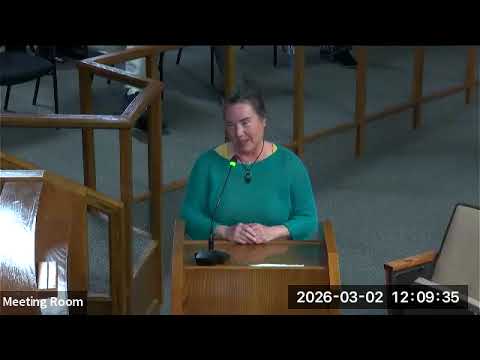
Members of the Nicely family and other residents said the process felt rushed. David Nicely told the committee the family had been farming and homesteading for years and that the speed of the annexation left them facing a mountain of code and potential compliance obligations. "We shouldn't have to fill out an abysmal amount of paperwork to do it," Nicely said, arguing the city’s outreach and responsiveness had been insufficient.
Gaye Woodhouse, representing Y Fresh Farms, asked staff to clarify operational details such as the 25‑customer‑per‑day county rule and how seasonal variation would be treated under city administration. Bloom said some county permit limits originate with the county and that certain state protections — for example related to food sales and distribution — remain in place regardless of annexation.
During the committee discussion, Council members debated a proposed amendment that would have approved most parcels immediately while setting a one‑year delayed effective date for Parcels 4 and 7 to allow fence repairs and to codify the urban‑farm policy. City Attorney John Brody warned that creating multiple effective dates within a single ordinance could raise legal and administrative complications, including statutory ambiguity and survey/map concerns, and suggested delaying the whole ordinance or handling delayed parcels in a separate ordinance.
Supporters of the amendment said a delayed effective date would give residents time to comply and preserve taxpayer money already spent on surveying; opponents argued split effective dates could create notice and equity problems and that postponement might only prolong uncertainty. The amendment failed on a committee vote. The committee then voted to recommend the annexation ordinance to the governing body for final consideration at the next meeting.
What happens next: The annexation ordinance will be on the governing‑body agenda at the next meeting; if adopted there, affected parcels will receive the city zoning assignments announced by staff and staff will continue to work with property owners on site‑specific compliance needs.