Cheyenne finance committee backs repeal of stormwater fee after tense debate over litigation and funding
Loading...
Summary
The Cheyenne Finance Committee voted to recommend repealing the city’s stormwater fee after extended staff briefings, public comment and debate over pending litigation and whether the legislature would provide funding; one member opposed the recommendation.
The Cheyenne Finance Committee on March 3 recommended that the governing body repeal the city’s stormwater user fee after a two-step process in which members first adopted a substitute and then approved a recommendation to repeal the fee.
City Attorney John Brody told the committee the item before them was an ordinance to delay or amend the fee’s effective date and that the proposal had been framed to allow state-level conversations about stormwater funding to continue before implementation. "What you have before you is a ordinance delaying the effective date of the stormwater fee," Brody said, adding that the staff proposal delayed implementation until March 5, 2027 to allow legislative discussions to proceed.
The discussion moved quickly from technical staffing and project needs to questions about litigation and state politics. Councilman Wolf recounted surviving the Aug. 1, 1985 flood and said stormwater was of direct personal importance to him; he pressed staff on whether ongoing litigation (cited in the meeting as Terrell Chevrolet) would be affected by repeal or delay. Brody warned the litigation is complex and that repealing the fee could present a court with a mootness argument.
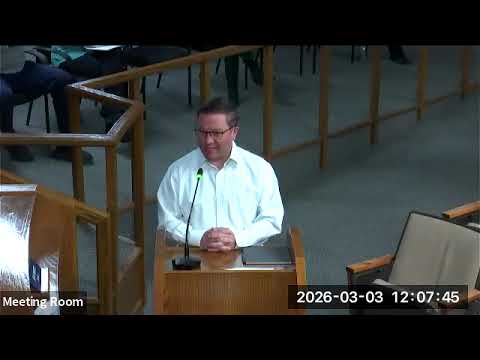
A member of the public, Mr. Lieborn, urged the committee to emphasize resilience and clearer communication about what the legislature had done and what it planned to do. "It's raining outside ... I think that's proof on the ground of global warming and climate change," he said, urging staff to share the substitute language and legislative outcomes before the governing-body vote.
Dr. Rainey (staff) summarized recent state legislative developments, noting that bills requiring elections for stormwater utilities and mandating rebates had been considered; he said the select committee on water had made stormwater its top interim topic. "There were a couple bills in the legislature ... one mandated a rebate of those fees," Dr. Rainey said in explaining why cities were under pressure and why some municipalities had chosen to repeal.
City Engineer Cobb described the technical basis for the program and said the initial planning had built from Dry Creek basin data. Cobb said the early project list produced a working estimate of roughly $112,000,000 for identified projects across basins, and stressed that the goal had been to create a sustainable program rather than one-off spending. "We started with Dry Creek because it's the most populated basin we have ... that made sense to start there," Cobb said.
Members debated strategy: several said repeal could build goodwill with the legislature and help secure funding, while others warned the city would lose a long-term funding mechanism for maintenance and capital work. After debate, the committee first adopted the substitute amendment (which staff had described as delaying implementation until after the next legislative session and offering a repeal option) and then voted to recommend repeal of the fee to the governing body; the chair recorded Councilman Wolf as opposed on both actions.
Next steps: the committee’s recommendation will go to the full governing body for final action at its next meeting; staff said they intend to participate in interim legislative work and continue exploring grants and other funding avenues.