Get Full Government Meeting Transcripts, Videos, & Alerts Forever!
Get email alerts on the Clean Slate topic
No spam. Unsubscribe anytime.
Council debates whether Connecticut's —clean slate— should exclude additional domestic-violence offenses
Summary
Members of the council discussed gaps in Connecticut General Statutes 46b-38h after a recent case suggested some family-violence charges that should be preserved on records are eligible for clean-slate erasure; the group agreed to gather data and consult lawmakers before recommending statutory changes.
Megan Scanlon, cochair of the council and director at CCADV, opened a discussion about whether Connecticut's clean-slate law is capturing all family-violence offenses that policymakers intended to keep on a defendant's record.
Why it matters: Council members said a recent case in which a defendant facing a strangulation-related charge could not be considered under existing family-violence flags highlighted potential gaps. If certain offenses are erased under the clean-slate process, members warned, courts and victim-advocacy systems may not have full information when making bond, release or other safety determinations.
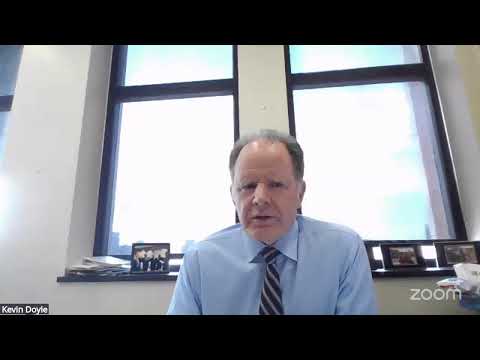
Judge Kevin Doyle outlined the existing mechanism for identifying family-violence convictions. "The UAR has a specific box on it for family violence crime. All the officers are trained to check that when they make a family violence arrest," he said, describing how clerks code files and how that coding flows into criminal-information systems used by the Department of Emergency Services and Public Protection. Doyle said the statute (46b-38h) and the court's coding are designed to trigger a flag that prevents erasure under the clean-slate provisions.
But members raised practical and statutory concerns. Sen. Mae Flexer asked about the Uniform Arrest Report and how charges get coded; several attendees noted that some commonly used chargesincluding unlawful restraint, breach of peace and assault third degreemay not appear on the list now included in 46b-38h even though they often arise in domestic contexts. Shauna Harrington and others urged gathering numbers to show how many convictions would be affected.
Sarah Steer pointed to other states that distinguish between domestic and non-domestic assault in statute. "Some states out west actually have specific statutes for assault domestic, assault non domestic," she said, noting that statutory structure can affect weapon prohibitions and plea bargaining.
Council members proposed three paths forward: 1) ask the legislators who drafted the clean-slate law about the original intent; 2) collect statistics to quantify how many convictions fall on lists inside vs. outside 46b-38h; and 3) if necessary, have the court-based issues subcommittee do more detailed work to recommend legislative or procedural fixes. The chair asked Sen. Flexer to consult legislative drafters, and Joe Detuno and others agreed to pull comprehensive charge data for 2025 to support the analysis.
No formal vote or rule change occurred. The council did not adopt any statutory amendments at the meeting; members agreed to return recommended next steps and data at future subcommittee or full-council meetings. The council set follow-up work and scheduled the next full meeting for April, with the court-based subcommittee continuing deeper analysis as needed.
The meeting ended with planning for data collection and outreach to legislators rather than an immediate policy decision.