
Pike County fiscal court rescinds landfill host agreement after lengthy public comment
Get AI-powered insights, summaries, and transcripts
Sign Up Free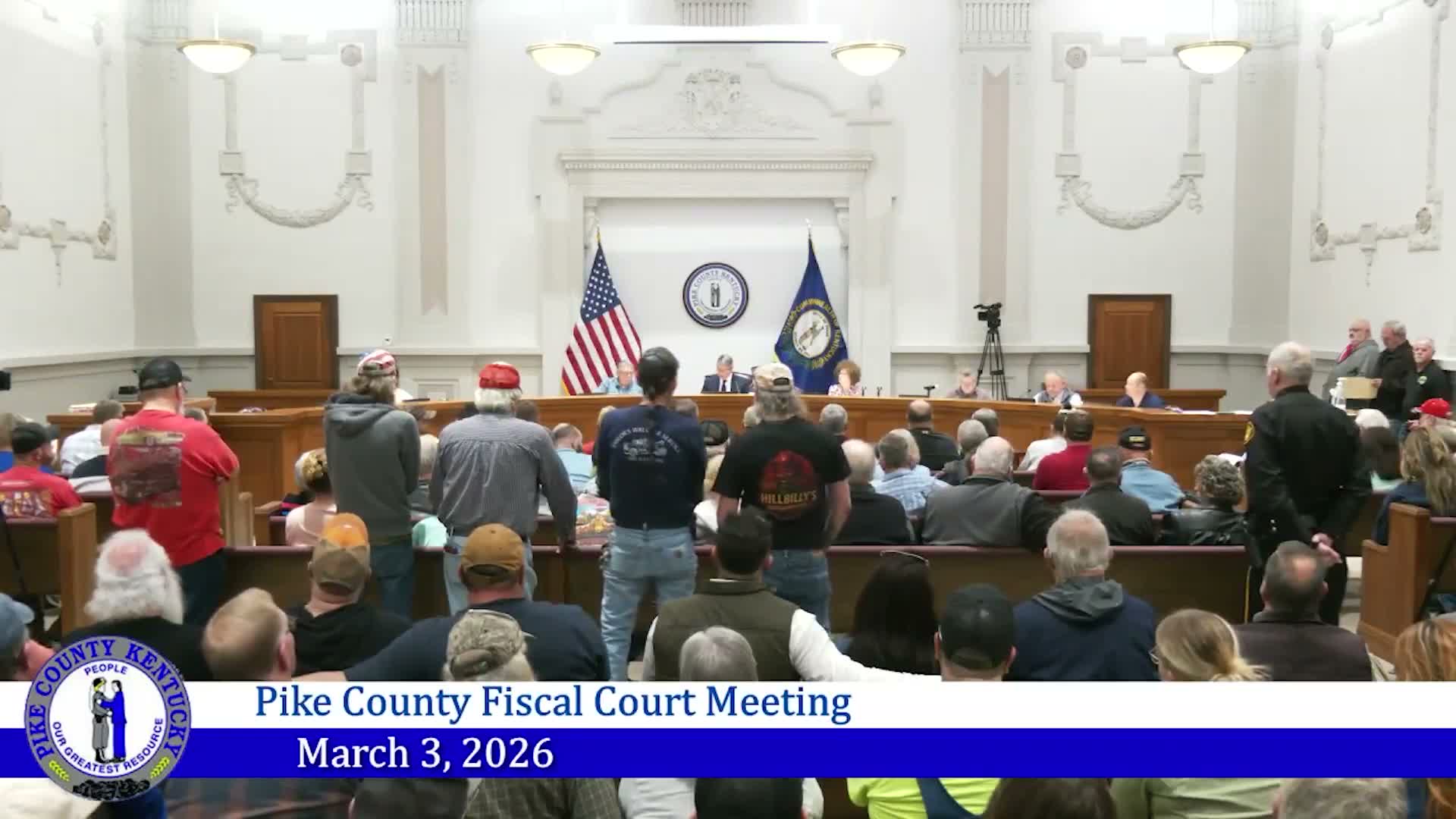
Summary
After more than two hours of public comment and debate, Pike County's fiscal court voted to rescind consideration of a host community agreement with USA Waste/American Land Reserve LLC and to notify the company it would not proceed; residents cited environmental and notice concerns while the judge emphasized process and potential economic trade-offs.
Pike County's fiscal court voted to rescind consideration of a host community agreement with USA Waste/American Land Reserve LLC after an extended public-comment period in which residents raised water-quality, traffic and transparency concerns and urged the court to halt the proposal.
Judge Jones, who presided over the meeting, told residents the host agreement was an exploratory contract that would have allowed the company to do engineering and file for permits; he repeatedly emphasized the county's siding ordinance and permitting process while responding to questions about notice and ownership. "This project is dead," Judge Jones said as he explained the technical and procedural steps that govern site approval and permit review.
Residents and advocacy groups told the court they felt blindsided by the proposal and by perceived lack of meaningful local notice. Blake Keithley, representing Saving Our Lavoisa Valley Environment, thanked the commissioners for listening and urged them to keep community input central. Kaye Coleman, a resident of Grafton, said public participation had been restricted by special meeting procedures and asked the court to lift any remaining COVID-era restrictions and extend public-comment time limits. Multiple speakers, including Stan Osborne and Linda Anders, warned of risks from building on or near unreclaimed mine works and an existing coal-slurry impoundment, and described potential impacts on local creeks and property values.
Supporters of studying the project argued the host agreement would merely allow engineering and public meetings; Jeremy Little, who lives near the proposed site, said he and neighbors had felt "blindsided" but asked the court to explain technical protections and the permitting sequence. Judge Jones detailed the site-approval requirements in the county siding ordinance—including a $10,000 application fee, engineering reports, public notice to property owners within five miles, audited financial statements, and disclosures of prior environmental liabilities—and said the county would require consultants and could recover review costs from the applicant.
A motion to re-vote on the host agreement and to send a letter informing the company the court had voted no was made by Commissioner Atkins and seconded on the floor. Roll-call results recorded multiple commissioners voting yes and Judge Jones voting no; minutes reflect the court acted to notify the company and to consider future solid-waste options in light of public concerns.
The meeting also featured a broad airing of countywide worries about economic decline, job losses in the coal industry, and tensions between attracting investment and protecting public health and property values. Residents repeatedly asked for clearer public notice and more transparent engagement from elected officials, while the judge said many decisions about siting and permitting are governed by state-level technical review and that the host agreement did not guarantee a facility would be built.
Next steps the judge outlined included: making written copies of the siding ordinance available at the judge's office, coordinating any future permit-related notices required by state or county code, and, if a future applicant files a petition for site approval, following the siding-ordinance review and consulting with outside engineers and hydrologists as necessary. The court closed by acknowledging the intensity of community concerns and the need for clearer public communication moving forward.